


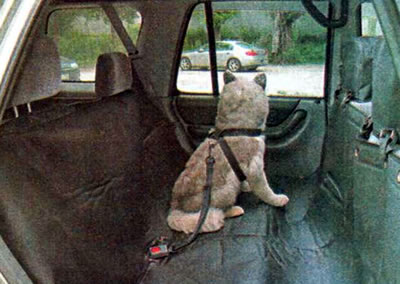
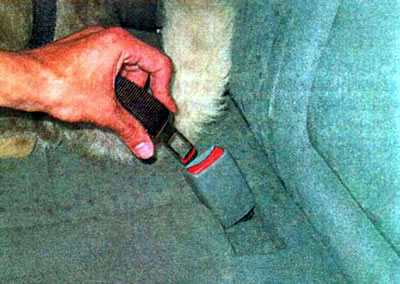
The leash is secured to the standard seat belt buckle or to the seat headrest.
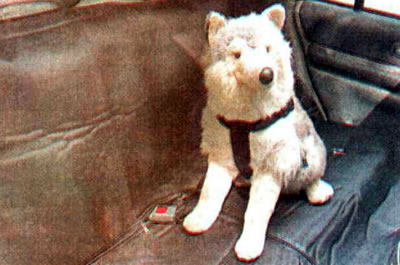
Anything can happen to an animal on the road. For example, he may get seasick and vomit on the new upholstery, not to mention the natural digestive processes, the results of which your pet is unable to inform you about in advance.
Wool, traces of dirty paws and saliva on velour or leather seats also do not look very aesthetically pleasing. However, you shouldn't cover the seat with an old blanket. Firstly, it looks ugly, and secondly, it will definitely slide off. It is much better to use special mats that are attached to the seat with Velcro or in some other way. These mats are made of hygienic synthetic materials, they are easy to wash, vacuum and are quite durable.
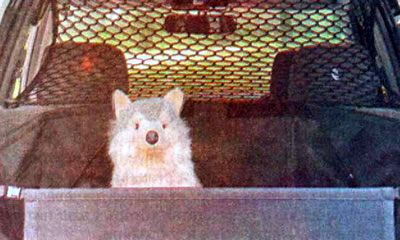
It is even better to arrange a real zoo compartment (three letters "o"!) in the cabin using a hard folding mat-container, sometimes called a hammock.
It will protect not only the seat, but also the door upholstery and the backs of the front seats from dirt and claws. Such a container, in the absence of other cargo, can also be placed in the luggage compartment.
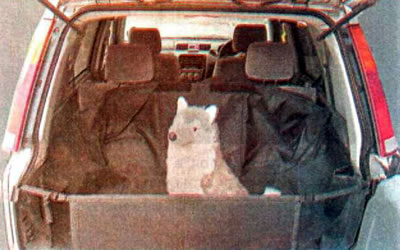
In this case, you need to make sure that your furry friend doesn't jump out into the car. A reliable barrier for him will be a dividing net stretched on hooks between the luggage compartment and the passenger compartment.
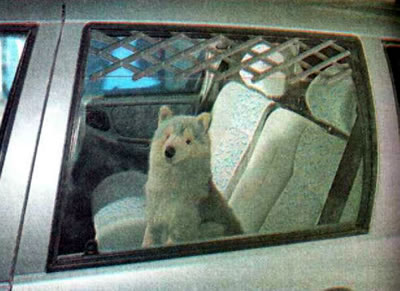
When transporting a dog in the back seat in the summer, owners often roll down the door windows to make it easier to breathe. As a rule, the dog breaks out of the window almost "up to the waist", barks at the whole world and even tries to jump out of the car. There are special folding plastic grilles on sale that can be installed in a window frame. This universal device fits the door of any car model. The grille is clamped by glass and securely fixed in the opening.
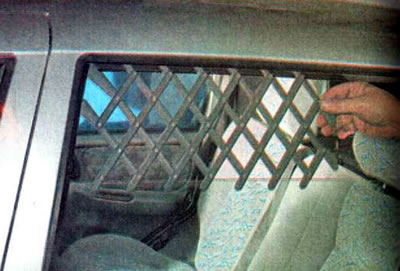
With such an obstacle, the dog will not be able to stick its nose out of the window, but at the same time, air will flow freely into the cabin.
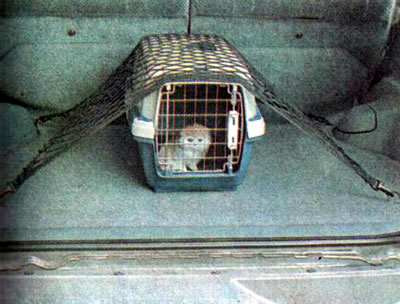
We recommend transporting cats, very small dogs and other small animals in special containers.
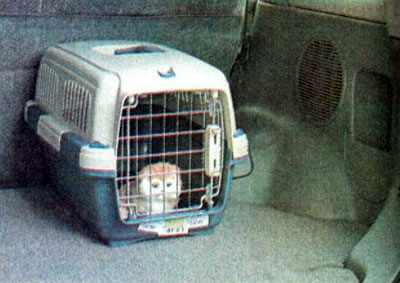
If the container is placed in the trunk of a station wagon, it must be secured there with a net, rubber cords with hooks at the ends, or another equally reliable method.
Basic rules for transporting animals
1. The animal should not be hungry, but it should be given something to eat at least two hours before the start of the journey. The dogs need to be walked.
2. Ensure the flow of fresh air into the cabin and the optimum temperature. Do not place a container with an animal in the trunk of a sedan, even if the journey is short!
3. It is better not to feed the animal while traveling. If it doesn't eat for five or six hours, nothing bad will happen. For longer flights, feed dry food in small portions. The car must be stopped to prevent the animal from choking.
4. Don't forget, especially in hot weather, to give your animal water: little by little, not cold, and preferably bottled water.
5. Do not give the animal any medications intended for humans, it will only make things worse.
6. Stop every two hours to allow the animal to stretch its paws. Don't let him out without a leash, the dog may jump out in his joy and get hit by other cars.
7. Constantly monitor the animal's condition while traveling.
8. Do not leave your dog alone in a closed car, even for a short time, and even if it is not hot outside. The dog may get scared of something and start fighting in the cabin and injure itself.
Warning: Keep your pet in your arms in the front seat if the vehicle is equipped with air bags. An airbag deployed during an accident will kill your pet!