


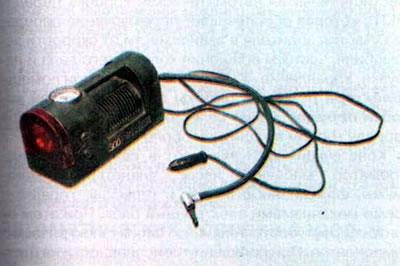
A portable compressor for inflating tires has become an essential attribute of a modern car. Compared to hand and foot tire pumps, the compressor allows you to save effort and time.
There are two types of compressors for pumping tires: piston and membrane. Piston compressors compress air by means of piston movement. Such compressors are considered more productive, but they are larger in terms of frame dimensions, weight and, due to the large number of rubbing parts, are less durable.
Diaphragm compressors pump air through a reciprocating rubber membrane. The disadvantages of diaphragm compressors include their noise and, compared to piston compressors, lower productivity and a lower maximum pressure limit. But it is unlikely that passenger car tires will require pressure higher than 3 bar.
An important parameter when choosing a car compressor is the method of connecting it to the network. Some compressors are connected with alligator clips directly to the battery terminals, others with a plug through the cigarette lighter socket.
Each connection method has its pros and cons. Connecting to the battery terminals is not always convenient, since in order to access them in a modern car, you sometimes have to remove many parts, but with this method there is no need to worry about whether the fuses and wiring of your car can withstand the current consumed by the compressor. Connecting the compressor through the cigarette lighter socket is certainly more convenient, but it is important to remember the maximum possible current that the cigarette lighter circuit can withstand. In addition, modern compressors can also contain additional options, such as a flashlight, a tool for minor tire repairs, and even a vacuum cleaner.