


Vehicle Maintenance Chevrolet Lumina 1

Vehicle identification data
Vehicle Identification Number The Vehicle Identification Number (VIN) is located on the dashboard under the lower left corner of the windshield (see...
Vehicle Identification Number The Vehicle Identification Number (VIN) is located on the dashboard under the lower left corner of the windshield (see...

Conversion factors of physical quantities
Length (distance) Inches x 25.4 = millimeters (mm) x 0.0394 = inches Feet x 0.305 = meters (m) x 3.281 = feet Miles x 1.609 = kilometers (km) x 0.621 = miles...
Length (distance) Inches x 25.4 = millimeters (mm) x 0.0394 = inches Feet x 0.305 = meters (m) x 3.281 = feet Miles x 1.609 = kilometers (km) x 0.621 = miles...

Data for maintenance purposes
Recommended oils and fluids Motor oil: Type - API SG, SG/CC or SG/CD Viscosity - See diagram 1 Hydraulic fluid - ATF for automatic transmission Dexron II, IIE...
Recommended oils and fluids Motor oil: Type - API SG, SG/CC or SG/CD Viscosity - See diagram 1 Hydraulic fluid - ATF for automatic transmission Dexron II, IIE...
General information about maintenance
This chapter provides recommendations for independent maintenance of Chevrolet Lumina, Pontiac Trans Sport and Oldsmobile Silhouette APV vehicles, which is...
This chapter provides recommendations for independent maintenance of Chevrolet Lumina, Pontiac Trans Sport and Oldsmobile Silhouette APV vehicles, which is...
Maintenance schedule
The following service interval data is based on the assumption that the service work will be performed by the vehicle owner and not by a workshop. While time...
The following service interval data is based on the assumption that the service work will be performed by the vehicle owner and not by a workshop. While time...

Engine bay and underbody of the car
Engine compartment of a car with a 3.1L engine: 1 - Power steering pump reservoir ( section 7 ), 2 - air filter ( section 19 ), 3 - distributor ( section 33 ),...
Engine compartment of a car with a 3.1L engine: 1 - Power steering pump reservoir ( section 7 ), 2 - air filter ( section 19 ), 3 - distributor ( section 33 ),...
General information on adjustment
Note: Before performing any operation that requires disconnecting the battery on vehicles equipped with the Delco Loc II audio system, ensure that the locking...
Note: Before performing any operation that requires disconnecting the battery on vehicles equipped with the Delco Loc II audio system, ensure that the locking...

Fluid level checks (every 250 miles or weekly)
Note: The following checks should be performed at 250 mile intervals or weekly. Additional fluid level checks can be found in the specific maintenance...
Note: The following checks should be performed at 250 mile intervals or weekly. Additional fluid level checks can be found in the specific maintenance...

Check tire condition and pressure (every 250 miles or weekly)
1. Periodically checking your tires can save you trouble on the road and also provide important information regarding possible problems with the steering or...
1. Periodically checking your tires can save you trouble on the road and also provide important information regarding possible problems with the steering or...

Checking the hydraulic fluid level in the automatic transmission (every 3000 miles or 3 months)
1. It is necessary to constantly maintain the hydraulic fluid level in the automatic transmission. Low fluid levels can cause slippage or loss of torque, while...
1. It is necessary to constantly maintain the hydraulic fluid level in the automatic transmission. Low fluid levels can cause slippage or loss of torque, while...

Check Power Steering Fluid (Every 3,000 miles or 3 months)
1. Unlike conventional steering, the power steering system contains hydraulic fluid that needs to be replenished after a certain period of time. 2. The power...
1. Unlike conventional steering, the power steering system contains hydraulic fluid that needs to be replenished after a certain period of time. 2. The power...

Check, service and charge the battery (every 3000 miles or 3 months)
Caution: Certain precautions must be taken when checking and servicing the battery. Battery cells always contain flammable hydrogen gas, so keep the battery...
Caution: Certain precautions must be taken when checking and servicing the battery. Battery cells always contain flammable hydrogen gas, so keep the battery...

Cooling system check (every 3000 miles or 3 months)
1. Many engine failures are related to problems with the cooling system. If the vehicle is equipped with an automatic transmission, the cooling system also...
1. Many engine failures are related to problems with the cooling system. If the vehicle is equipped with an automatic transmission, the cooling system also...

Check and replace underhood hoses (every 3,000 miles or 3 months)
General questions Caution: Air conditioning hose replacement should be performed by a General Motors dealer or an air conditioning service shop that has...
General questions Caution: Air conditioning hose replacement should be performed by a General Motors dealer or an air conditioning service shop that has...

Check and replace wiper blades (every 3,000 miles or three 3 months)
1. Windshield wipers and rear window wipers should be checked periodically for damage, loose parts, or wear on the wiper rubber. 2. A film may form on the...
1. Windshield wipers and rear window wipers should be checked periodically for damage, loose parts, or wear on the wiper rubber. 2. A film may form on the...

Change engine oil and oil filter (every 3,000 miles or 3 months)
1. Regular oil changes are an important maintenance procedure. Motor oil is getting old (the density changes, it gets dirty), which leads to premature wear of...
1. Regular oil changes are an important maintenance procedure. Motor oil is getting old (the density changes, it gets dirty), which leads to premature wear of...

Checking the condition of the axle shaft boots (every 3000 miles or 3 months)
1. Axle shaft boots play an important role because they prevent dirt, water and foreign matter from entering the constant velocity joints, causing damage to...
1. Axle shaft boots play an important role because they prevent dirt, water and foreign matter from entering the constant velocity joints, causing damage to...

Suspension and steering check (every 3000 miles or 3 months)
1. Periodically raise the front of the vehicle and inspect the suspension and steering components for wear. 2. Excessive play in the steering wheel, as well as...
1. Periodically raise the front of the vehicle and inspect the suspension and steering components for wear. 2. Excessive play in the steering wheel, as well as...

Exhaust System Check (every 3000 miles or 3 months)
1. When the engine is cold (at least 3 hours after the trip) check the entire exhaust system from the engine to the end of the exhaust pipe. Ideally, the...
1. When the engine is cold (at least 3 hours after the trip) check the entire exhaust system from the engine to the end of the exhaust pipe. Ideally, the...

Tire rotation (every 7,500 miles or 12 months)
1. Wheel rotation should be performed at the specified intervals and whenever uneven wear is detected. 2. Front wheel drive vehicles require a special rotation...
1. Wheel rotation should be performed at the specified intervals and whenever uneven wear is detected. 2. Front wheel drive vehicles require a special rotation...

Brake inspection (every 7,500 miles or 12 months)
Warning! The brake system may contain asbestos, which is dangerous to your health. Do not blow out its particles with compressed air or inhale it. Do not use...
Warning! The brake system may contain asbestos, which is dangerous to your health. Do not blow out its particles with compressed air or inhale it. Do not use...

Fuel System Check (every 7,500 miles or 12 months)
Warning: Gasoline is highly flammable, so take all necessary precautions when working with any part of the fuel system. Do not smoke or leave open flames or...
Warning: Gasoline is highly flammable, so take all necessary precautions when working with any part of the fuel system. Do not smoke or leave open flames or...

Air Filter Replacement (every 7,500 miles or 12 months)
1. The air filter should be replaced in accordance with the terms specified in the technical specifications. The filter must be checked between replacements....
1. The air filter should be replaced in accordance with the terms specified in the technical specifications. The filter must be checked between replacements....

Checking the tightening of the TBI central injection system mounting bolt (3.1L engine)
1. The throttle body with the injector is attached to the top of the intake manifold with three nuts. Due to vibration and temperature changes during normal...
1. The throttle body with the injector is attached to the top of the intake manifold with three nuts. Due to vibration and temperature changes during normal...

Check and replace the poly-V belt (every 7,500 miles or 12 months)
1. The single poly V-belt drive is located at the front of the engine and plays an important role in the operation of the engine and its components. Due to its...
1. The single poly V-belt drive is located at the front of the engine and plays an important role in the operation of the engine and its components. Due to its...
Seat Belt Inspection (Every 7,500 Miles or 12 Months)
1. Check the seat belts, buckles, latches, and guides for visible damage and signs of wear. 2. Check if the seat belt reminder light comes on when you turn the...
1. Check the seat belts, buckles, latches, and guides for visible damage and signs of wear. 2. Check if the seat belt reminder light comes on when you turn the...
Check starter interlock (every 7,500 miles or 12 months)
Warning: When performing the following checks, there is a possibility that the vehicle may roll forward, causing damage or injury to people. Position the...
Warning: When performing the following checks, there is a possibility that the vehicle may roll forward, causing damage or injury to people. Position the...

Check spare tire and jack (every 7,500 miles or 12 months)
1. Periodically check the condition and reliability of the spare wheel and jack. This will help you become familiar with the procedure required when changing a...
1. Periodically check the condition and reliability of the spare wheel and jack. This will help you become familiar with the procedure required when changing a...

Fuel Filter Replacement (every 30,000 miles or 24 months)
Warning: Gasoline is highly flammable, so take all necessary precautions when working with any part of the fuel system. Do not smoke or leave open flames or...
Warning: Gasoline is highly flammable, so take all necessary precautions when working with any part of the fuel system. Do not smoke or leave open flames or...

Chassis and body lubrication (every 30,000 miles or 24 months)
1. To purchase the required type of lubricant, refer to the subsection " Recommended oils and fluids " at the beginning of this chapter. You will also need a...
1. To purchase the required type of lubricant, refer to the subsection " Recommended oils and fluids " at the beginning of this chapter. You will also need a...

Automatic transmission fluid change and filter replacement (every 30,000 miles or 24 months)
1. At the intervals specified in the technical specifications, the hydraulic fluid in the drive axle in the block with the automatic transmission should be...
1. At the intervals specified in the technical specifications, the hydraulic fluid in the drive axle in the block with the automatic transmission should be...

Check Thermostat (3.1L Engine) (Every 30,000 miles or 24 months)
1. The thermostat ensures that air of the required temperature is taken into the throttle body depending on the engine temperature. 2. A simple visual...
1. The thermostat ensures that air of the required temperature is taken into the throttle body depending on the engine temperature. 2. A simple visual...

Drain, flush and fill the cooling system (every 30,000 miles or 24 months)
1. The cooling system should be periodically drained, flushed and refilled with coolant to prevent rust and corrosion, which may degrade the cooling system...
1. The cooling system should be periodically drained, flushed and refilled with coolant to prevent rust and corrosion, which may degrade the cooling system...

Check and replace PCV valve (every 30,000 miles or 24 months)
Engine 3.1 l 1. With the engine idling at normal operating temperature, remove the valve (with attached hose) from the rubber bushing in the valve cover (see...
Engine 3.1 l 1. With the engine idling at normal operating temperature, remove the valve (with attached hose) from the rubber bushing in the valve cover (see...

Evaporative Emission System Check (every 30,000 miles or 12 months)
1. The system works to "pull" fuel vapors from the gas tank and fuel system, pass them through an activated carbon filter and then burn them during normal...
1. The system works to "pull" fuel vapors from the gas tank and fuel system, pass them through an activated carbon filter and then burn them during normal...

Replace spark plugs (every 30,000 miles or 12 months)
1. Spark plugs are located on the front (near the radiator) and back (at the bulkhead) sides of the engine. The spark plugs are accessible from the engine bay,...
1. Spark plugs are located on the front (near the radiator) and back (at the bulkhead) sides of the engine. The spark plugs are accessible from the engine bay,...
Checking and replacing spark plug wires, distributor cap and rotor
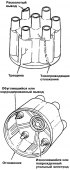
Note: Engines with a displacement of 3.8 L are equipped with an ignition system without a distributor. The spark plug wires are connected directly to the...
Note: Engines with a displacement of 3.8 L are equipped with an ignition system without a distributor. The spark plug wires are connected directly to the...

Determining faults by the appearance of spark plugs
Carbon deposits Signs The presence of dry soot deposits indicates an over-rich mixture or a weak spark. Causes misfires, difficulty starting and engine...
Carbon deposits Signs The presence of dry soot deposits indicates an over-rich mixture or a weak spark. Causes misfires, difficulty starting and engine...

Checking and adjusting the ignition timing (3.1L engine)
Note: If the information contained in this section differs from the information on the release control label (located on the right front shock absorber in the...
Note: If the information contained in this section differs from the information on the release control label (located on the right front shock absorber in the...
This section is available at russian, bulgarian, belarusian, ukrainian, serbian, croatian, romanian, polish, slovak, hungarian
See similar sections on Chevrolet cars:
General information: User manual Chevrolet Aveo T300 (2012-2018)
Manual: Maintenance Chevrolet Captiva 1 (2006-2018)
General information: Maintenance Chevrolet Cruze 1 (2008-2016)
General information: Maintenance Chevrolet Lacetti 1 (2002-2009)
General information: Maintenance Chevrolet Lanos T150 (2002-2009)
General information: User manual Chevrolet Niva 1 (2002-2016)
General information: Maintenance Chevrolet Tahoe 2 and 3 (2000-2014)
General information: User manual Chevrolet Aveo T300 (2012-2018)
Manual: Maintenance Chevrolet Captiva 1 (2006-2018)
General information: Maintenance Chevrolet Cruze 1 (2008-2016)
General information: Maintenance Chevrolet Lacetti 1 (2002-2009)
General information: Maintenance Chevrolet Lanos T150 (2002-2009)
General information: User manual Chevrolet Niva 1 (2002-2016)
General information: Maintenance Chevrolet Tahoe 2 and 3 (2000-2014)
Share information:
- General information
- Introduction to manual
- User manual
- Maintenance
- Troubleshooting
- Power unit
- Engine repair
- Fuel and control system
- Cooling and lubrication system
- Ignition system
- Transmission
- Clutch
- Gearbox
- Drive shafts
- Chassis
- Car suspension
- Steering
- Brake system
- Body
- Exterior (external elements)
- Doors, locks and windows
- Electrical equipment
- Equipment and devices
- Windscreen wipers
- Power devices
- Electrical diagrams
- General information
- User manual
- Troubleshooting
- Maintenance
- Power unit
- Engine in a car
- Engine overhaul
- Cooling and heating
- Fuel and exhaust system
- Engine electrical equipment
- Engine control
- Transmission
- Automatic gearbox
- Transfer case
- Drive shafts and cardan
- Chassis
- Brake system
- Car suspension
- Steering
- Body
- Exterior (external elements)
- Interior (internal elements)
- Doors, locks and windows
- Electrical equipment
- Equipment and devices
- Electrical circuits
- General information
- Maintenance
- Power unit
- Engine 3.1L V6
- Engine 3.8L V6
- Engine overhaul
- Cooling system
- Power and exhaust system
- Fuel injection
- Engine electrical equipment
- Reduced exhaust gas toxicity
- Transmission
- Automatic gearbox
- Drive shafts
- Chassis
- Brake system
- Car suspension
- Steering
- Body
- Heating and air conditioning
- Repair of body elements
- Doors, covers and windows
- Interior (internal elements)
- Electrical equipment
- Equipment and devices
- Electrical circuits