


Warning: Gasoline is highly flammable, so take all necessary precautions when working with any part of the fuel system. Do not smoke or leave open flames or unprotected lamps in the work area, do not work in the garage with devices and appliances powered by natural gas (such as titanium or dryer), if there is a burning fuse there. If you spill any fuel on your skin, wash it off immediately with soap and water. When performing any work on the fuel system, wear safety glasses and have a fire extinguisher handy. The fuel system is under pressure, so if any lines need to be disconnected, the system must first be depressurized (more detailed information on this issue can be found in Chapter 4).
1. The fuel system is easiest to inspect when the vehicle is raised on a lift so that the components underneath the vehicle are visible and accessible.
2. If a gasoline smell is detected during a trip or after the vehicle has been exposed to the sun, the system should be thoroughly checked immediately.
3. Remove the gas cap and check it for damage, corrosion, and see if the gasket is damaged (see illustration). Replace the plug if necessary.
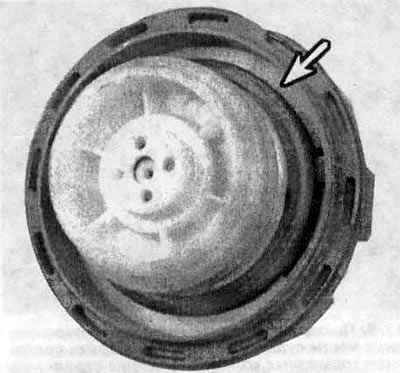
18.3. Make sure that the gas cap gasket is (indicated by the arrow) is not damaged and fits around the entire circumference, otherwise the fuel system will not be properly sealed
4. Once the vehicle is raised, inspect the gas tank and filler neck for punctures, cracks, or other damage. The connection between the filler neck and the tank is especially important. Sometimes the rubber filler neck leaks due to loose clamps or deterioration of the rubber quality (see illustration).
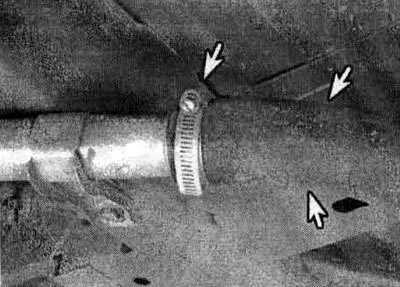
18.4 Check the fuel filler neck clamp to make sure it is tight and that there are no cracks or damage to the hose
Warning! Do not attempt to repair the gas tank yourself under any circumstances (except for replacement of rubber parts). A welding machine or any other open flame can immediately ignite gasoline vapors and cause an explosion if proper precautions are not taken.
5. Carefully check all rubber hoses and metal pipes coming from the gas tank. Check for loose connections, frayed hoses, dented metal pipes, or other damage. Follow the hoses all the way to the front of the vehicle. Repair or replace damaged areas if necessary.