


This section only briefly describes the injection system malfunctions caused by failure of certain sensors. The procedure for removing and installing units of the fuel and engine control systems is given in the subsections "Engine power supply system" and "Engine management system".
A catalytic converter of exhaust gases and a sensor of oxygen concentration in exhaust gases, which provides feedback, are installed in the injection system with feedback. The sensor monitors the concentration of oxygen in exhaust gases, and the electronic control unit, based on its signals, maintains such a ratio of air and fuel at which the converter operates most effectively.
Warnings
Before removing any fuel injection system components, disconnect the negative battery cable. Disconnect the battery only when the ignition is off.
Do not start the engine if the battery cable terminals are not tightly tightened.
Never disconnect the battery from the vehicle's electrical system while the engine is running.
When charging, disconnect the battery from the vehicle's electrical system, as increased current during charging may damage electronic components.
Do not allow the electronic control unit (ECU) to heat up above 65°C when operating and above 80°C when not operating (for example, in a drying chamber). It is necessary to remove the ECU from the car if this temperature is exceeded.
Do not disconnect or connect the wiring harness connectors to the ECU with the ignition on.
Before performing arc welding on a vehicle, disconnect the wires from the battery and the wire connectors from the ECU.
All voltage measurements should be performed using a digital voltmeter with an internal resistance of at least 10 megohms. The electronic components used in the injection system are designed for very low voltage, so they can easily be damaged by electrostatic discharge. To prevent damage to the ECU by electrostatic discharge, observe the following requirements:
- do not touch the ECU connectors or electronic components on its boards with your hands;
- when working with the programmable read-only memory (PROM) of the control unit, do not touch the terminals of the microcircuit.
It is not permitted to operate an engine equipped with a neutralizer on leaded gasoline - this will lead to rapid failure of the neutralizer and oxygen concentration sensor.
When working in rainy weather, do not allow water to come into contact with the electronic components of the fuel injection system.
Check the injection system in the following order.
1. Check the connection of the engine and battery to ground.
2. Check the fuel pump and its fuel filter.
3. Check the fuses and relays for switching on the injection system elements.
4. Check the reliability of the contacts in the pads with wires of the injection system elements.
5. Check the injection system sensors.
The vast majority of fuel injection system faults are caused by failure of the following sensors:
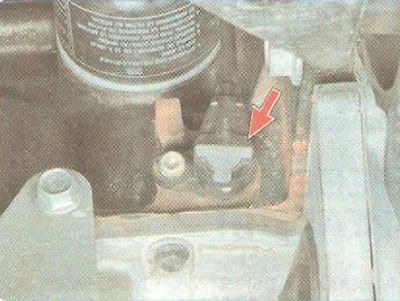
- crankshaft position sensor - complete failure of the injection system, the engine does not start;
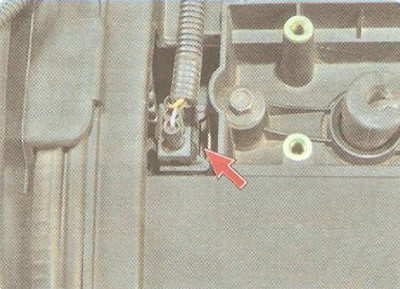
- phase sensor - power loss, fuel consumption increase (for convenience, shown with the decorative engine cover removed);
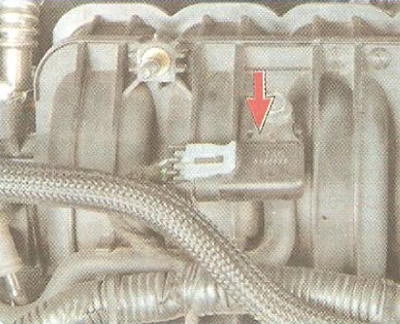
- absolute pressure sensor (rarefaction) in the intake pipe - increased fuel consumption, significant deterioration in dynamics, problems with starting the engine;
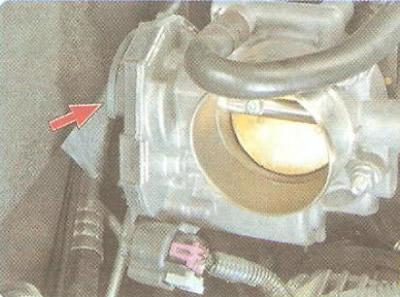
- throttle position sensor - loss of power, jerks and dips during acceleration, unstable operation in idle mode (for convenience, shown with the air supply hose removed);
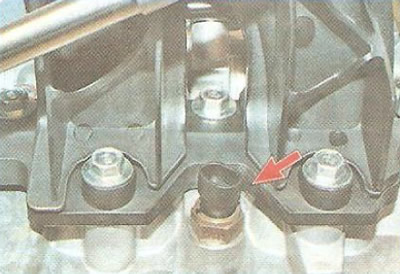
- coolant temperature sensor (installed on the right side of the cylinder head under the intake manifold, for clarity the intake manifold support bracket has been removed) - difficulties with starting in cold weather, since you have to warm up the engine, maintaining the speed with the accelerator pedal; when overheated, the power is significantly reduced, detonation appears;
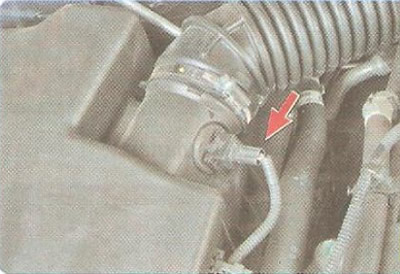
- intake air temperature sensor - increased fuel consumption, increased exhaust gas toxicity;
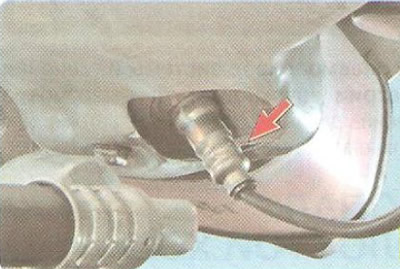
- oxygen concentration sensor (lambda probe) - increased fuel consumption, decreased engine power, unstable idling. Possible damage to the catalytic converter of exhaust gases;
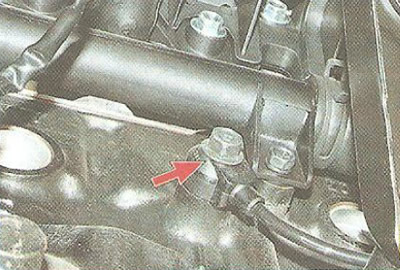
- knock sensor (installed on the right side of the cylinder block in the area of the 2nd and 3rd cylinders) - the engine is very sensitive to the quality of gasoline, increased tendency to detonation;
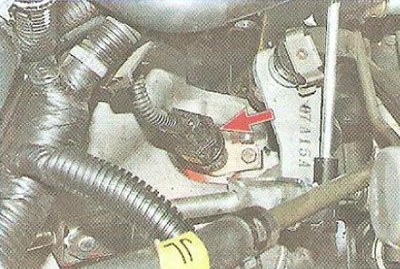
- speed sensor (mounted on the gearbox housing) - possible deterioration of the vehicle's dynamic qualities and increase in fuel consumption;
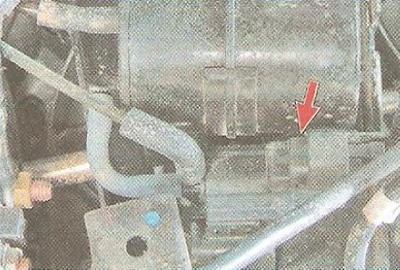
- electromagnetic valve...
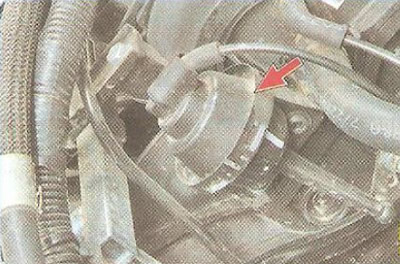
...and the pneumatic drive of the intake manifold geometry change system - it is possible that the dynamic qualities of the car will deteriorate and fuel consumption will increase.
(The original material is located on the website: «ChevyMan.ru»)