


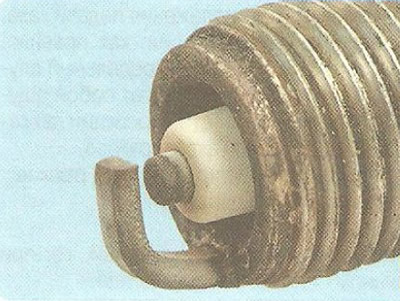
1. Normal candle.
Brown or greyish-yellowish colour and slight wear of the electrodes. Exact match of the heat value of the spark plug to the engine and operating conditions.
Helpful Hint: When replacing spark plugs with new ones, install spark plugs with the same characteristics from those recommended by the manufacturer.
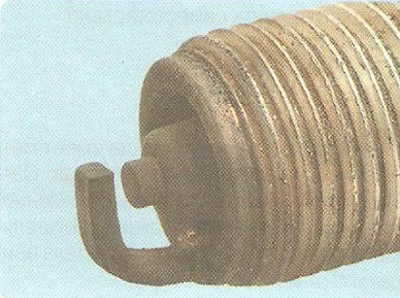
2. Soot deposits.
Dry soot deposits indicate a rich air-fuel mixture or late ignition. Causes misfires, difficult starting and erratic engine operation. Check for clogged air filter, coolant temperature and intake air temperature sensors.
Helpful Hint: Use a "hotter" candle.
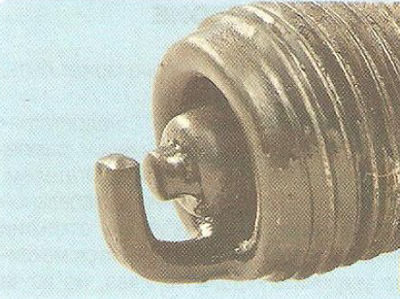
3. Oil deposits.
Oily spark plug electrodes and insulator.
The reason is oil getting into the combustion chamber.
Oil gets into the combustion chamber through the valve guides or through the piston rings. Causes difficult starting, cylinder misfires and "jerking" of the running engine. Repair of the cylinder head and piston group of the engine is necessary. Replace the spark plugs.
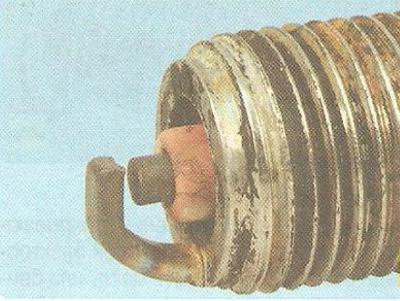
4. Metal-containing plaque.
Brick-red iron oxide deposits on the insulator skirt from anti-knock iron-containing additives (ferrocene) to gasoline. They are deposited in an even, dense layer. When the engine is running under heavy load, under the influence of high temperature and pressure in the combustion chamber, the oxides are reduced to conductive paths of pure iron, shorting the central electrode to ground. This causes misfires and, as a result, a drop in engine power and increased fuel consumption. In addition, the catalytic converter of exhaust gases can be damaged, overheating greatly when gasoline that has not burned in the engine cylinders gets into it. The deposit is practically impossible to remove mechanically and does not burn out during prolonged movement at high speed. If this deposit appears on new spark plugs after a short mileage, change the refueling location.
Helpful Hint: If you can't replace the spark plugs with new ones right away, try removing this deposit by soaking the spark plugs with their insulator skirts in phosphoric acid or a rust converter for ten minutes (contains phosphoric acid). After this, clean off the plaque with a non-metallic brush (you can use an old toothbrush) and wash the spark plugs first with water and then with gasoline.
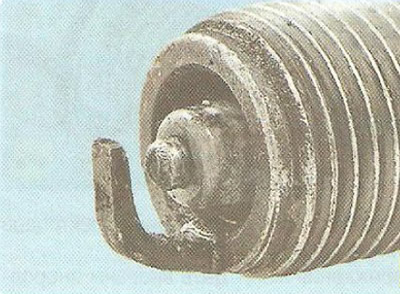
5. Melted electrodes.
Early ignition. The insulator is white, but may be contaminated due to spark misfires and deposits from the combustion chamber. May cause engine damage. It is necessary to check the spark plug type, the cleanliness of the injector nozzles and fuel filter, the operation of the cooling and lubrication systems.
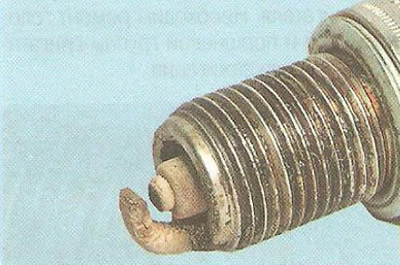
6. Ash deposits.
Light brown deposits that crust over the center and side electrodes. They come from oil or gasoline additives. Large amounts can insulate the spark plug electrodes, causing misfires and hesitation during acceleration. If excessive deposits form in a short time or at low mileage, replace the valve guide seals to prevent oil from entering the combustion chamber.
Helpful advice: If deposits are consistently formed over long periods of mileage, the cause is the quality of the gasoline - change the place where you fill up.
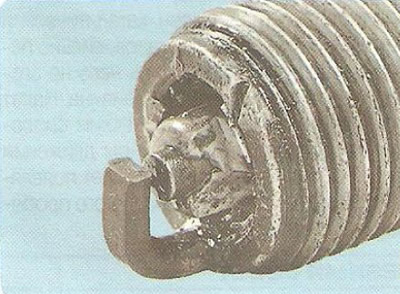
7. The spark plug insulator is cracked or chipped.
Detonation. This can cause piston damage. Make sure the octane rating of the gasoline is correct.
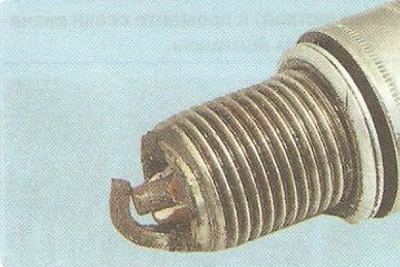
8. Mechanical damage to the electrodes and insulator of the spark plug.
Damage can be caused by foreign objects that have entered the combustion chamber, and if a spark plug is too long, its electrodes can catch on the piston. This leads to the destruction of the spark plug, the cylinder being disconnected and can damage the piston. Remove the foreign object from the cylinder and/or replace the spark plug.
The article was borrowed from the website: «ChevyMan»