


General information
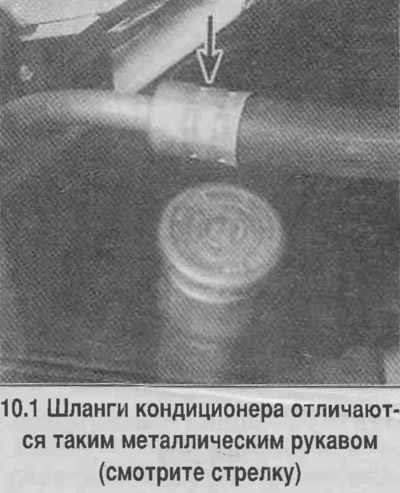
1. Air conditioning hoses are checked and changed only at a car service center.
2. Under the influence of high temperatures inside the engine compartment, the rubber and plastic hoses that ensure the operation of various engine units gradually harden and deteriorate. The condition of the hoses, the presence of cracks and hardening, loose connections, and loss of tightness should be checked periodically.
3. Some hoses are secured with clamps. Check the clamps for tightness, as loosening of the clamps will result in a loss of tightness. In places where clamps are not provided, check the reliability of the hose seal on the fittings; loss of elasticity in such connections due to swelling or hardening of the hoses is not allowed, otherwise the tightness of the connection will be compromised.
Vacuum hoses
4. Vacuum hoses can be identified by color or by colored stripes glued to them. Vacuum hoses with different wall thickness, resistance to atmospheric pressure compression, and heat resistance are used for different engine systems. When replacing, make sure that the new vacuum hoses exactly match the ones being replaced.
5. Often, a hose can only be checked after it has been removed from the vehicle. If several hoses are being removed, mark the mating fittings and hoses first to avoid disturbing their relative position later.
6. When checking the condition of the vacuum hoses, also inspect the plastic tees. Check for cracks on them, as well as deformation of the hose where it meets the tee, which may be the cause of a leak. It is prohibited to replace reinforced vacuum hoses with transparent plastic or water hoses.
7. To check for leaks, listen through a section of hose with an internal diameter of about 6 mm, placing the hose on the place being checked. A characteristic "hissing" will indicate the presence of a leak.
Fuel hoses
8. Check the condition of the rubber fuel hoses and check for damage.
9. When replacing the fuel line on injection engines, the new line must exactly match the one used in the fuel system of the engine of this type.
10. When replacing hoses, always install screw-type clamps.
Metal tubes
11. Metal tubes are commonly used in the fuel system. Check the tubes for twisted sections and small incipient cracks.
12. When replacing, only seamless steel tubes should be installed. Copper or aluminum tubes are not suitable, as they cannot withstand vibration loads.
13. Check the condition of the metal tubes and fittings of the brake hydraulic system at the points of connection with the main brake cylinder and the dispenser. Any signs of fluid loss from the hydraulic drive are grounds for a thorough check.