


2. Wear of suspension and steering components is indicated by strong body swaying when driving over bumps, tight steering wheel rotation, and strong vehicle tilt when turning.
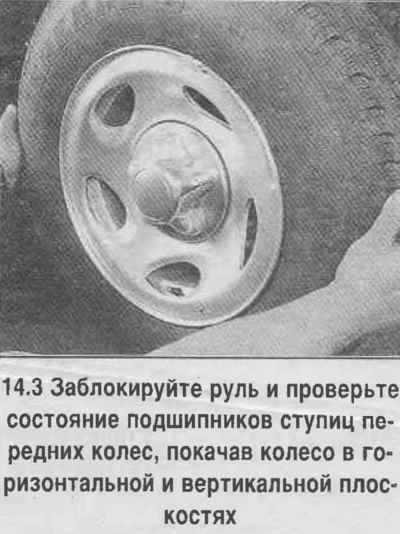
3. Check the condition of the front wheel hub bearings. Check the freedom of rotation of the wheel. There should be no jamming or extraneous sounds when the wheel rotates. Rock the wheel in a vertical plane, holding the upper and lower edges (see photo). A barely noticeable movement of the wheel is allowed; noticeable play indicates a weakening of the tension in the hub bearings.
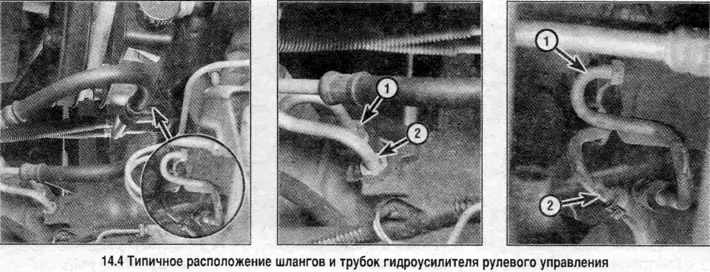
4. Working under the vehicle, check the tightness of the connections, the condition of the rubber bushings of the suspension and steering. Check the condition of the hoses and connections of the power steering (see photo). No liquid leaks are allowed.
5. Ask an assistant to turn the steering wheel in both directions until it stops, while turning the steering wheel, observe the play in the steering components, the bending of the components, and their freedom of movement (play). If significant play is detected in the steering joints, find the loose connection and repair it.
6. On all-wheel drive models, check the condition of the axle shaft covers. Covers prevent dust, dirt and water from getting into the CV joints, which cause the joints to break. It is recommended to wash the covers with a soap solution. Check for cracks in the covers and loose clamps. If any defects are found, replace the covers (see Chapter 8).
The text of the article was obtained from the website: chevyman.ru