


2. Carefully unscrew the radiator cap and wipe it thoroughly with a rag from the inside. Wipe the radiator neck, the presence of traces of corrosion or oil on the neck indicates the need to change the coolant (the presence of oil indicates a leak in the cylinder head gasket). The liquid inside the expansion tank and radiator should be relatively clean and transparent. If the liquid is stained with rust or has an oily film, drain the liquid, flush the system and fill with fresh cooling mixture in the required proportion.
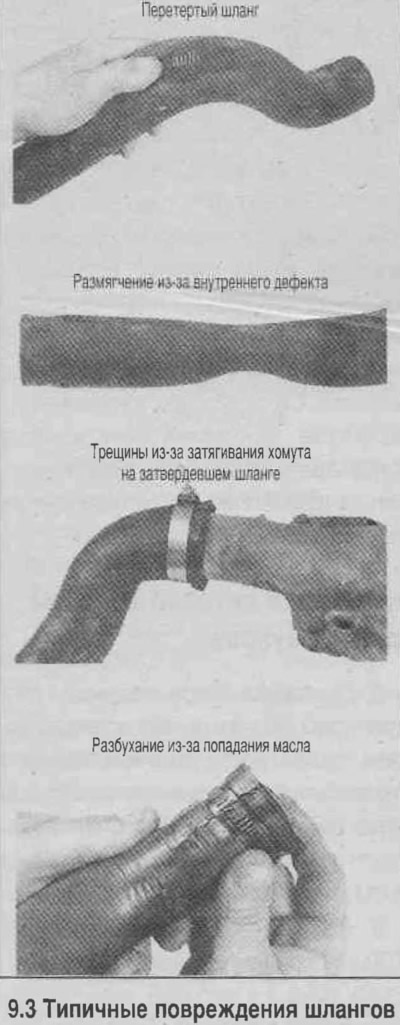
3. Carefully check the radiator and heater hoses along their entire length. If swelling, cracks or mechanical damage are detected, replace the hoses (see photo). Cracks in the hose are more visible when it is bent. Pay special attention to the clamps that secure the hoses to the cooling system components.
4. Check for signs of leaks on all parts of the cooling system (including hoses, connectors, etc.). Traces of fluid leakage usually appear as white deposits or rust. If such traces are found on system components, replace the component or gasket. Replace all cotter pins (wire) clamps on clamps with screw tightening.
5. Clean the front of the radiator from insects, leaves, etc., embedded in the grille. Be careful not to damage the radiator tubes.
[The article was borrowed from the website: ChevyMan]