


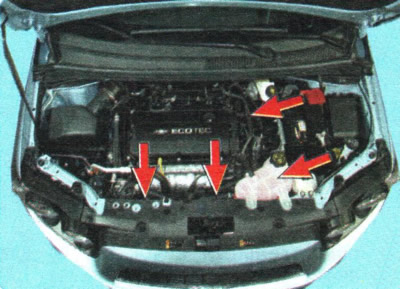
1. Open the hood and inspect the underhood space. When inspecting the engine, pay attention to the presence of coolant in the expansion tank, the integrity of the rubber hoses, and the radiator.
HELPFUL TIP: A burst hose can be temporarily repaired using adhesive tape. Reinforced adhesive tape is especially good for this purpose (for example, silver color), which can be purchased at auto stores.
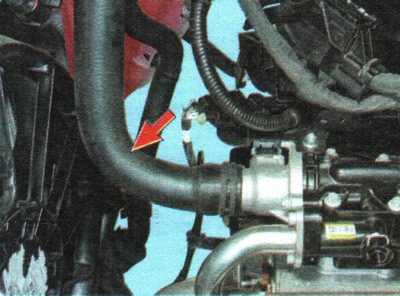
2. Inspect the connections to the radiator supply...
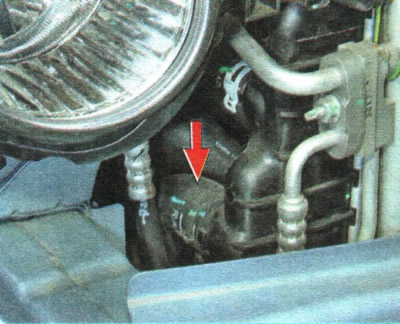
3. ...and the discharge hose.
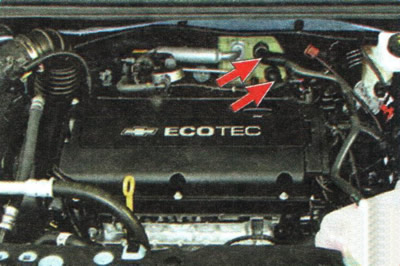
4. Inspect the connections of the cooling system hoses to the heater radiator pipes...
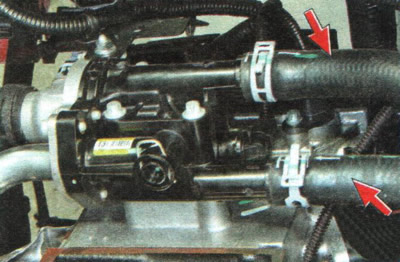
5. ...and with the thermostat module pipes.
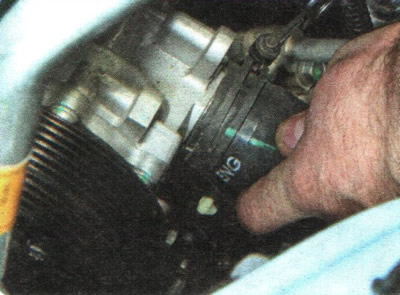
6. Check the tightness of the hose connections to the water pump...
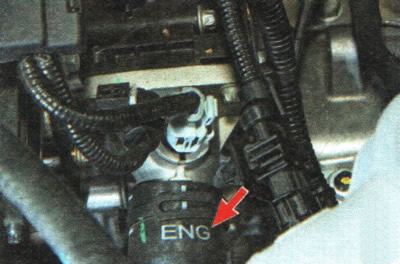
7. ...with thermostat...
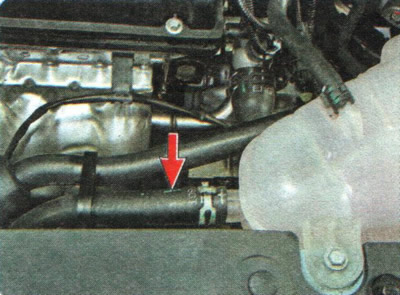
8. ...expansion tank...
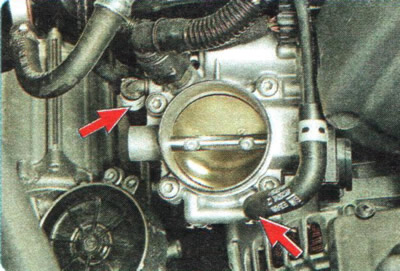
9. ...and the throttle assembly.
NOTE: Shown with air supply hose removed for clarity.
USEFUL TIPS: There are two valves installed in the expansion tank cap: inlet and outlet. The outlet valve plays a major role in ensuring the optimal engine temperature. It maintains excess pressure in the system of at least 0.12-0.13 MPa (1.2-1.3 kgf/cm²), providing an increase in the temperature at which the coolant begins to boil and preventing intensive vaporization. Unfortunately, when the valve gets stuck in the closed position due to overheating, a significant excess of excess pressure occurs - more than 0.2 MPa (2 kgf/cm²), which can lead to a rupture of the expansion tank or a tear in one of the hoses. In turn, jamming the valve in the open position leads to premature boiling of the coolant.
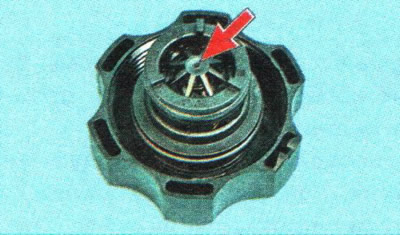
Therefore, once a year, wash the expansion tank plug with running water, and check the valve for sticking by pressing with a thin screwdriver. If in doubt, replace the plug.
[The original text can be found on the website: «ChevyMan.ru»]