
ChevyMan.ru
Mazda Mitsubishi Toyota Land Rover Honda Kia Nissan
English Русский
Български
Беларускі
Український
Српски
Hrvatski
Română
Polski
Slovenský
Magyar
|
Articles | Sitemap | Contacts |


Home   Aveo   Captiva   Cruze   Lacetti   Lanos   Niva   Tahoe   Others  
Cruze 1 (2008-2016)
  • Home
  • Cruze
  • J300 (2008-2016)
  • Power unit
  • Cooling system
  • Checking the cooling system hoses and connections

Checking the cooling system hoses and connections (Chevrolet Cruze J300)

            0

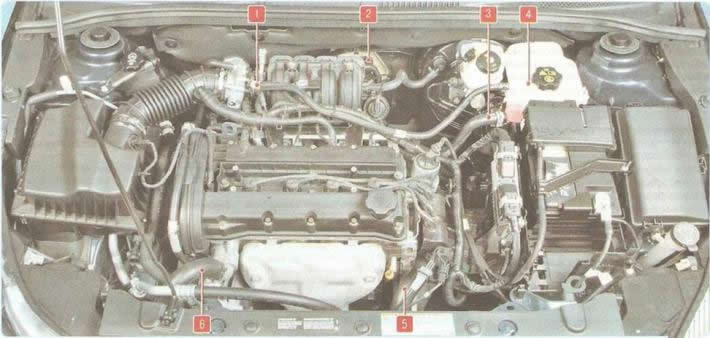
Fig. 5.16. Location of cooling system elements (for clarity, the decorative engine cover has been…
Fig. 5.16. Location of cooling system elements (for clarity, the decorative engine cover has been removed): 1 - hose connecting the throttle assembly to the expansion tank; 2 - hoses connecting the cooling system to the heater radiator pipes; 3 - expansion tank hoses; 4 - expansion tank; 5 - Upper radiator hose; 6 - hose from the thermostat housing to the radiator


1. When inspecting the engine, pay attention to the presence of coolant in the expansion tank, the integrity of the rubber hoses and radiator (Fig. 5.16).

Helpful Hint: A burst hose can be temporarily repaired using duct tape.


Reinforced adhesive tape is especially well suited for this purpose (for example, silver color), which can be purchased at auto stores.
Reinforced adhesive tape is especially well suited for this purpose (for example, silver color),…


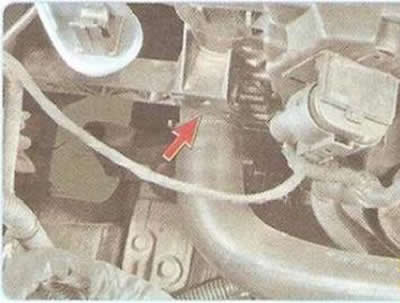
2. Inspect the connections to the radiator outlet...
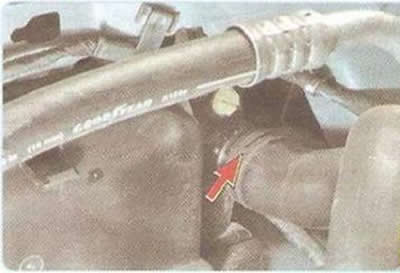


2. Inspect the connections to the radiator outlet...


3. ...and supply hoses.
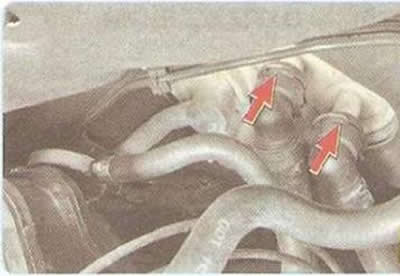
3. ...and supply hoses.


4. Inspect the connections of the cooling system hoses to the heater radiator pipes...
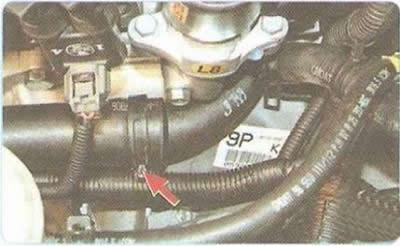
4. Inspect the connections of the cooling system hoses to the heater radiator pipes...


5. ...and also the lead-in...
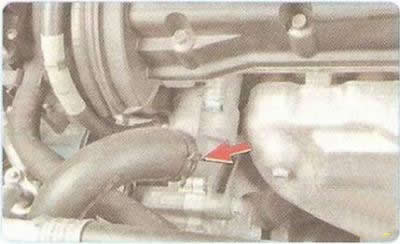
5. ...and also the lead-in...


6. ...and the outlet hoses with the cylinder head.


Helpful Hint: If you detect a leak in any of the hoses where it connects to the pipe, drain the coolant. Squeeze the clamp with pliers and slide it along the axis of the hose.
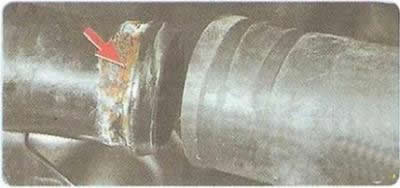

Helpful Hint: If you detect a leak in any of the hoses where it connects to the pipe, drain the…


Remove the hose from the branch pipe. As a rule, the cause of the leak is corrosion of the sealing surface of the branch pipes. Clean the damaged surface and install the hose on the sealant. After the sealant dries, fill in the coolant.
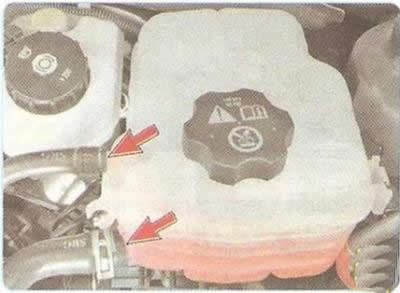
Remove the hose from the branch pipe. As a rule, the cause of the leak is corrosion of the sealing…


7. Check the hose connections to the expansion tank.

There are two valves installed in the expansion tank cap: inlet and outlet. The outlet valve plays a major role in ensuring the optimal temperature regime of the engine. It maintains excess pressure in the system of at least 0.14 MPa (1.4 kgf/cm²), ensuring an increase in the temperature at which the coolant begins to boil and preventing intensive vaporization. When the valve is jammed in the closed position, overheating causes a significant increase in excess pressure, which can lead to a rupture of the expansion tank or a tear in one of the hoses. In turn, jamming the valve in the open position leads to premature boiling of the coolant.

Therefore, once a year, wash the expansion tank plug with running water, and check the valve for sticking by pressing with a thin screwdriver. If in doubt, replace the plug.

The article was checked: Vladimir Romannikov
This article is available at russian, bulgarian, belarusian, ukrainian, serbian, croatian, romanian, polish, slovak, hungarian

Share information:

Previous articles
Cruze 1: Cooling system
Next articles

Possible malfunctions of the cooling system, their causes and methods of elimination
Features of the design of the engine cooling system
Replacing the coolant
Removal and installation the electric fan of the radiator of the cooling system
Replacing the cooling system radiator
Replacing the water pump
Removal and installation the thermostat


See similar articles on the topic of Chevrolet cars:
Checking the cooling system hoses and connections Chevrolet Aveo T300 (2012-2018)
Technical characteristics of the cooling system Chevrolet Captiva 1 (2006-2018)
Engine Cooling System Fan Wiring Diagram Chevrolet Lacetti 1 (2002-2009)
Checking the pressure in the engine fuel system Chevrolet Lanos T150 (2002-2009)
Checking the level and density of the liquid in the cooling system Chevrolet Niva 1 (2002-2016)
Checking the cooling system Chevrolet Tahoe 1 (1992-2000)
Cooling system fan and its clutch — checking the functionality Chevrolet Trailblazer 1 (2001-2008, petrol)
Link in different formats to this page


Visitor comments

No comments yet


How much will 17 + 48 =


Cruze 1 (2008-2016) 
  • General information
  • User manual
  • Troubleshooting
  • Maintenance
  • Power unit
  • Engine repair
  • Lubrication system
  • Cooling system
  • Exhaust system
  • Supply system
  • Control system
  • Transmission
  • Clutch
  • Car gearbox
  • Front wheel drives
  • Chassis
  • Front suspension
  • Rear suspension
  • Steering
  • Brake system
  • Body
  • Exterior (external elements)
  • Interior (internal elements)
  • Doors, covers and windows
  • Heating and air conditioning
  • Security systems
  • Electrical equipment
  • Equipment and devices
  • Power devices
  • Lighting and signaling
  • Electrical circuits


ChevyMan.ru © 2017-2026 · Mobile version · Feedback · Site search · Interesting to read · Sitemap: EN BG BY UA RS HR RO PL SK HU

Aveo 2003-2008 · Aveo 2006-2011 · Aveo 2012-2018 · Captiva 2006-2018 · Cruze 2008-2016 · Lacetti 2002-2009 · Lanos 2002-2009 · Niva 2002-2016 · Tahoe 1992-2000 · Tahoe 2000-2014 · Lumina 1 1989-1994 · Trailblazer 1 2001-2008 · Orlando 1 2010-2018 ·
🛡️ For your security and to improve our service, this site uses cookies. You can disable them in your browser.