


Contents: General techniques for starting an… ↧ Malfunctions in the starting system ↧ Checking the ignition system ↧ Checking the engine fuel system ↧
General techniques for starting an engine
The methods for starting an engine with a fuel injection system are the same at any temperature of the outside air and liquid in the engine cooling system.
To start, simply turn on the starter without touching the accelerator pedal. The engine management system will automatically set the fuel supply and ignition timing parameters required for starting.
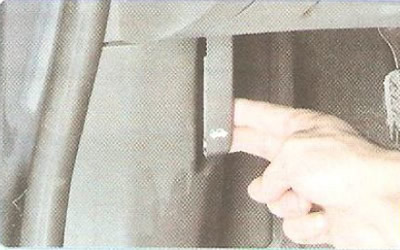
1. Open the hood by pulling the hood lock handle towards you.
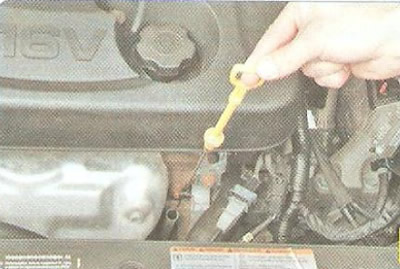
2. Measure the oil level with the dipstick.

The oil level should be between the "MAX" and "MIN" marks on the dipstick.
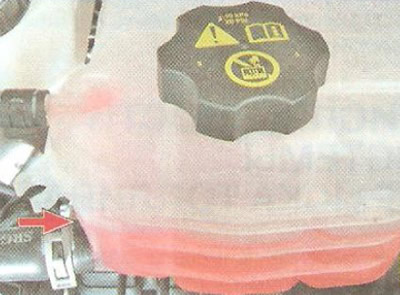
3. Check the coolant level.
4. Inspect the engine and underhood space. Pay attention to leaks of gasoline, oil, brake and cooling fluids. Make sure the electrical wiring is intact. Check the fit of the high-voltage wires in the ignition coil sockets and on the spark plugs.
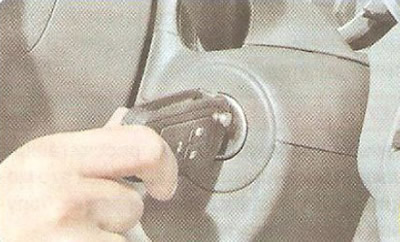
5. Without closing the hood (in case of rain or snowfall, close the hood), get behind the wheel. Turn on the ignition. Turn the key to the "starter" position and release it when the engine starts.
Helpful Hints: It is better to close the hood after the engine starts running. Before this, it is advisable to inspect the engine again, make sure there are no leaks of fuel, oil, coolant, or extraneous sounds in its operation. If for some reason the spark plugs are "flooded" during an unsuccessful start attempt, use the cylinder purge mode. To do this, press the accelerator pedal all the way down and turn on the starter. In this mode, there is no fuel supply and excess gasoline is removed from the cylinders by an air flow, while the spark plugs are dried. After purging, try starting again in the usual manner.
If the engine does not start, there are three main reasons:
- the starting system does not work;
- the ignition system does not work;
- the power supply system is not working.
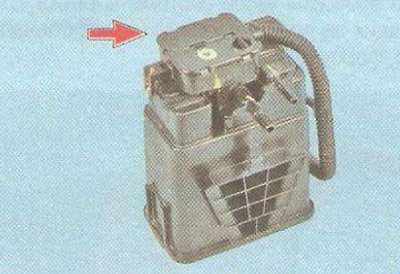
In addition to the main reasons listed above, the engine may not start if the purge valve of the adsorber is faulty or if air is sucked in through the connections of the hoses of the fuel vapor recovery system.
Malfunctions in the starting system
Malfunctions in the starting system manifest themselves in abnormal operation of the starter. The following five main starter malfunctions can be identified.
1. The starter does not turn on. Causes: faulty contact connections, break or short circuit in the starter circuits, faulty traction relay.
2. When the starter is turned on, multiple clicks are heard. Causes: faulty holding winding of the traction relay, very discharged battery, loose contact connections in the starter circuit.
3. The starter turns on, but its anchor either does not rotate or rotates slowly. Causes: discharged battery, broken contact connections, burnt contacts of the traction relay, dirty collector or worn brushes, interturn or short circuit in the windings.
4. The starter engages, its anchor rotates, but the flywheel remains stationary. Causes: loosening of the starter fastening to the clutch housing, damage to the flywheel teeth or drive gear, slippage of the freewheel clutch, breakage of the lever, drive ring or buffer spring of the starter drive.
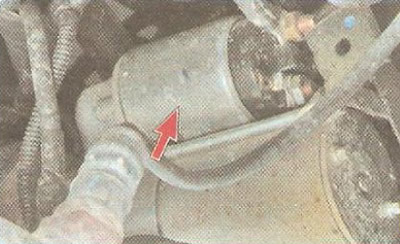
5. The starter does not turn off after starting the engine. Causes: malfunction of the starter freewheel clutch, sintering of the traction relay contacts. In case of such a malfunction, stop the engine immediately!
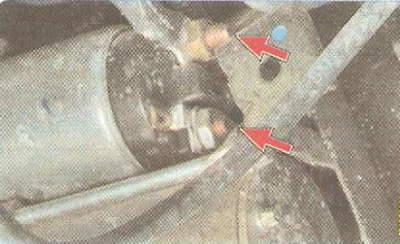
The above faults require qualified intervention at a car service center (see section. "Electrical equipment"). You can only check the battery discharge level in advance using a voltmeter (for example, as part of an autotester) and tightening the contact connections in the starter circuit.
Checking the ignition system
Warning: Your vehicle is equipped with a high-energy microprocessor-controlled ignition system (HEISS). The high-voltage wires carry approximately 25,000 volts, and although the low current is not life-threatening, a possible electric shock when testing the ignition system can lead to serious consequences. Therefore, if you handle a high-voltage wire with the ignition on, use a thick rubber glove or, at a pinch, pliers with insulated handles.
Helpful Hint: Before checking the ignition system, place the gear shift lever in neutral and leave the parking brake on.
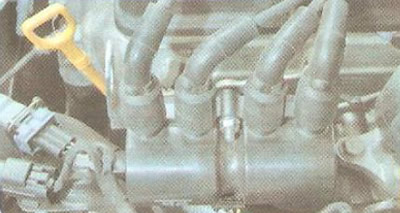
1. With the ignition off, check the integrity and fit of the high-voltage wires in the ignition coil sockets.
2. Check the serviceability of the ignition coil (see "Checking ignition coils").
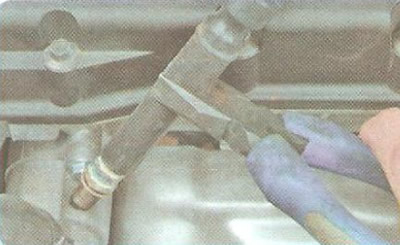
3. If the low voltage circuit of the ignition coil is OK, check for spark at the spark plugs. Remove the high voltage wire from any spark plug.
Insert a spare spark plug into the wire tip and press the metal part of it to the vehicle ground (for example, to the transport eye). Ask an assistant to turn the engine crankshaft with the starter.
Warnings: Reliable contact of the spark plug body with the "ground" is mandatory, since if an additional spark gap appears, larger than the gap between the spark plug electrodes, damage to the engine control unit or the high-voltage circuit of the ignition coil is possible.
Perform the specified check for no more than 5 seconds, so as not to damage the exhaust gas neutralizer if unburned gasoline from the engine cylinders gets into it.
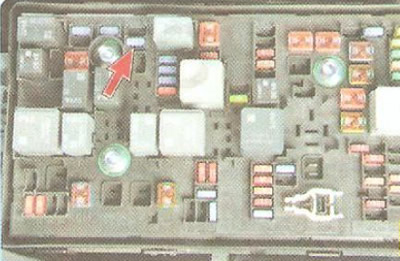
4. If there is no spark on any high-voltage wire, check whether fuse #5 has blown: (see "Location of fuses, fuse links, relays and their replacement") in the fuse box located in the engine compartment. If the fuse is blown, replace it and start the engine.
Warning: Do not install fuses with a higher current rating, as this may cause damage to electrical equipment or even fire.
5. If there is no spark, replace the high-voltage wires with new ones. You can first try to install not new ones, but tested ones, from a "working" car.
6. If after replacing the wires the spark does not appear, replace the ignition coil (see "Removal and installation ignition coils"). If there is a spark, but the engine does not start, replace the spark plugs with new ones. You can also try to install not new ones, but tested ones, from a "working" car.
7. If the engine still does not start, check the engine management system (see "Fuel injection system faults").
Checking the engine fuel system
The main indicator of the engine fuel system health is the fuel pressure in the fuel rail. But first, we recommend checking the condition of the air filter (see "Replacing the air filter element"), as this is a fairly simple procedure that does not take much time. After you have made sure that the air filter is clean, check the reliability of the electrical contacts in the wiring harness pads of the injection system units responsible for fuel supply (electric fuel pump, injectors).
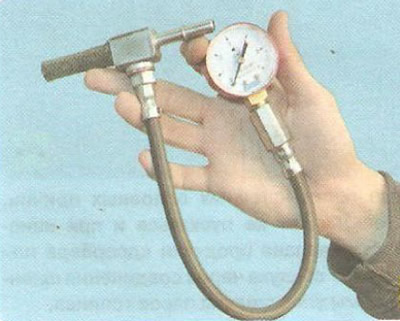
Checking the fuel pressure in the engine fuel rail is only possible if you have a pressure gauge with a set of adapters for connection to the fuel line.
1. Turn on the ignition and listen: within a few seconds you should hear the sound of the electric fuel pump. If you do not hear it, check the electric fuel pump power circuit.
Warning: Keep in mind that the electric fuel pump will not turn on if there is pressure in the fuel supply system. In other words, if you previously turned on the ignition and tried to start the engine, then a working electric fuel pump should have created pressure in the system and its failure to turn on in this case is not a malfunction.
2. The fuel pressure check procedure is described in Section 5 "Engine" (see "Checking the pressure in the engine fuel system"). When the engine is idling, the pressure in the fuel line should be about 0.3 MPa (3 kgf/cm²).
The following are possible reasons for the decrease in pressure:
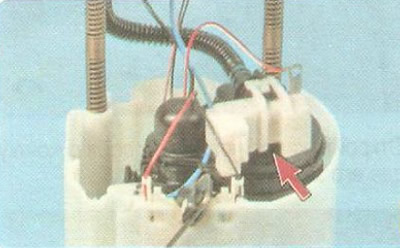
- the fuel pressure regulator is faulty (is part of the fuel module);
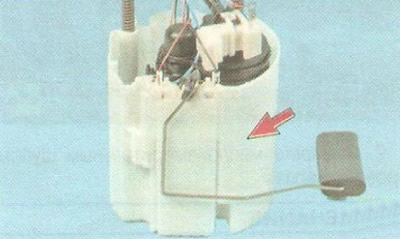
- fuel pump failure. The fuel pump module has a built-in fuel filter, so the cause of the drop in fuel pressure, in addition to the failure of the pump itself, may be a clogged filter. In both cases, the fuel pump must be removed from the vehicle for repair.
You will find methods for troubleshooting these faults in Section 5 "Engine" (see "Engine power supply system").