
ChevyMan.ru
Mazda Mitsubishi Toyota Land Rover Honda Kia Nissan
English Русский
Български
Беларускі
Український
Српски
Hrvatski
Română
Polski
Slovenský
Magyar
|
Articles | Sitemap | Contacts |


Home   Aveo   Captiva   Cruze   Lacetti   Lanos   Niva   Tahoe   Others  
Cruze 1 (2008-2016)
  • Home
  • Cruze
  • J300 (2008-2016)
  • General information
  • Troubleshooting
  • Engine misfires

Engine misfires (Chevrolet Cruze J300)

            0

When interruptions occur, the engine idles unstably, does not develop sufficient power, and consumes gasoline at an increased rate. In addition, the exhaust gas neutralizer may fail. Interruptions are usually explained by a malfunction of the injectors or electric fuel pump (see "Engine management system"), a malfunction of the spark plug of one of the cylinders, air leakage into one of the cylinders. It is necessary to find the malfunction and, if possible, eliminate it.

When interruptions occur, the engine idles unstably, does not develop sufficient power, and…


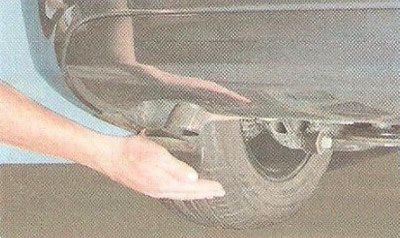
1. Start the engine and let it idle. Go to the exhaust pipe and listen to the exhaust sound. You can put your hand to the end of the exhaust pipe - this way you can feel the interruptions better. The sound should be smooth, "soft", of one tone. Pops from the exhaust pipe at regular intervals indicate that one cylinder is not working due to a faulty spark plug, no spark on it, a failure of the injector, a strong air leak in one cylinder or a significant decrease in compression in it. Pops at irregular intervals occur due to contamination of the injector nozzles, severe wear or contamination of the spark plugs. If pops occur at irregular intervals, you can try to replace the entire set of spark plugs yourself, regardless of mileage and appearance, but it is better to do this after contacting a car service for diagnostics and repair of the engine management system.


1. Start the engine and let it idle. Go to the exhaust pipe and listen to the exhaust sound. You…


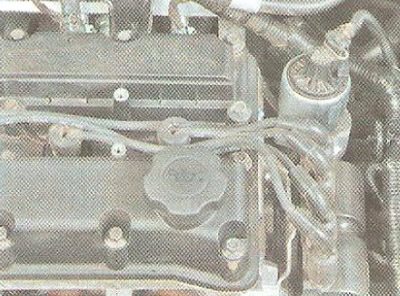
2. If the pops are regular, stop the engine and open the hood. Check the condition of the ignition system wires. The insulation of the high-voltage wires should not be damaged, and the wire tips should not be oxidized. If there is damage to the wires, replace the faulty wire.

Helpful Hint: The easiest and most effective way to check high-voltage wires is to check in the dark. Place the car in a dark place, start the engine and open the hood. Inspect the high-voltage wires. If the insulation of the wires is damaged, you will see a characteristic blue-violet spark ("northern lights"). In this case, the high-voltage wires must be replaced.

Helpful Hint: The easiest and most effective way to check high-voltage wires is to check in the…


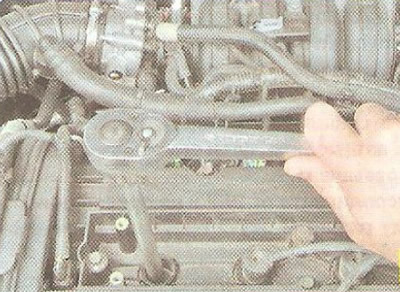
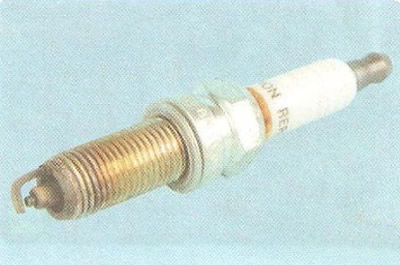
3. Remove the spark plugs (see "Replacement and maintenance of spark plugs").


3. Remove the spark plugs (see «Replacement and maintenance of spark plugs»).


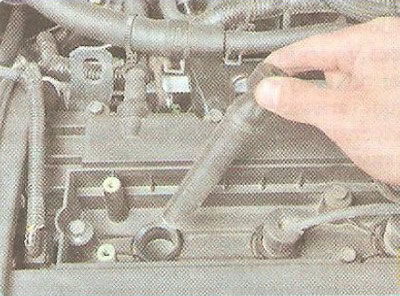
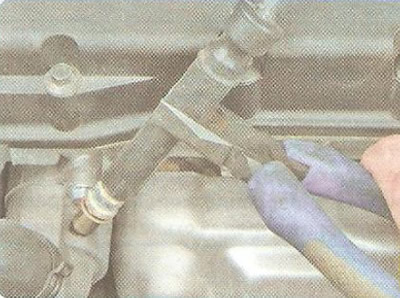
Warning: When removing high-voltage cable lugs, never pull on the cable itself. Grasp the lug directly with your hand, twist it from side to side before removing, and then pull.

Warning: When removing high-voltage cable lugs, never pull on the cable itself. Grasp the lug…


4. Inspect the spark plugs and compare their appearance with the photographs provided in the next subsection "Diagnosis of engine condition by the appearance of spark plugs". If the candle is black and wet, it can be thrown away.

5. If all the spark plugs look OK, reinstall them and reconnect the spark plug wires. Cylinder firing order 1-3-4-2, cylinder numbering (1, 2, 3, 4th) is driven from the engine crankshaft pulley.
5. If all the spark plugs look OK, reinstall them and reconnect the spark plug wires. Cylinder…


6. Take a spare spark plug. Secure it to the engine in any way.


Connect the high-voltage wire of the 1st cylinder to the spare spark plug. Start the engine. If the engine misfires do not increase, replace the spark plug in the 1st cylinder with a known good one. Put on the high-voltage wire and start the engine. If the misfires increase, repeat this procedure sequentially with all cylinders to identify the faulty spark plug.

Warnings: Reliable contact of the spark plug body with the "ground" is mandatory, since if an additional spark gap appears, larger than the gap between the spark plug electrodes, damage to the high-voltage circuit of the ignition coil or the engine control unit is possible.


Try to carry out the above-described check in the shortest possible time, since if unburned gasoline enters the catalytic converter of exhaust gases for a long time, it may fail due to overheating, since the gasoline will burn in it.


If the engine misfires are not eliminated as a result of the measures taken, check the compression in each cylinder (see "Checking the compression in the cylinders"). Normal compression is more than 1.0 MPa (10 kgf/cm²), a difference of more than 0.1 MPa (1 kgf/cm²) in one cylinder indicates the need for engine repair.

The text of the article was obtained from the website: chevyman.ru

The article was checked: Vladimir Romannikov
This article is available at russian, bulgarian, belarusian, ukrainian, serbian, croatian, romanian, polish, slovak, hungarian

Share information:

Previous articles
Cruze 1: Troubleshooting
Next articles

Idle speed is gone
Fuel injection system faults
The engine will not start
Diagnosis of engine condition by the appearance of spark plugs
The car moves in jerks
The car accelerates poorly
The engine stalled while driving
Oil pressure dropped


See similar articles on the topic of Chevrolet cars:
The engine will not start Chevrolet Aveo T300 (2012-2018)
Engine coolant temperature gauge Chevrolet Captiva 1 (2006-2018)
Starting the engine from another car's battery («jump-starting») Chevrolet Lacetti 1 (2002-2009)
Starting the engine from another car's battery (jump-starting) Chevrolet Lanos T150 (2002-2009)
Starting the engine Chevrolet Niva 1 (2002-2016)
Starting a gasoline engine Chevrolet Tahoe 1 (1992-2000)
Engine bay and underbody of the car Chevrolet Lumina 1 (1989-1994)
Link in different formats to this page


Visitor comments

No comments yet


How much will 12 + 20 =


Cruze 1 (2008-2016) 
  • General information
  • User manual
  • Troubleshooting
  • Maintenance
  • Power unit
  • Engine repair
  • Lubrication system
  • Cooling system
  • Exhaust system
  • Supply system
  • Control system
  • Transmission
  • Clutch
  • Car gearbox
  • Front wheel drives
  • Chassis
  • Front suspension
  • Rear suspension
  • Steering
  • Brake system
  • Body
  • Exterior (external elements)
  • Interior (internal elements)
  • Doors, covers and windows
  • Heating and air conditioning
  • Security systems
  • Electrical equipment
  • Equipment and devices
  • Power devices
  • Lighting and signaling
  • Electrical circuits


ChevyMan.ru © 2017-2026 · Mobile version · Feedback · Site search · Interesting to read · Sitemap: EN BG BY UA RS HR RO PL SK HU

Aveo 2003-2008 · Aveo 2006-2011 · Aveo 2012-2018 · Captiva 2006-2018 · Cruze 2008-2016 · Lacetti 2002-2009 · Lanos 2002-2009 · Niva 2002-2016 · Tahoe 1992-2000 · Tahoe 2000-2014 · Lumina 1 1989-1994 · Trailblazer 1 2001-2008 · Orlando 1 2010-2018 ·
🛡️ For your security and to improve our service, this site uses cookies. You can disable them in your browser.