


There are many reasons for the deterioration of dynamics, the main ones can be defined as follows.
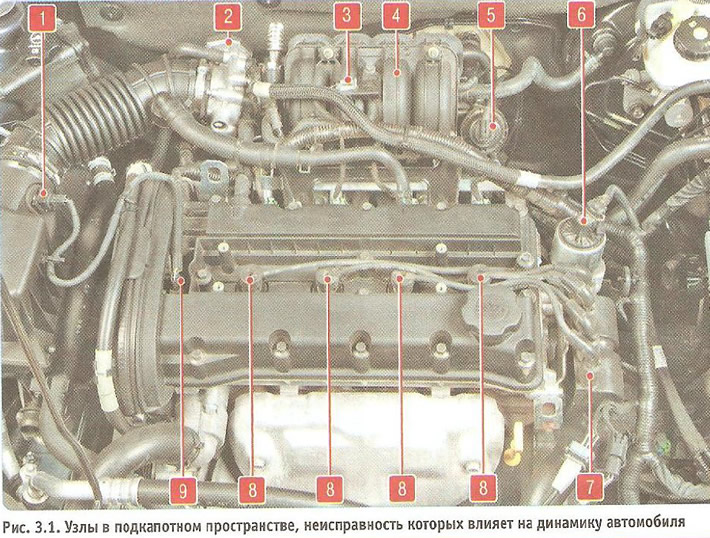
1. Engine malfunction - decreased compression in one or more cylinders, additional air is sucked into the intake manifold 4 (Fig. 3.1). Coking of the exhaust system or damage to the catalytic converter of exhaust gases (see "Exhaust system").
2. Fuel system malfunction - clogged injectors, fuel filter and fuel supply system hoses. Insufficient fuel pump supply, Use of low-quality fuel.
3. Malfunction of the ignition system - failure of the spark plug, ignition coils 7, breakdown of high-voltage wires 8 (see "Checking the ignition system").
4, Engine management system malfunction - failure of the system sensors: intake air temperature sensor 1, throttle position sensor 2, absolute pressure sensor 3, phase sensor 9 (see "Engine management system"). If any sensor fails, the electronic control unit switches to a backup program, which allows you to get to a garage or car service, but at the same time the engine power and economic characteristics are reduced.
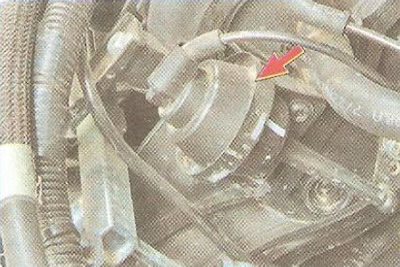
5. Malfunction of the intake manifold geometry change system - failure of electromagnetic valve 6 and pneumatic drive 5 of the system.
6. Clutch slippage due to wear or malfunction of the hydraulic drive elements that release it.
7. Malfunction of the braking system - braking of one or more wheels while driving, incorrect adjustment of the parking brake.
8. Insufficient air pressure in the tires.
9. Overloading the vehicle.
A full diagnostics of the car should be carried out by highly qualified specialists using special diagnostic equipment, so contact the car service.
You can carry out the following work yourself.
1. Check and adjust the air pressure in your tires to the correct level.
2. Check the operation of the service brake system and the parking brake. It is not necessary to remove the wheels for this. Find a flat section of the road and, in dry, windless weather, conduct a test run to determine the coasting of the car. The car must be fully fueled, with only the driver in the car. Accelerate the car to 50 km/h, equalize the speed, then turn off the gear and move by inertia until a complete stop. Perform another run in the opposite direction. The coasting should be about 500 m.
3. Check the operation of the ignition system as described above.
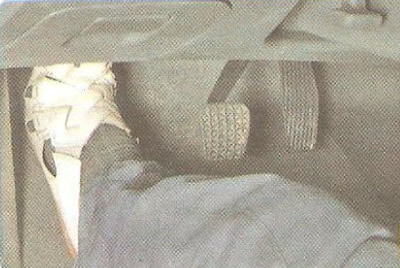
4. Check the clutch operation. The initial check is carried out on a level, obstacle-free area. Set the accelerator pedal to a high idle speed of approximately 1500 min⁻¹. Brake the car with the parking brake. Depress the clutch and engage first gear. Then begin to smoothly release the clutch pedal. If the engine stalls, the clutch is in good condition and does not slip. If the engine does not stall, the clutch is worn out and requires replacement.
Original version of the article on the website chevyman