


1. Malfunction of the engine and its systems (see "Engine malfunctions", p. 42).
2. Clutch slippage due to wear or malfunction of the hydraulic drive elements that release it.
3. Malfunction of the braking system - braking of one or more wheels while driving, incorrect adjustment of the parking brake.
4. Insufficient air pressure in the tires.
5. Overloading the vehicle.
A full diagnostic of the car should be carried out by highly qualified specialists using special diagnostic equipment, so contact a car service.
You can carry out the following work yourself.
1. Check and adjust the air pressure in your tires to the correct level.
2. Check the operation of the service brake system and the parking brake. It is not necessary to remove the wheels for this. Find a flat section of the road and, in dry, windless weather, conduct a test run to determine the coasting of the car. The car must be fully fueled, with only the driver in the car. Accelerate the car to 50 km/h, equalize the speed, then turn off the gear and move by inertia until a complete stop. Do another run in the opposite direction. The coasting should be about 500 m.
3. Check the operation of the ignition system as described above.
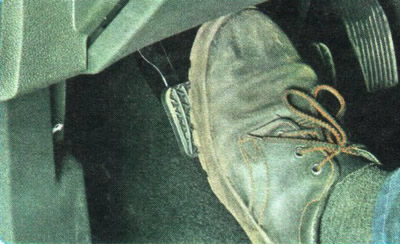
4. On a vehicle with a manual transmission, check the operation of the clutch. Perform the initial check on a level, obstacle-free area. Use the accelerator pedal to set the engine speed to high idle speed - approximately 1500 min⁻¹. Brake the vehicle with the parking brake. Depress the clutch and engage 1st gear. Then begin to smoothly release the clutch pedal. If the engine stalls, the clutch is working properly and is not slipping. If the engine does not stall, the clutch is worn out and requires replacement.