


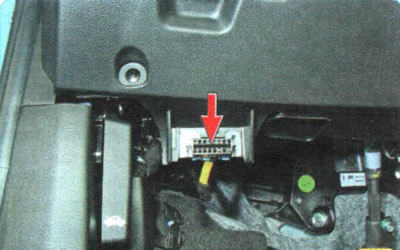
Today the situation has changed: almost all cars sold on the Russian market have a diagnostic connector of the OBD-II/EOBD standard. Not only professional diagnostic devices can be connected to such a connector, but also the simplest devices for reading fault codes (DTC). There are quite a lot of such devices on sale, and they are quite affordable for the average motorist in terms of price and ease of use. In order to feel confident on a long trip, it is better to carry one of these devices with you.
NOTE: The primary fault codes are defined by the SAE standard and are the same for all vehicle brands (see "Engine Management System Error Codes"). However, the diagnostic connectors of the American OBD-II standard and the European EOBD, although identical in shape, differ in the purpose of some terminals. Most commercially available diagnostic devices allow you to read codes from any connector, but when buying a device, you still need to clarify that it is suitable for the Chevrolet Aveo (oBD-II standard).
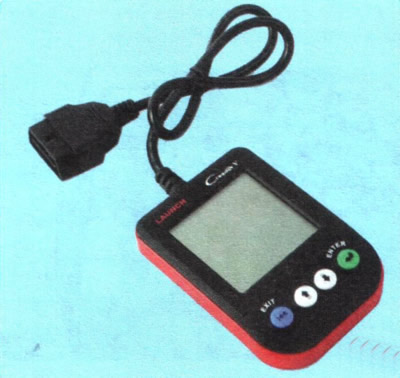
The easiest to use diagnostic devices are mini-scanners (trouble code readers). They are placed in a separate case with a display, which can display fault codes and other information about engine operation after connecting the device to the diagnostic connector. As a rule, these devices also allow you to erase the error code from the memory of the electronic engine control unit after eliminating the fault. To simplify the work, the memory of some models of mini-scanners contains a description of all OBD-II/EOBD diagnostic codes.
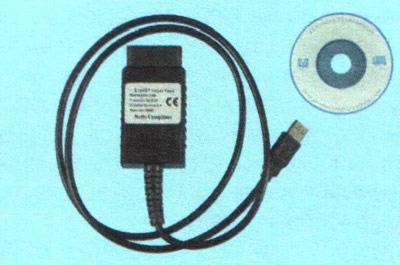
The second popular group of devices for diagnosing the electronic engine control unit are adapters of various types. Adapters allow you to connect the diagnostic connector of the car to a personal computer, tablet computer or smartphone. In this case, software from the CD supplied with the adapter is installed on the computer or smartphone. Moreover, various programs for working with this or that adapter can be found freely available on the Internet. As a rule, the capabilities of diagnostic programs for installation on computers and other mobile devices significantly exceed the capabilities of mini-scanners. Often, they allow not only to determine various engine operating parameters and analyze sensor signals, but also to interfere with the settings of the electronic engine control unit, however, the use of such functions requires special knowledge. An unprepared motorist is better off limiting himself to reading and erasing fault codes. Currently, wired adapters are being replaced by wireless ones operating via Bluetooth protocol. Such an adapter allows you to read parameters even when the car is moving.
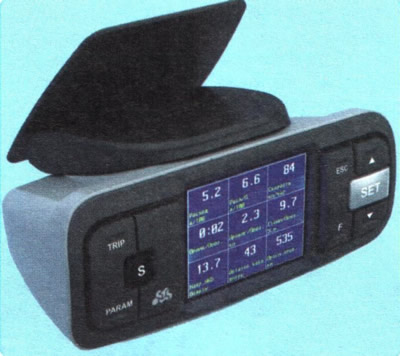
Many on-board computers also have the ability to read and erase fault codes stored in the memory of the electronic engine control unit. Usually, the on-board computer is installed on the windshield or dashboard, the computer's wire harness is passed under the dashboard, and the connector of the harness is connected to the diagnostic connector. In addition to engine operating parameters, the on-board computer display can display information about the trip: its duration, average and current fuel consumption, etc.
[The article is reprinted from the website: ChevyMan]