


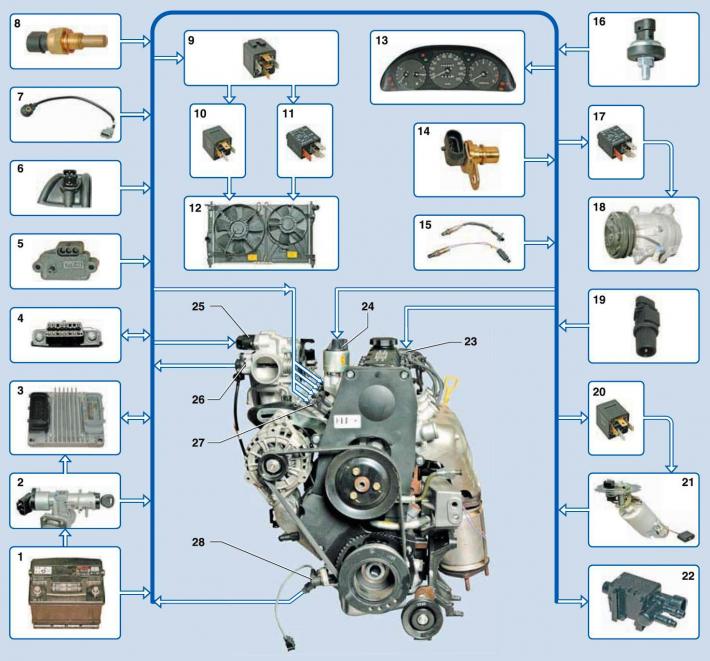
Electronic engine management system diagram: 1 - battery; 2 - ignition switch; 3 — electronic engine control unit (ECU); 4 — diagnostic socket; 5 — absolute air pressure sensor in the intake manifold; 6 - intake manifold air temperature sensor; 7 - knock sensor; 8 - coolant temperature sensor; 9 — control relay of cooling system fans; 10 — main fan motor relay; 11 — additional fan motor relay; 12 — electric fans of the cooling system; 13 — instrument cluster; 14 — phase sensor; 15 - diagnostic and control oxygen concentration sensors; 16 - Rough Road Sensor; 17 — air conditioning compressor relay; 18 — air conditioning compressor; 19 - vehicle speed sensor; 20 — fuel pump relay; 21 — fuel module; 22 — electromagnetic valve for purging the adsorber; 23 - ignition coil; 24 — exhaust gas recirculation valve; 25 — idle speed control; 26 - throttle position sensor; 27 — nozzle; 28 - crankshaft position sensor
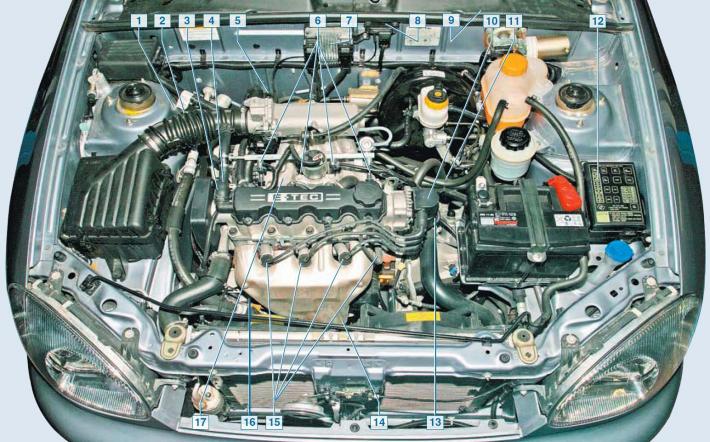
Elements of the electronic engine management system: 1* — rough road sensor; 2* — intake air temperature sensor; 3* — phase sensor; 4* — crankshaft position sensor; 5* — throttle position sensor; 6 — injectors; 7 — electronic control unit; 8 - absolute air pressure sensor; 9* — diagnostic socket; 10 — ignition coil; 11* — speed sensor; 12 — relay and fuse mounting block; 13* — coolant temperature sensor; 14* — diagnostic oxygen concentration sensor; 15 - spark plugs; 16 - oxygen concentration control sensor; 17* — knock sensor
*Item not visible in photo.
The engine is equipped with a distributed phased fuel injection system: gasoline is supplied by injectors to each cylinder in turn in accordance with the engine operating order.
The engine management system consists of an electronic control unit (ECU), sensors for engine and vehicle operating parameters, and actuators.
The ECU is a special-purpose mini-computer.
It consists of random access memory (RAM) and programmable read-only memory (PROM).
The ECU is located in the engine compartment and is attached to the front panel using a bracket.
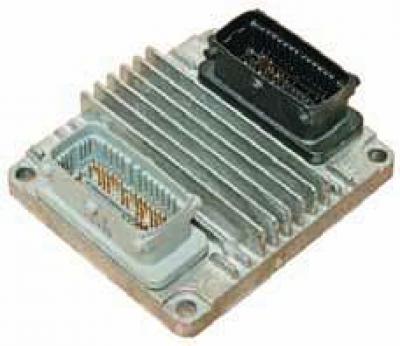
Electronic engine control unit
In addition to supplying voltage to the sensors and controlling actuators, the ECU performs diagnostic functions of the engine management system (on-board diagnostic system) — determines the presence of faults in the elements of the system, turns on the fault indicator in the instrument cluster and stores fault codes in its memory.
If a malfunction is detected, in order to avoid negative consequences (burnout of pistons due to detonation, damage to the catalytic converter in the event of misfires of the fuel-air mixture, exceeding the toxicity limits of exhaust gases, etc.), The ECU switches the system to emergency operating modes.
Their essence is that when any sensor or its circuit fails, the engine control unit uses replacement data stored in its memory.
The engine management system malfunction indicator is located in the instrument cluster.
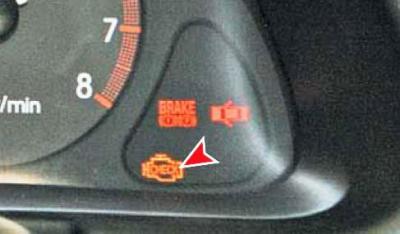
Engine management system malfunction indicator in the instrument cluster
If the system is working properly, then when the ignition is turned on, the indicator should light up - thus, the ECU checks the serviceability of the indicator and the control circuit.
After starting the engine, the indicator should go out if the ECU memory does not contain the conditions for its activation.
When the indicator lights up while the engine is running, it informs the driver that the on-board diagnostic system has detected a malfunction and that further movement of the vehicle occurs in emergency mode.
This may worsen some engine performance parameters (power, responsiveness, economy), but driving with such faults is possible, and the car can drive to the service station on its own.
The only exception is the crankshaft position sensor; if it is faulty, the engine cannot run.
If the malfunction is temporary, the ECU will turn off the indicator after 10 seconds, provided that there are no other fault codes in the unit's memory that require the indicator to be turned on.
Error codes (even if the indicator goes out) remain in the unit's memory and can be read using a special diagnostic device connected to the diagnostic connector.
The diagnostic connector is attached to the inside of the instrument panel console to the right of the gas pedal.
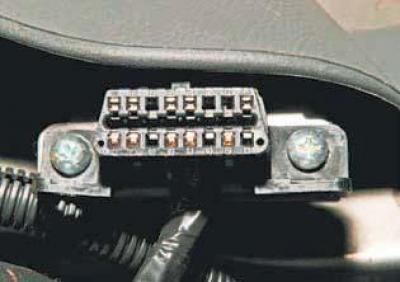
Diagnostic connector
When clearing fault codes from the electronic unit memory using a diagnostic tool or by disconnecting the battery (for at least 10 sec) the indicator goes out.
The control system sensors provide the ECU with information about the engine and vehicle operating parameters, based on which it calculates the moment, duration and order of opening of the fuel injectors, the moment and order of spark formation.
The crankshaft position sensor is mounted on the oil pump housing.
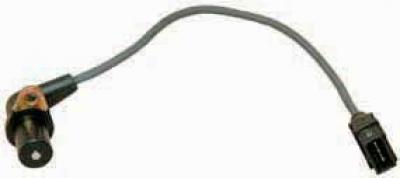
Crankshaft position sensor
The sensor provides the ECU with information about the rotation speed and angular position of the crankshaft.
The sensor is an inductive type and reacts to the passage of the teeth of the drive disk, which is connected to the auxiliary drive pulley, near its core.
The teeth are located on the disc at intervals of 6°.
To determine the position of the crankshaft, two of the 60 teeth are cut off, forming a wide groove.
When this groove passes the sensor, a so-called "reference" synchronization pulse is generated in it.
The installation gap between the sensor core and the tops of the teeth is approximately 1.3 mm.
When the master disk rotates, the magnetic flux in the sensor's magnetic circuit changes - AC voltage pulses are induced in its winding.
Based on the number and frequency of these pulses, the ECU calculates the phase and duration of the control pulses for the injectors and ignition coil.
The phase sensor is mounted on the rear wall of the camshaft bearing housing next to the camshaft pulley.
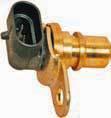
Phase sensor
The ECU uses the phase sensor signal to coordinate fuel injection processes in accordance with the cylinder firing order.
The operating principle of the sensor is based on the Hall effect.
The sensor reacts to the passage of a tide made on the toe of the camshaft.
Depending on the angular position of the shaft, the sensor sends rectangular voltage pulses to the control unit.
Based on the output signals from the crankshaft and camshaft position sensors, the control unit sets the ignition timing and the cylinder to which fuel should be supplied.
If the phase sensor fails, the ECU switches to unphased fuel injection mode.
The coolant temperature sensor is installed at the left end of the cylinder head.
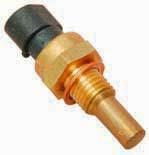
Coolant temperature sensor
The sensor is a thermistor with a negative temperature coefficient, i.e. its resistance decreases as the temperature increases.
The ECU supplies a stabilized voltage of +5.0 V to the sensor via a resistor and, based on the voltage drop on the sensor, calculates the coolant temperature, the values of which are used to adjust the fuel supply and ignition timing.
The throttle position sensor is mounted on the throttle shaft and is a potentiometric type resistor.
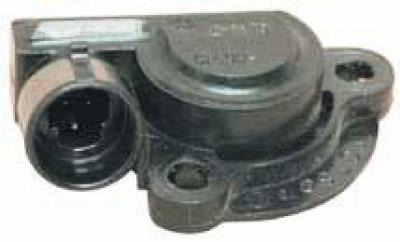
Throttle position sensor
A stabilized voltage of +5.0 V is supplied to one end of its resistive element from the ECU, and the other is connected to the ground of the electronic unit.
From the third terminal of the potentiometer (slider), which is connected to the throttle valve axis, a signal is taken for the control unit.
By measuring the output voltage of the sensor signal, the ECU determines the current position of the throttle valve to calculate the ignition timing and fuel injection pulse duration, as well as to control the idle speed controller.
Absolute pressure sensor (rarefaction) the air in the intake manifold is located in the engine compartment on the front panel and is connected to the intake manifold by a tube.

Manifold Absolute Pressure Sensor
The sensor evaluates changes in air pressure in the intake manifold, which depend on the engine load, and converts them into output voltage signals.
Based on these signals, the ECU determines the amount of air entering the engine and calculates the required amount of fuel.
To deliver more fuel at a higher throttle opening angle (the vacuum in the intake manifold is insignificant) The ECU increases the operating time of the fuel injectors.
When the throttle opening angle decreases, the vacuum in the intake manifold increases and the ECU, processing the signal, reduces the operating time of the injectors.
The manifold absolute pressure sensor allows the ECU to make adjustments to engine operation when atmospheric pressure changes depending on altitude.
The air temperature sensor in the intake manifold is mounted in the corrugated air supply hose to the throttle assembly.
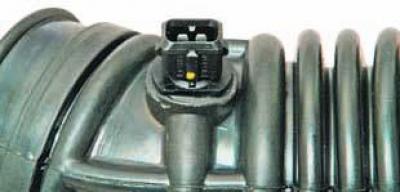
Intake manifold air temperature sensor
The sensor is a thermistor (with the same electrical characteristics as the coolant temperature sensor), which changes its resistance depending on the air temperature.
The ECU takes into account the information received from the sensor when calculating the air flow to correct the fuel supply and ignition timing.
The knock sensor is mounted on the rear wall of the cylinder block in the area of the 3rd cylinder.
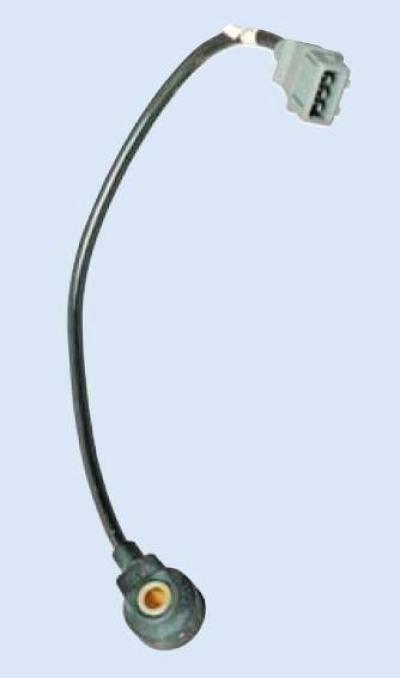
Knock sensor
The piezoelectric ceramic sensor element generates an alternating current voltage signal, the amplitude and frequency of which correspond to the vibration parameters of the engine cylinder block wall.
When detonation occurs, the amplitude of vibrations of a certain frequency increases.
In this case, to suppress detonation, the ECU adjusts the ignition timing towards a later point.
The oxygen concentration control sensor is installed in the exhaust manifold.
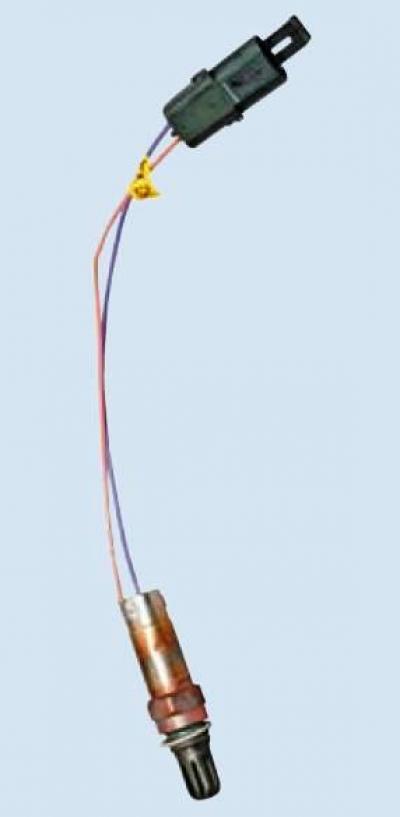
Oxygen concentration control sensor
The sensor is a galvanic current source, the output voltage of which depends on the oxygen concentration in the environment surrounding the sensor.
Based on the signal from the sensor about the presence of oxygen in the exhaust gases, the ECU adjusts the fuel supply by the injectors so that the composition of the working mixture is optimal for the efficient operation of the catalytic converter of the exhaust gases.
Oxygen contained in the exhaust gases, after entering into a chemical reaction with the sensor electrodes, creates a potential difference at the sensor output, varying from approximately 0.1 V to 0.9 V.
Low signal level corresponds to a lean mixture (presence of oxygen), and a high level is rich (oxygen is absent).
When the sensor is in a cold state, there is no output signal from the sensor, since its internal resistance in this state is very high - several MOhms (the engine management system operates in open loop).
For normal operation, the oxygen concentration sensor must have a temperature of at least 300°C.
As the sensor warms up, its resistance drops and it begins to generate an output signal.
Then the ECU begins to take into account the signal from the oxygen concentration sensor to control the fuel supply in closed loop mode.
The oxygen concentration sensor may be poisoned by the use of leaded gasoline.
The presence of lead compounds in the exhaust gases can lead to failure of the sensor.
In the event of failure of the sensor or its circuits, the ECU controls the fuel supply in an open circuit.
The oxygen concentration diagnostic sensor is installed after the catalytic converter in the intermediate pipe of the exhaust system.
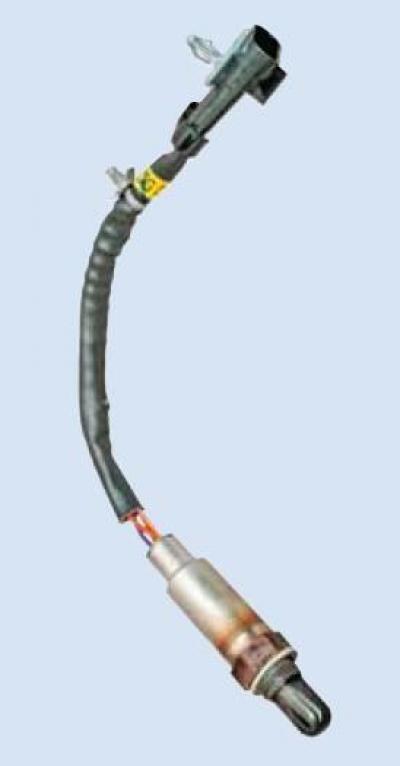
Oxygen Concentration Diagnostic Sensor
The operating principle of the diagnostic sensor is the same as that of the control oxygen concentration sensor.
To quickly warm up the sensor after starting the engine, a heating element is built into the sensor, which is controlled by the ECU.
The signal generated by the sensor indicates the presence of oxygen in the exhaust gases after the catalytic converter.
If the catalytic converter is operating normally, the diagnostic sensor readings will differ significantly from the control sensor readings.
The vehicle speed sensor is mounted on the top of the gearbox housing, next to the gear shift mechanism.
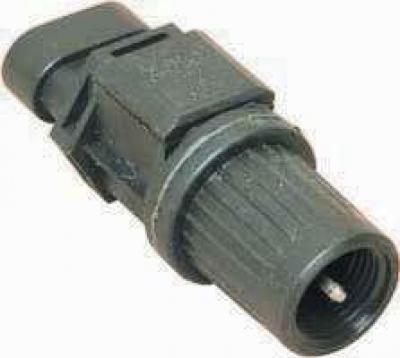
Vehicle speed sensor
Its operating principle is based on the Hall effect.
The sensor drive is installed in the gearbox and rotates at a frequency proportional to the rotation frequency of the front wheels of the vehicle.
The sensor sends rectangular voltage pulses to the ECU (lower level – no more than 1.0 V, upper level – no less than 5.0 V).
These same pulses are used to operate the car's speedometer.
The number of sensor pulses is proportional to the distance traveled by the vehicle.
The ECU determines the vehicle speed based on the pulse frequency.
The rough road sensor is installed in the engine compartment on the right mudguard cup.
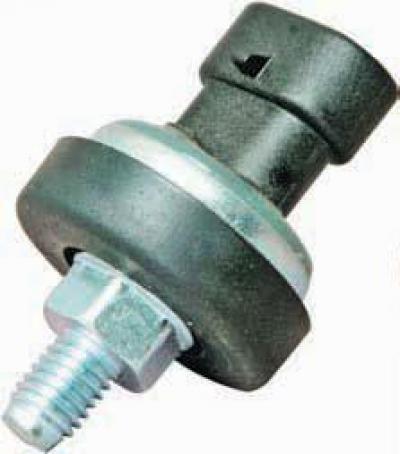
Rough Road Sensor
The sensor is designed to measure the amplitude of body vibrations.
The principle of its operation is based on the piezoelectric effect.
The variable load on the transmission that occurs when driving on uneven roads affects the angular speed of the engine crankshaft.
In this case, the fluctuations in the crankshaft rotation frequency are similar to similar fluctuations that occur when the fuel-air mixture misfires in the engine cylinders.
In this case, to prevent false misfire detection, the ECU disables this function of the on-board diagnostic system when the sensor signal exceeds a certain threshold.
The ignition system is part of the engine management system and consists of an ignition coil, high-voltage wires and spark plugs.
During operation, the system does not require maintenance or adjustment, except for replacing the spark plugs.
Current control controls the fuel supply to the injectors so that the composition of the working mixture is optimal for the efficient operation of the catalytic converter of exhaust gases.
Oxygen contained in the exhaust gases, after entering into a chemical reaction with the sensor electrodes, creates a potential difference at the sensor output, varying from approximately 0.1 V to 0.9 V.
Low signal level corresponds to a lean mixture (presence of oxygen), and a high level is rich (oxygen is absent).
When the sensor is in a cold state, there is no output signal from the sensor, since its internal resistance in this state is very high - several MOhms (the engine management system operates in open loop).
For normal operation, the oxygen concentration sensor must have a temperature of at least 300°C.
As the sensor warms up, its resistance drops and it begins to generate an output signal.
Then the ECU begins to take into account the signal from the oxygen concentration sensor to control the fuel supply in closed loop mode.
The oxygen concentration sensor may be poisoned by the use of leaded gasoline.
The presence of lead compounds in the exhaust gases can lead to failure of the sensor.
In the event of failure of the sensor or its circuits, the ECU controls the fuel supply in an open circuit.
The oxygen concentration diagnostic sensor is installed after the catalytic converter in the intermediate pipe of the exhaust system.
The operating principle of the diagnostic sensor is the same as that of the control oxygen concentration sensor.
To quickly warm up the sensor after starting the engine, a heating element is built into the sensor, which is controlled by the ECU.
The signal generated by the sensor indicates the presence of oxygen in the exhaust gases after the catalytic converter.
If the catalytic converter is operating normally, the diagnostic sensor readings will differ significantly from the control sensor readings.
The vehicle speed sensor is mounted on the top of the gearbox housing, next to the gear shift mechanism.
Its operating principle is based on the Hall effect.
The sensor drive is installed in the gearbox and rotates at a frequency proportional to the rotation frequency of the front wheels of the vehicle.
The sensor sends rectangular voltage pulses to the ECU (lower level – no more than 1.0 V, upper level – no less than 5.0 V).
These same pulses are used to operate the car's speedometer.
The number of sensor pulses is proportional to the distance traveled by the vehicle.
The ECU determines the vehicle speed based on the pulse frequency.
The rough road sensor is installed in the engine compartment on the right mudguard cup.
The sensor is designed to measure the amplitude of body vibrations.
The principle of its operation is based on the piezoelectric effect.
The variable load on the transmission that occurs when driving on uneven roads affects the angular speed of the engine crankshaft.
In this case, the fluctuations in the crankshaft rotation frequency are similar to similar fluctuations that occur when the fuel-air mixture misfires in the engine cylinders.
In this case, to prevent false misfire detection, the ECU disables this function of the on-board diagnostic system when the sensor signal exceeds a certain threshold.
The ignition system is part of the engine management system and consists of an ignition coil, high-voltage wires and spark plugs.
During operation, the system does not require maintenance or adjustment, except for replacing the spark plugs.
The current in the primary windings of the coil is controlled by the ECU depending on the engine operating mode.
To the conclusions of secondary (high voltage) the spark plug wires are connected to the coil windings: to one winding - the 1st and 4th cylinders, to the other - the 2nd and 3rd.
Thus, the spark simultaneously jumps in two cylinders (1-4 or 2-3) - in one at the end of the compression stroke (working spark), in the other - at the end of the exhaust stroke (idle).
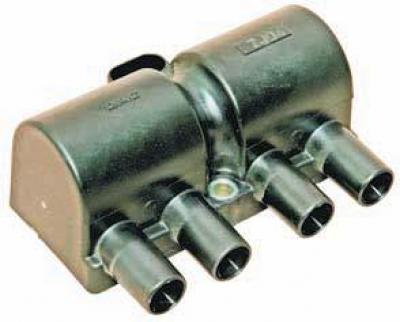
Ignition coil
The ignition coil is non-separable and is replaced when it fails.
Spark plugs CHAMPION RN9YC, NGK BPR6ES or similar from other manufacturers.
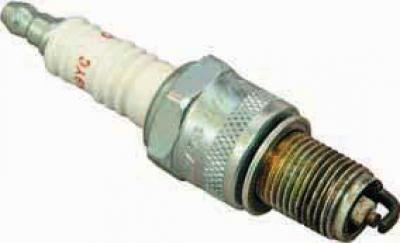
Spark plug
The gap between the spark plug electrodes is 0.7–0.8 mm.
The hexagon size for the key is 21 mm.
When the ignition is turned on, the ECU powers the fuel pump relay for 2 seconds to create the required pressure in the fuel rail.
If the starter does not start turning the crankshaft during this time, the ECU switches off the relay and switches it on again after cranking starts.
When the engine is running, the mixture composition is regulated by the duration of the control pulse supplied to the injectors (the longer the pulse, the more fuel is supplied).
If there is no signal from the crankshaft position sensor (the shaft does not rotate, the sensor or its circuits are faulty) The ECU cuts off the fuel supply to the cylinders.
The fuel supply is also cut off when the ignition is turned off, which prevents spontaneous combustion of the mixture in the engine cylinders.
During engine braking (with the gear and clutch engaged), when the throttle valve is fully closed and the engine speed is high, fuel injection is not performed to reduce exhaust toxicity.
When the voltage in the vehicle's on-board network drops, the ECU increases the time it takes for energy to accumulate in the ignition coil (for reliable ignition of the combustible mixture) and injection pulse duration (to compensate for the increase in the injector opening time).
As the voltage in the on-board network increases, the time it takes for energy to accumulate in the ignition coil and the duration of the pulse supplied to the injectors decreases.
The ECU, via a relay, controls the activation of the cooling system fan (fans - if there is an air conditioner) depending on the engine temperature and crankshaft speed.
When servicing or repairing the engine management system, always turn off the ignition (in some cases, it is necessary to disconnect the wire terminal from the negative terminal of the battery).
When performing welding work on the vehicle, disconnect the engine management system wiring harnesses from the ECU.
Before drying the car in a drying chamber (after painting) remove the ECU.
With the engine running, do not disconnect or adjust the engine management system wiring harness connectors or the battery terminal wire terminals.
Do not start the engine if the battery terminals and ground cable terminals on the engine are loose or dirty.