


General questions
Caution: Air conditioning hose replacement should be performed by a General Motors dealer or an air conditioning service shop that has equipment that can safely depressurize the system. Never remove air conditioning system parts or hoses (see illustration), until the system is depressurized.
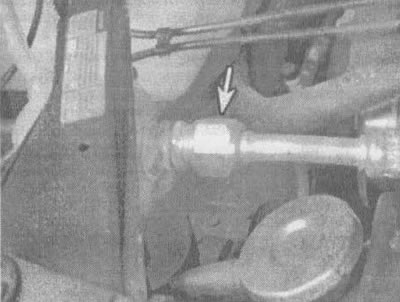
10.1 Air conditioning hoses are easily identified by the metal tubes used at each connection point (one of them is indicated by an arrow). Do not disconnect or accidentally damage these hoses (the system is under high pressure)
2. High temperatures under the hood can cause deterioration of rubber and plastic hoses used in the engine, auxiliary systems and exhaust system. Hoses should be checked periodically for cracks, loose clamps, hardened materials and leaks. Information regarding cooling system hoses can be found in section 9.
3. Some (but not all) hoses are secured to the fittings with clamps. Where clamps are used, check and ensure that they have not lost tension, preventing leakage. If clamps are not used, make sure the hose has not expanded or hardened where it fits over the fitting.
Vacuum hoses
4. Often vacuum hoses, especially those used in exhaust systems, are color coded or have colored stripes molded into each hose. Different systems require hoses with different wall thicknesses, different compressive strengths and different temperature resistances. When replacing hoses, make sure the new hoses are made of the same material as the old ones.
5. Often the only effective way to check a hose is to remove it from the vehicle. If you are removing more than one hose, be sure to mark them and their fittings so that you can reinstall them correctly.
6. When checking the vacuum hoses, be sure to include all plastic tees in the check. Check the fittings for cracks and inspect the hoses where they meet the fitting, looking for any deformation that could cause a leak.
7. To locate vacuum leaks, you can use a small piece of 1/4-inch inside diameter vacuum tubing as a stethoscope. Place one end of the tubing against your ear and touch the vacuum hoses and fittings, listening for the hissing sounds that indicate an air leak.
Caution: When performing a vacuum hose stethoscope check, be careful not to allow your body or the hose to come into contact with moving engine parts such as drive belts, fan, etc.
Fuel hose
Warning: Gasoline is highly flammable, so take all necessary precautions when working with any part of the fuel system. Do not smoke or leave open flames or unprotected lamps in the work area, do not work in the garage with devices and appliances powered by natural gas (such as titanium or dryer), if there is a burning fuse there. If you spill any gasoline on your skin, wash it off immediately with soap and water. When performing any work on the fuel system, wear safety glasses and have a fire extinguisher handy. The fuel system is under pressure, so if any lines need to be disconnected, the system must first be depressurized (for more information, see chapter 4).
8. Check all rubber fuel hoses for wear and tear. Check especially for cracks where the hose bends and inspect the connection points with the pipes, such as where the hoses attach to the fuel filter and fuel injection unit.
9. To replace the fuel hose, you should use a high quality fuel hose, usually type "Fluroelastomer" (what is indicated on the hose). Do not, under any circumstances, use non-reinforced vacuum line, plastic tubing, or water tubing as fuel hoses.
10. Spring type clamps are usually used on fuel lines. Over time, they lose their elasticity, so whenever the hose is replaced, they are replaced with clamps with a screw.
Metal pipelines
11. Sections of steel pipe are often used as a fuel line between the fuel pump and the fuel injection unit. Check them carefully for cracks, creases and other defects.
12. If a section of metal piping is to be replaced, only seamless steel piping may be used as copper and aluminum are not strong enough to withstand vibration during engine operation.
13. Check the metal brake pipes where they enter the master cylinder and ABS unit (if it exists) for cracks in pipelines and loosely connected pipes. Any signs of brake fluid leakage require immediate attention and a thorough inspection of the brake system.
The article was reprinted from the website: «ChevyMan.ru»