


Warning: Gasoline is highly flammable, so take all necessary precautions when working with any part of the fuel system. Do not smoke or leave open flames or unprotected lamps in the workplace, do not work in the garage with devices and devices powered by natural gas (such as titanium or dryer), if there is a burning fuse there. If you spill gasoline on your skin, wash it off immediately with soap and water. When performing any work on the fuel system, wear safety glasses and have a special fire extinguisher for gasoline on hand.
1. Depressurize the fuel system (see chapter 4, section 2).
2. Raise the vehicle and support it securely on stands.
3. Referring to the illustrations provided here, replace the fuel filter (see illustrations).
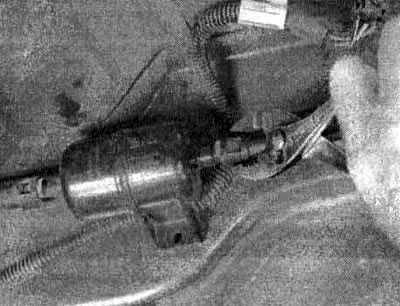
25.3a. Grasp each of the fuel line fittings on the fuel filter and rotate them 1/4 turn to remove any debris |
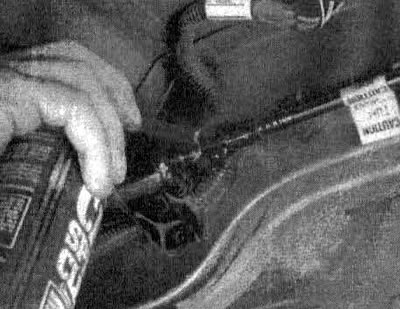
25.3b. To blow or wash away dirt from the fitting, use compressed air or an aerosol carburetor cleaner |
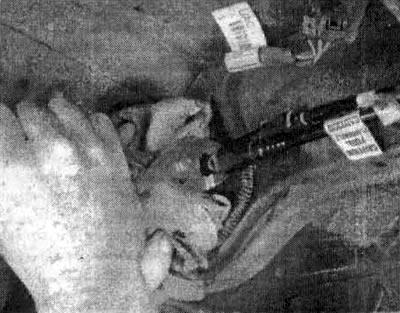
25. Sound. Wrap a rag around the fuel hose (otherwise the residual pressure in the fuel line will escape). Using pliers, carefully press the white plastic tabs and separate the fuel lines from the filter |
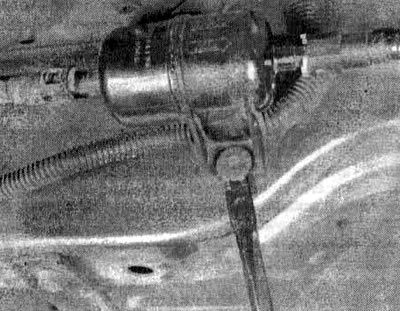
25.3g. Using a large screwdriver to remove the plastic rivets (on early models; on later ones the filter is held in place by bolts), remove the filter |
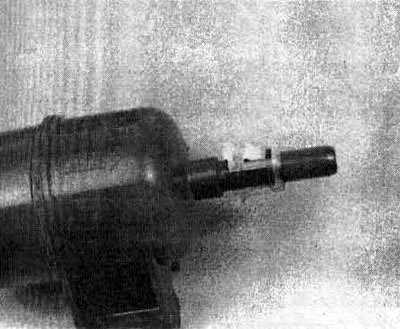
25. Zd. Press the quick release clips into place on the new filter |
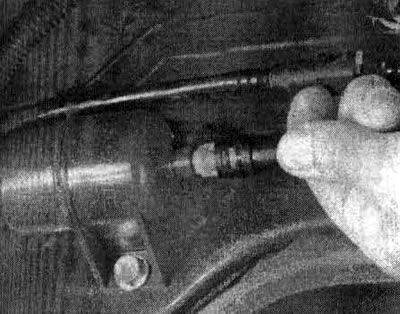
25. Ze. Install a new filter (so that the arrow points in the direction of the engine), then push the fuel hoses into the fuel filter until the quick release clamps snap into place |
[For details, visit the website: «chevyman»]