


Contents: Starting the engine with the… ↧ Parking ↧
Before you set off, check:
- Tire pressure and condition.
- Engine oil level and fluid levels.
- Glass, mirrors, exterior lighting and license plates must be clean, free of snow and ice, and in working order.
- Correct position of seats, seat belts and mirrors.
- Check the brakes for proper operation at low speed, especially if the brake pads are wet.
Starting the engine with the ignition key
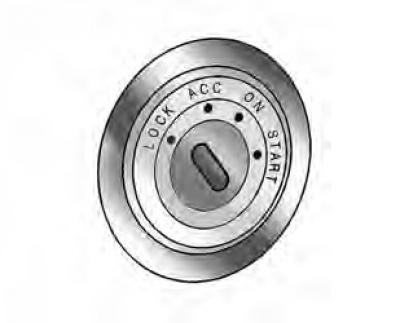
- Turn the key to the ACC position, turn the steering wheel slightly to release the steering wheel lock.
- Manual transmission: depress the clutch.
- Automatic transmission: Move the selector lever to position P or N.
- Do not press the accelerator pedal.
- Diesel engine: To preheat, turn the key to the ON position, wait until the indicator goes out
 .
. - Turn the key to the START position while depressing the clutch and brake pedals; release the pedals after the engine starts.
Before restarting or to turn off the engine, return the key to the LOCK position.
Parking
Do not leave the vehicle on a surface that can easily catch fire. In this case, the high temperature of the vehicle's exhaust system may cause a fire.
When applying the parking brake, do not press the release button. When going up or down hills, apply the parking brake as hard as possible. To reduce the force required to apply the parking brake, press the brake pedal at the same time.
Turn off the engine and ignition. Turn the steering wheel until the lock engages.
If the car is on a level surface or an incline, before turning off the ignition, set the selector to first gear or to the P position. When stopped on an incline, turn the front wheels away from the curb. If the car is on a downhill slope, before turning off the ignition, engage reverse gear. Turn the front wheels toward the curb.
Close the windows.
Lock your car.
The original article can be found on the resource: «chevyman»