


Protect rubber parts, bushings and protective coatings from solvents when washing.
Springs. Check the elastic characteristics of the spring at the control points (figure 4-14), having previously compressed it until the turns touch.
Install springs of the same class on the rear suspension as those installed on the front suspension. In exceptional cases, when class "A" springs are installed on the front suspension, and there are no springs of this class for the rear suspension, then class "B" springs may be installed on the rear suspension. However, class "A" springs may not be installed on the rear suspension if class "B" springs are installed on the front suspension.
Check for spring deformation. If the spring elasticity does not correspond to the data in Figure 4-14 or deformations may cause the spring to malfunction, replace it.
Check the condition of the rubber spring support pads; if necessary, replace them with new ones.
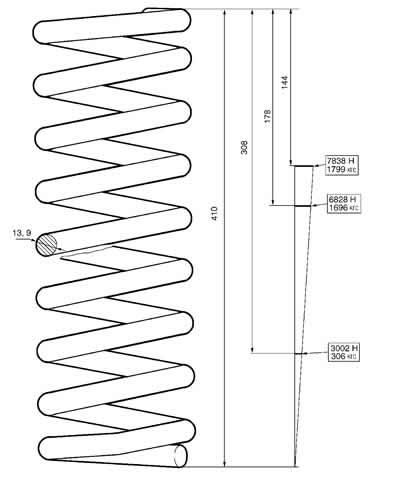
Figure 4-14. Basic data for checking the rear suspension spring.
Barbells. Check:
- are the rods deformed?; if possible, please correct them;
- are there any cracks on the rear axle beam and body brackets; if cracks are found, repair the brackets;
- condition of elastic bushings of rod hinges; if necessary, replace them with new ones using the supplied tool kit.