In the past, a child safety seat was secured to the seat with a seat belt.
As a result, the installation or fastening of the seat was often incorrect and did not ensure the proper safety of the child.
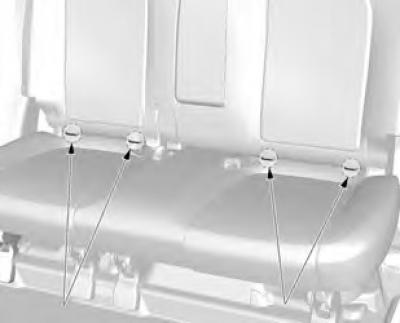
Our vehicles are now equipped with ISOFIX lower anchorages on the two outboard rear seats and Top-Tether anchorages on the back of the rear seatbacks, allowing child seats to be secured to the rear seats.
To install a child seat with ISOFIX lower anchorage and Top-tether anchorage, follow the instructions included with the child seat.
Be sure to read and strictly follow the instructions in this manual and the instructions from the manufacturer of this child seat.
You are responsible for the safety of the child!
For all questions related to the child safety seat and its installation, please contact the seat manufacturer. If you still cannot install the child seat in the car, we recommend contacting an authorized service center.
Installing an ISOFIX child seat
1. Select a side position in the rear seat to install the child seat.
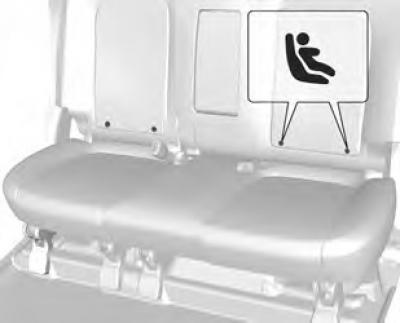
2. Locate the two lower anchor points. The location of the lower child seat anchor points is indicated by circular marks on the bottom of the rear seat back.
3. Make sure that no foreign objects accumulate around the lower anchorages, as well as the seat belt buckles and the belts themselves. Foreign objects prevent the child seat from being properly secured in the anchorages.
4. Place the child seat on the seat above the two lower anchor points and secure it according to the instructions provided by the manufacturer of the child seat.
5. Adjust and tighten the child seat fastenings according to the instructions provided by the manufacturer of the child seat.
Warning: The child restraint system may move forward when not in use. Remove the child restraint system from the vehicle when not in use or secure it with the seat belts.
Note: Because the seat belt or child restraint system can become very hot in a closed vehicle, check the seat upholstery and buckles before placing your child in the vehicle.
Warning: All ISOFIX lower anchorages and Top-tether anchorages must only be used for their intended purpose.
ISOFIX lower anchorages and Top-tether anchorages are intended only for fastening child seats equipped with upper and lower anchorages. It is prohibited to use ISOFIX lower anchorages and Top-tether anchorages for fastening adult seat belts, wiring harnesses or other vehicle parts and equipment.
Using ISOFIX lower anchorages and Top-tether upper anchorages to secure adult seat belts, wiring harnesses and other vehicle parts and equipment will not provide adequate protection in a collision, which could result in injury or even death.
Warning: Placing a child restraint system in the front seat can result in serious injury or death to the child. Never place a rear-facing child restraint system in the front seat of a vehicle equipped with a front passenger air bag. A child in a rear-facing child restraint system in the front seat can be seriously injured if the air bag deploys. Secure a rear-facing child restraint system in the rear seat.
A rear-facing child seat should only be secured in the front seat if absolutely necessary.
When installing the seat on the front passenger seat, move the seat as far back as possible.
Please note: Full size rear facing child seats may not be suitable for installation. Please contact your retailer for information on suitable child seats.
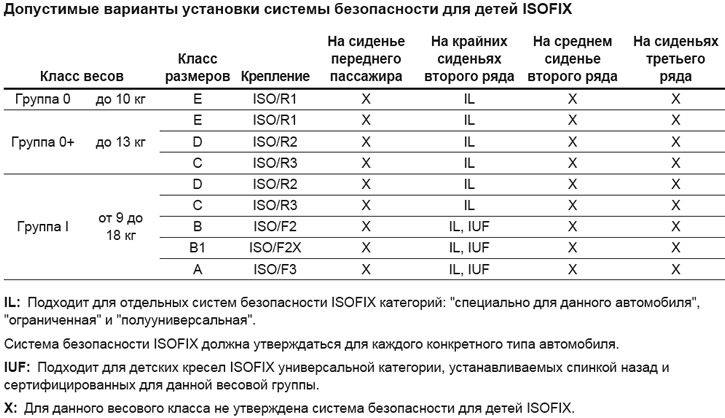
Size class and ISOFIX seat
A — ISO/F3: Forward-facing child seat for children in the upper weight class from 9 to 18 kg.
B — ISO/F2: Forward-facing child seat for children in the lower weight class from 9 to 18 kg.
B1 - ISO/F2X: Forward-facing child seat for children in the low weight category from 9 to 18 kg.
C — ISO/R3: Rear-facing child seat for children in the upper weight class up to 13 kg.
D — ISO/R2: Rear-facing child seat for children in the lower weight class up to 13 kg.
E — ISO/R1: Rear-facing child seat for small children weighing up to 13 kg.