


3.1. To access the fuse box located in the passenger compartment, remove the glove compartment cover
Each fuse provides protection for a specific electrical circuit; they can be identified by the markings provided on the fuse panel.
The fuse box contains flat fuses; they are small in size and have knife-type contacts, which allows them to be removed and installed manually, without the use of special devices. When any electrical device fails, always check the integrity of the fuse first. A blown fuse is easy to spot thanks to the transparent plastic housing. Visually inspect each fuse box component for damage (see illustration). If continuity testing is required, connect the tester leads to the ends of the contacts in the fuse housing.
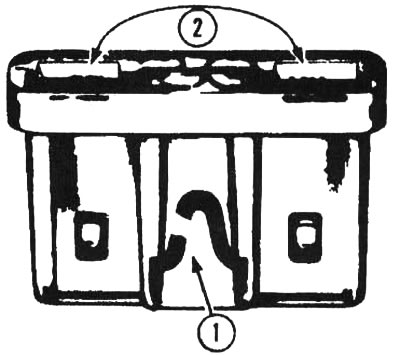
3.3. To check the integrity of the fuse, remove it from the socket and visually inspect it for a break (1) or, having turned on the electrical circuit, apply the terminals of the test lamp to the points indicated in the illustration (2)
When replacing a blown fuse, make sure the new one has the same designation and is rated for the same current. The design of fuses rated for different currents is the same, so when repairing an electrical circuit, fuses rated for exactly the same current should be used. It is not permissible to replace a fuse with another one rated for a lower or higher current. The current value in amperes is indicated on the fuse body.
If a new fuse installed to replace a faulty one blows immediately, do not replace it until you have identified and corrected the cause of the fault. In most cases, this is caused by a short circuit in the circuit caused by a broken or damaged wire.
(The original text can be found on the website «ChevyMan»)