
ChevyMan.ru
Mazda Mitsubishi Toyota Land Rover Honda Kia Nissan
English Русский
Български
Беларускі
Український
Српски
Hrvatski
Română
Polski
Slovenský
Magyar
|
Articles | Sitemap | Contacts |


Home   Aveo   Captiva   Cruze   Lacetti   Lanos   Niva   Tahoe   Others  
Captiva 1 (2006-2018)
  • Home
  • Captiva
  • 1 (2006-2018)
  • Manual
  • Driving a car
  • Filling the fuel tank

Filling the fuel tank (Chevrolet Captiva 1)

            0

Caution: Using the wrong grade of fuel or adding the wrong additives to the fuel tank can cause serious damage to the engine and catalytic converter. Use only fuel (gasoline or diesel fuel), prescribed for this vehicle. Filling a vehicle with gasoline and a diesel engine can cause serious damage to the vehicle. If the vehicle is equipped with a diesel engine, the correct fuel grade can be found by looking at the information on the fuel filler cap.


Danger: Before refueling, turn off the engine and additional heaters with their own combustion chambers. Turn off mobile phones.

Fuel vapors may be ignited by electromagnetic waves or current from a mobile phone.

Fuel is flammable and explosive. Do not smoke. Avoid open flames and sparks. When refueling, follow the instructions and safety rules of the filling station.

For safety, canisters, pumps, and hoses must be properly grounded. Static electricity discharge can ignite gasoline vapors. This can cause burns and damage to the vehicle.

Before opening the fuel cap or touching the fuel nozzle, discharge any static electricity from your hands by touching something that discharges static charges.

When refueling, do not do anything that could cause electrostatic discharge, such as getting in or out of the vehicle. Electrostatic discharge could ignite fuel vapors.


Danger: If you smell fuel in your vehicle, have the cause of the malfunction immediately eliminated at a service station.
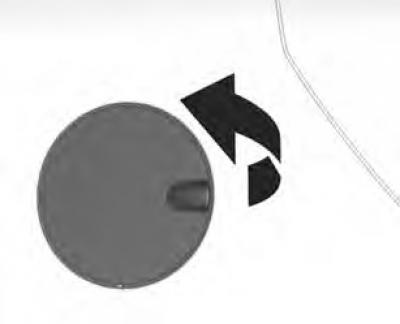

Danger: If you smell fuel in your vehicle, have the cause of the malfunction immediately eliminated…


The fuel tank flap is located on the left side of the vehicle at the rear.


1. Turn off the engine.

2. Unlock the door by pressing the door lock switch on the driver's door trim.

3. Open the fuel tank door.

4. Slowly turn the filler cap counterclockwise. If a hissing sound occurs, wait until it stops before completely unscrewing the cap.
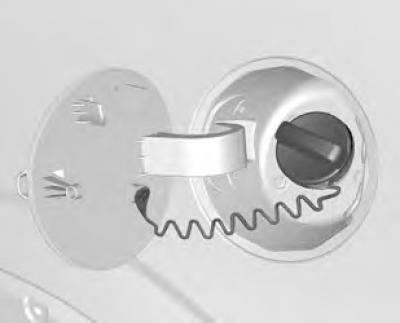
4. Slowly turn the filler cap counterclockwise. If a hissing sound occurs, wait until it stops…


5. Remove the cover. The cover is attached to the hinge.

6. After filling, close the cap. Turn the cap clockwise until it clicks.

7. Close and latch the fuel tank cap securely.

Note: If the fuel filler flap does not open in cold weather, tap the flap lightly. Then try opening it again.


Caution: Any spilled fuel must be wiped up immediately.


[The article is based on data from the website: CHEVYMAN.ru]

The article was checked: Vladimir Romannikov
This article is available at russian, bulgarian, belarusian, ukrainian, serbian, croatian, romanian, polish, slovak, hungarian

Share information:

Previous articles
Captiva 1: Driving a car
Next articles

Fuel grades for diesel engines
Fuel grades for gasoline engines
Rear View Camera (RVC)
Ultrasonic parking assistance system
Cruise control


See similar articles on the topic of Chevrolet cars:
Removal and installation the fuel tank filler pipe hatch cover Chevrolet Aveo T300 (2012-2018)
Replacing the fuel tank and its filler pipe Chevrolet Cruze 1 (2008-2016)
Removal the fuel tank Chevrolet Lacetti 1 (2002-2009)
Replacing the fuel filter Chevrolet Lanos T150 (2002-2009)
Fuel tank cap Chevrolet Niva 1 (2002-2016)
Fuel tank — removal and installation Chevrolet Tahoe 1 (1992-2000)
Fuel tank cleaning and repair Chevrolet Lumina 1 (1989-1994)
Link in different formats to this page


Visitor comments

No comments yet


How much will 21 + 33 =


Captiva 1 (2006-2018) 
  • Manual
  • Before leaving
  • Keys, doors and windows
  • Seats, protection systems
  • Instruments and controls
  • Lighting system
  • Information and entertainment
  • Navigation system
  • Climate control
  • Driving a car
  • Car care
  • Maintenance
  • Engine 2.0 l (diesel)
  • Engine device
  • Troubleshooting
  • Engine repair
  • Cooling system
  • Engine electrical equipment
  • Control and power systems
  • Exhaust system
  • Engine FAM II 2.4D
  • Engine device
  • Troubleshooting
  • Engine repair
  • Cooling system
  • Engine electrical equipment
  • Control and power systems
  • Exhaust system
  • Engine HFV6 3.2L
  • Engine device
  • Troubleshooting
  • Engine repair
  • Cooling system
  • Engine electrical equipment
  • Control and power systems
  • Exhaust system
  • Transmission
  • Front drive axle
  • Rear drive axle
  • Automatic gearbox - device
  • Automatic gearbox - service
  • Automatic gearbox - repair
  • Manual gearbox - device
  • Manual gearbox - service and repair
  • Clutch
  • Transfer case
  • Chassis
  • Car suspension
  • Brake system
  • Steering
  • Body
  • Heating and ventilation
  • Air conditioning (manual)
  • Air conditioning (automatic)
  • Seat belts
  • Airbags
  • Car seat
  • Interior (internal elements)
  • Exterior (external elements)
  • Doors and windows
  • Electrical equipment
  • Equipment and devices
  • Lighting and lamps
  • Windshield wipers and washers
  • Electrical circuits


ChevyMan.ru © 2017-2026 · Mobile version · Feedback · Site search · Interesting to read · Sitemap: EN BG BY UA RS HR RO PL SK HU

Aveo 2003-2008 · Aveo 2006-2011 · Aveo 2012-2018 · Captiva 2006-2018 · Cruze 2008-2016 · Lacetti 2002-2009 · Lanos 2002-2009 · Niva 2002-2016 · Tahoe 1992-2000 · Tahoe 2000-2014 · Lumina 1 1989-1994 · Trailblazer 1 2001-2008 · Orlando 1 2010-2018 ·
🛡️ For your security and to improve our service, this site uses cookies. You can disable them in your browser.