


Table 7-4. Temperature correction for hydrometer readings when measuring the density of electrolyte
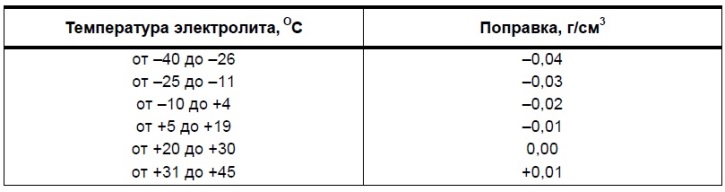
At the electrolyte temperature above 30°C, the correction value is added to the actual hydrometer reading. If the electrolyte temperature is below 20°C, the correction value is subtracted accordingly. When the electrolyte temperature is within 20-30°C, the temperature correction is not introduced.
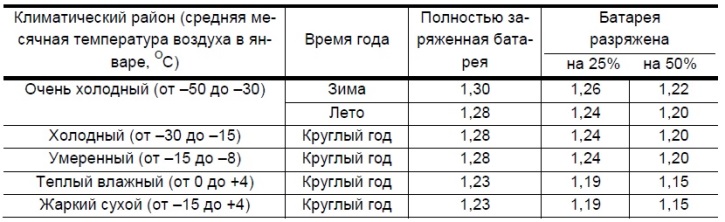
After determining the density of the electrolyte in each battery element, the degree of its discharge is determined according to Table 7-5. Remove the battery from the vehicle if it is discharged by more than 25% in winter and more than 50% in summer and recharge it.
Table 7-5. Electrolyte density at 25 C, g/cm
When measuring the density, make sure that drops of electrolyte containing sulfuric acid, which causes corrosion, current leakage, etc., do not fall from the pipette onto the surface of the battery, the body, or other parts.
To avoid getting incorrect results, do not measure the density of the electrolyte:
- if its level is not normal;
- if the electrolyte is too hot or cold; the optimal temperature for measuring density is 15-27°C;
- after adding distilled water. You should wait until the electrolyte is mixed; if the battery is discharged, this may even take several hours;
- after several starts. You need to wait until the electrolyte density in the battery element is uniform;
- with "boiling" electrolyte. You should wait until the bubbles in the electrolyte, collected in the pipette of the hydrometer, rise to the surface.
[The original article can be found on the resource: «ChevyMan»]