


Install the generator on the stand and make connections as shown in Figure 7-6. Turn on the stand's electric motor, use rheostat 4 to set the generator output voltage to 13 V and bring the rotor speed to 6000 min⁻¹. Let the generator run in this mode for at least 10 minutes, and then measure the output current.
A working generator should have at least 80 A.
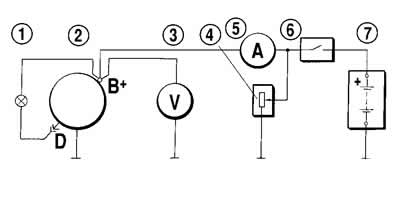
Figure 7-6. Wiring diagram for testing the generator on the bench:
1 - control lamp 12 V, 3 W;
2 - generator;
3 - voltmeter;
4 - rheostat;
5 - ammeter;
6 - switch;
7 - battery.
If the measured value of the output current is significantly less, this indicates faults in the stator and rotor windings or damage to the generator rectifier unit. In this case, a thorough check of the windings and the generator rectifier unit is necessary to determine the location of the fault.
The generator output voltage is checked at a rotor speed of 5000 min⁻¹. Using rheostat 4, set the output current to 15 A and measure the generator output voltage, which should be 13.2-14.7 V at an ambient air and generator temperature of (25±10)°C.
If the voltage does not fit within the specified limits, then replace the brush holder with a voltage regulator with a new one, known to be in good working order, and repeat the check. If the voltage is normal, then the old voltage regulator is damaged and must be replaced. And if the voltage still does not fit within the above limits, then it is necessary to check the windings and the rectifier unit of the generator.