


These devices include:
- Electronic Spark Plug (EST)
- Electronic ignition control (ESC)
- Exhaust Gas Recirculation (EGR) System
- Evaporative Emission Control System (EECS)
- Positive Crankcase Ventilation (PCV) System
- Torque Converter (TCC)
- Catalyst
- Thermostatic air filter
- Air conditioning control system
All these systems are connected, directly or indirectly, to the computer command control system (SSS or SZ).
The sections of this chapter include general descriptions, checks, and element replacement operations for each of the above systems.
Before concluding that the emission control system is faulty, carefully check the fuel and ignition systems. Some emission control system devices require special tools, equipment and skills to test. If the inspection and maintenance seem too complicated or beyond your capabilities, contact an auto repair shop.
This does not mean, however, that maintenance and repair of the emission control system is particularly difficult. You can easily and quickly perform numerous verification operations and most (if not all) routine maintenance operations using common hand tools and adjustment devices. Note: The most common cause of emission control system problems is a loose or broken vacuum hose or poor electrical connection, so always check the hose and wire connections first.
Pay particular attention to all special warnings given in this chapter. It should be noted that illustrations of the various systems may not exactly match the system installed on your vehicle due to ongoing modifications by the manufacturer.
The Vehicle Emission Control Information (VECI) label is located in the engine compartment (see illustration). This label includes important system specifications, ignition timing operations, and a diagram of the location of vacuum hoses and various emission control system components. When servicing your engine or systems, always refer to the VECI label that is specific to your vehicle.
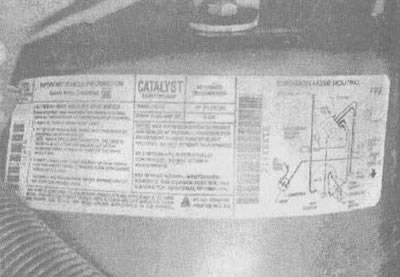
1.6. The Vehicle Emission Control Information (VECI) label is located on the pillar in the engine compartment and includes information on idle adjustment, ignition timing, a description of the location of emission control components on your vehicle, vacuum lines, etc.
Note: On models equipped with the Delco Loc II audio system, the audio interlock system must be disengaged before performing any operation that involves disconnecting the battery.