


- 205 - tire width, mm;
- 60 - height to width ratio of the profile, %;
- R - radial tire;
- 16 - disk diameter in inches;
- 95 - load index (table 14.1);
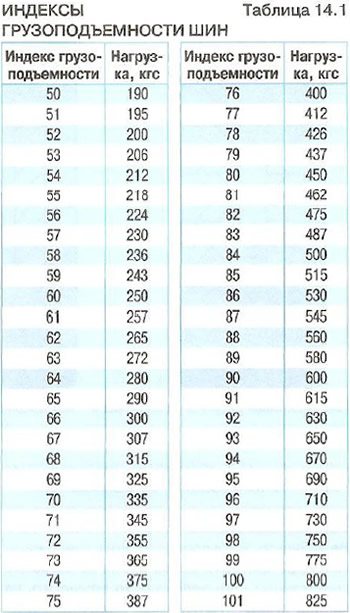
Note: Sometimes, instead of the load index, the tire may indicate the permissible load - "MAX LOAD 690 KG".
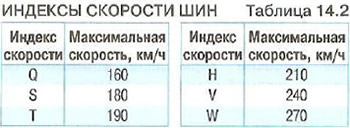
- H - speed index (table 14.2).
Depending on the type and country of manufacture, additional markings may be applied to the sidewall of the tire, providing more detailed information about the model. The most common markings are listed below:
- REINFORCED (reinforced) - tire with increased load capacity;
- REGROOVABLE - a tire with the ability to deepen the pattern by cutting;
- STEEL (Steel belted) - a tire with a metal cord around it;
- TWI (tread wear index) or a triangular symbol - indicates the location of the wear indicators. Once the tread wears down to the level of these indicators, the tire is considered unsuitable for use;
- SAFETY WARNING (for tires of the US and Canadian market) - text in English explaining some of the features of safe use of the tire;
- The tire manufacturing date consists of three digits, where the first two indicate the week and the last one indicates the year of manufacture (since 2000 - four digits, where the year of manufacture is the last two digits);
- DOT - a symbol of compliance with current safety standards set by the U.S. Department of Transportation. The tire identification or serial number is listed below (up to 11 numbers and letters);
- E with a number is the code of the country that issued the certificate of conformity according to the UNECE rules;
- ETRTO (The European Tyre and Rim Technical Organization) - Association of European Tyre and Wheel Manufacturers, Brussels;
- ECE (Economic Commission for Europe) -UN agency in Geneva;
- FMVSS (Federal Motor Vehicle Safety Standards) - US safety regulations;
- TUBELESS - tubeless tire design;
- TUBED TIRE - tube tire construction;
- PLIES TREAD - tread layer composition;
- SIDEWALL - sidewall layer composition;
- ROTATION - direction of rotation;
- DA (stamp) - minor manufacturing defects that do not interfere with normal operation.
For tires with an asymmetric tread pattern, the correct position of the tire on the vehicle is indicated:
- LEFT - the tire is installed on the left side of the car;
- RIGHT - the tire is installed on the right side of the car;
- OUTSIDE (Side facing outwards) - external side of the installation;
- INSIDE (Side facing inwards) - the inner side of the installation.
Often the tire may indicate the operating conditions, for example:
- M+S (Mud + Snow) - mud and snow;
- R+W (Road + Winter) - road and winter;
- WINTER - winter;
- RAIN - rain;
- WATER or AQUA - water;
- AW (Any weather) - all-weather;
- ALL SEASON NORTH AMERICA (all seasons of North America) etc. - tires designed for use in specific conditions.
Some manufacturers use pictograms instead of letter designations (sun, snowflake, cloud, etc.).