


2. There are three ways to check the operation of the coolant pump when it is installed on the engine. If the pump is faulty, it must be replaced with a new or refurbished one.
3. With the engine at normal operating temperature, squeeze the upper radiator hose. If the coolant pump is working, a surge of pressure will be felt when the hose is released.
Caution: Keep hands away from fan blades.
4. The coolant pump has an inspection hole. If a fault occurs in the pump seal, coolant will leak out of the hole (see illustration). In most cases, you will need a flashlight and a mirror to locate the hole in the bottom of the coolant pump to check it.
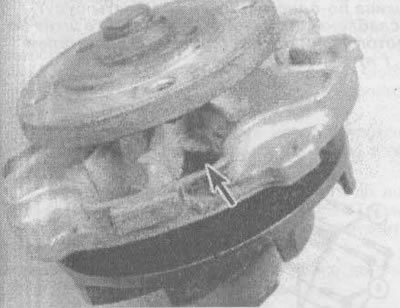
7.4 Check for leaks through the inspection hole (indicated by the arrow)
5. If the coolant pump shaft bearings fail, a howling sound may be heard from the drive belt when the engine is running. When the engine is off, you can feel the wear on the shaft by rocking the pump pulley up and down. Do not confuse a slipping drive belt, which causes a squealing noise, with a faulty coolant pump bearing.
[The original material is located on the website: «CHEVYMAN»]