


NOTE: The manufacturer recommends using ethylene glycol-based coolant (antifreeze).
Do not mix liquids of different colors and different manufacturers. If you need to top up the coolant, but you do not know the brand of the liquid poured into the system, replace all the liquid in the cooling system. Use only products from trusted manufacturers. Remember that using low-quality coolant leads to expensive engine repairs! Before starting work, place the car on a level surface.
WARNINGS: Check the coolant level only when the engine is cold. Coolant is toxic, so take precautions when handling it.
Do not fill the tank much higher than the welded joint of the upper and lower parts of the expansion tank, as its volume will increase when the engine is running. When starting the engine, the expansion tank cap must be tightly closed.
USEFUL TIPS: Constantly monitor the coolant level. A sharp decrease or increase should be a signal for an immediate check of the engine cooling system. If the freshly poured antifreeze suddenly and unexpectedly quickly changes color to brown, then you were sold a fake, to which they "forgot" to add corrosion inhibitors. Replace the liquid as quickly as possible before it has time to corrode the cooling system.
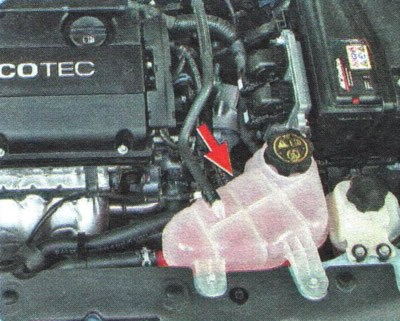
The expansion tank is installed in the engine compartment, in its front part, on the left side.
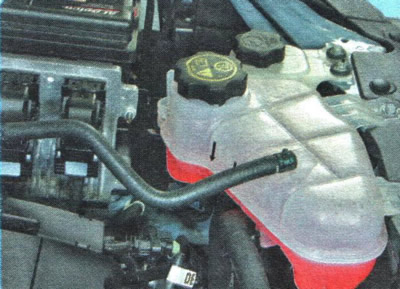
1. The coolant level when the engine is cold should be slightly above the welded seam of the tank halves (it is indicated by two arrows applied to the wall of the expansion tank).
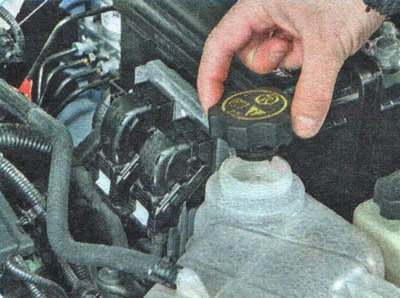
2. To add fluid, unscrew the expansion tank cap...
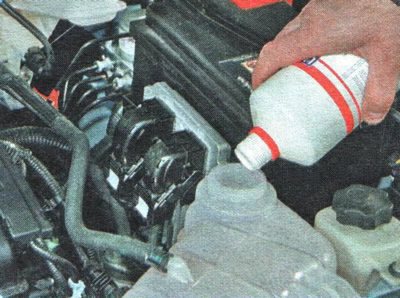
3. ...and add coolant to the required level.
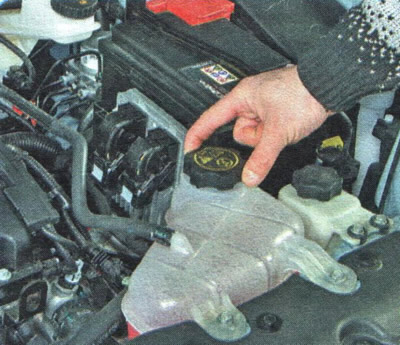
4. Screw on the expansion tank cap.
WARNING: Make sure the expansion tank cap is tightly screwed in. When the engine is running, the expansion tank is under pressure and a loose cap may leak coolant or tear off the cap.
[The article was reprinted from the website «CHEVYMAN.RU»]