

Normal operation of the vehicle
The maintenance instructions provided in the maintenance plan must be followed when the vehicle is operated under the following conditions:
- Transportation of passengers and cargo within the limits indicated on the nameplate.
- Driving on a roadway with a surface of acceptable quality and in compliance with regulatory tolerances during operation.
Scheduled Maintenance Information
The maintenance schedule is explained below. When performing maintenance, ensure that all parts are replaced and all necessary repairs are completed before driving the vehicle. Use only the correct fluids and lubricants.
Inspection of the drive belt
If the power steering pump, air conditioning compressor and alternator are driven by a separate belt, check the belt for cracks, fraying, wear and proper tension. Adjust the belt tension or replace it if necessary.
Changing engine oil and oil filter
Always use the recommended motor oil. Refer to "Recommended fuels, lubricants and operating fluids" in this section.
Viscosity of motor oil
Motor oil viscosity (thickness) affects fuel economy and cold weather performance. Lower viscosity motor oils help save more fuel and improve cold weather performance; however, as ambient temperatures increase, higher viscosity motor oils are required for satisfactory lubrication. Using oils with a viscosity other than that recommended can damage the engine.
Maintenance of the cooling system
Drain, bleed and refill with new coolant. Contact "Recommended fuels, lubricants and operating fluids" in this section.
Replacing the fuel filter
Inspect and replace the engine fuel filter. See "Planned Maintenance Cards" in this section.
Replacing the air filter element
Replace the air filter element every 45,000 km (30000 miles).
In dusty conditions, replace the air filter more often.
Tightening torque of mounting bolts on the throttle body
Check the tightening torque of the mounting bolts on the throttle body.
Tighten
If necessary, tighten the mounting bolts on the throttle body to 10 N·m (89 lbs.in).
Replacing spark plugs
Replace spark plugs with others of the same type.
Replacing spark plug wires
Clean the wires and check for any signs of burns, cracks, or other damage. Check that the output protective cap fits securely on the direct ignition System (DIS) module and on the spark plugs. Replace the wires if necessary.
Maintenance of the brake system
Check disc brake pads every 30,000 km (20000 miles) or 24 months. Check the thickness of the pads carefully. If the pads do not last another 30,000 km (20000 miles) mileage, replace them. Make sure there is no contamination and the passage in the suction tube of the brake fluid reservoir cap is open.
Maintenance of the gearbox with the main gear assembly
Changing the fluid for a manual transmission with the final drive assembly is not necessary. For automatic transmissions with the final drive assembly, see "Planned Maintenance Cards" in this section.
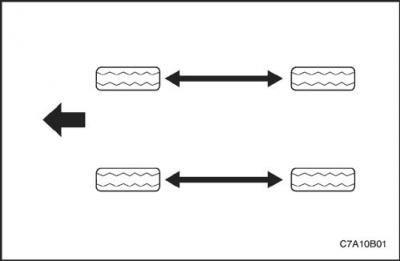
Checking and rotating tires and wheels
Check your tires for abnormal wear or damage. Rotate your tires to distribute wear evenly and maximize tire life. If your tires are wearing unevenly or prematurely, check for proper alignment and damage. Check your brakes with your wheels and tires off. See "With every oil change" in this section.