


If the engine is hot, it is necessary to allow it to cool down and then release excess pressure in the cooling system by unscrewing the expansion tank cap (see Checking the level and adding coolant).
The design of the cooling system allows the coolant to be drained through the drain nipple located in the lower radiator tank.
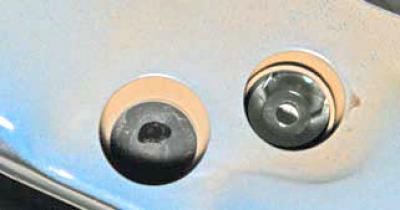
The drain nipple of the cooling system is directed downwards and enters the hole in the lower cross member of the radiator frame.
For ease of draining coolant…
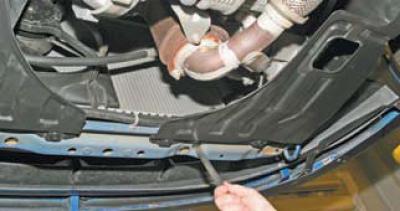
…we put a tube of a suitable diameter on the drain nipple of the cooling system.
Place a wide container with a capacity of at least 8.0 liters under the drain hole or tube.
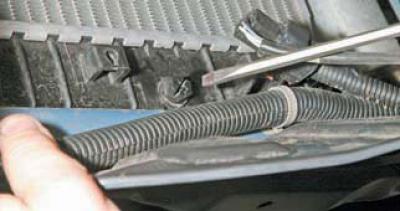
Using a screwdriver, unscrew the drain plug... ...and drain the liquid from the engine into a container provided.
To improve the drainage of fluid from the engine, unscrew the expansion tank cap.
We tighten the plug of the drain nipple.
We fill the system with coolant through the expansion tank. We start the engine.
With the engine running, squeeze the cooling system hoses vigorously several times in turn - this will help the liquid fill the system and force the air out of it. As the liquid level in the expansion tank drops, bring it to the norm and tighten the tank cap. When the engine warms up, the outlet (lower) radiator hose should be cold for some time, and then quickly heat up, which will indicate the beginning of the circulation of liquid in a large circle. After waiting for the cooling system fan to turn on, stop the engine.
After the engine has cooled down, check the coolant level in the tank and top it up to normal (it should be between the MIN and MAX marks).
The article was borrowed from the website: «chevyman.ru»