


Caution: The coolant contains ethylene glycol and an anti-corrosion additive. Since the radiator, cylinder head and coolant pump housing are cast from aluminum alloy, periodic replacement of the coolant is necessary to prevent corrosion of these parts. In addition, it is not allowed to replace the coolant with clean water even in summer.
Note: DEX-COOL® brand coolant is recommended for the cooling system. When using concentrate, it is recommended to mix with distilled water in a 50/50 ratio for best results.
1. Place the vehicle on a level, horizontal surface and apply the parking brake.
2. Wait until the engine cools down.
3. Drain the liquid from the radiator of the cooling system.
- a) Slowly unscrew the expansion tank cap. If you hear a hissing sound when unscrewing, release the pressure by leaving the cap partially unscrewed. After a while, remove the cap.
- b) Drain the coolant from the radiator into a suitable container by opening the radiator drain cock.
Note: The drain cock is located at the bottom left corner of the radiator. Install a sufficient container (about 12 liters) under the drain tap.
Note: Make sure that the drain pipe is installed on the drain cock. If necessary, install the drain pipe or hose and direct it into an empty drain container. - Use a clean container if possible.
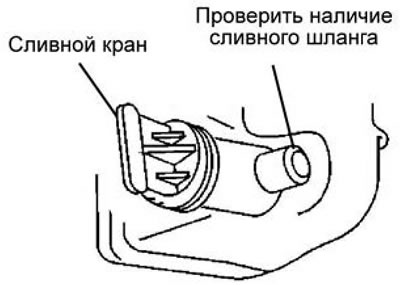
- c) Assess the condition of the coolant for the absence of oil stains and uniformity of color.
- d) Close the radiator drain cock.
4. Drain the coolant from the engine.
- a) Unscrew the drain plugs on the left and right sides of the cylinder block and drain the coolant from the engine.
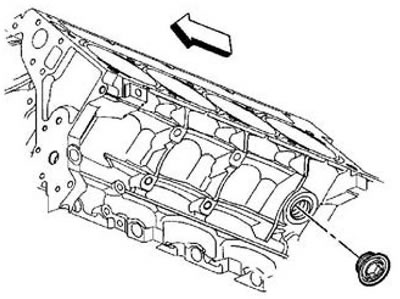
- b) If installed, remove the coolant heater (see chapter "Cooling system").
- c) If necessary, after draining the coolant, pour clean distilled water into the radiator to flush the cooling system.
- d) Apply sealant to the thread of the cylinder block drain plug and tighten it to the rated torque. Tightening torque 60 Nm.
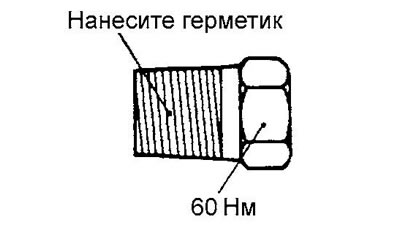
- d) Tighten the radiator drain plug securely.
- e) If removed, install the coolant heater.
5. Filling with coolant.
- a) Prepare the required amount of coolant. When using DEX-COOL® brand concentrate, mix it with distilled water in a 50/50 ratio. When using concentrates from other companies, mix in the ratio recommended in the instructions for use of this concentrate.
- b) Slowly pour coolant through the expansion tank until its level reaches the "FULL COLD" mark.
- The range of acceptable concentrations of antifreeze in the coolant is 30-60%
- Filling volume:
- Models produced before 2007:
- 5.3L engine models with front air conditioning - 14.4L
- 5.3L engine models with front and rear air conditioning - 15.8L
- 6.0 l engine, with fan drive from engine crankshaft - 15.3 l
- 6.0 l engine, with electric cooling fan - 15.9 l
- Models produced since 2007:
- engine 5.3 l - 17.3 l
- engine 6.2 l - 16.7 l
Attention:
- If the concentration of antifreeze is below 30%, the anti-corrosion properties of the coolant are significantly reduced.
- In addition, if the concentration is more than 60%, the crystallization temperature of the antifreeze increases (the efficiency of heat exchange decreases), adversely affecting the engine. Therefore, make sure that the concentration level of antifreeze is within the specified range.
- Use a brand name ethylene glycol based coolant with an anti-corrosion additive and mix it with demineralized or distilled water according to the manufacturer's instructions.
- Do not mix antifreezes of different brands.
- Do not use alcohol-based antifreeze.
6. Without closing the expansion tank cap, start the engine and let it idle until you feel the upper radiator hose become warm.
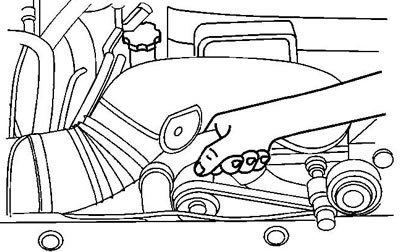
7. Slowly tighten the expansion tank cap.
8. At 30 second intervals, set the idle speed to about 3000 rpm until the coolant temperature reaches 99°C and the thermostat opens.
9. After the thermostat opens, press the accelerator pedal several times to increase the crankshaft speed, then turn off the engine. Check for leaks from the drain plugs.
10. Allow the engine to cool slightly and, taking precautions, remove the expansion tank cap.
11. Check the coolant level. If necessary, add coolant above the "FULL COLD" mark by 13 mm. _
12. Carry out operations according to points 7-11 until the coolant level becomes constant (i.e. above the "FULL COLD" mark by 13 mm on a warm engine).
Information taken from the official website «chevyman.ru»