
ChevyMan.ru
Mazda Mitsubishi Toyota Land Rover Honda Kia Nissan
English Русский
Български
Беларускі
Український
Српски
Hrvatski
Română
Polski
Slovenský
Magyar
|
Articles | Sitemap | Contacts |


Home   Aveo   Captiva   Cruze   Lacetti   Lanos   Niva   Tahoe   Others  
Niva 1 (2002-2016)
  • Home
  • Niva
  • 1 (2002-2016)
  • Body
  • Exterior (external elements)
  • Repair of deformed surfaces of body parts

Repair of deformed surfaces of body parts (Chevrolet Niva 1)

            0

Repair of damaged body parts is carried out by drawing, straightening, straightening with metal shrinkage, cutting out areas that cannot be repaired, making repair inserts from rejected body parts or sheet metal and giving them the shape of the part being restored.

Deformed areas of panels are usually straightened manually using a special tool (hammers, levers, various mandrels) and devices.

Heat straightening is used for upsetting (tightening) highly stretched panel surfaces. To prevent deterioration of the mechanical properties of the metal, the panels are heated to 600-650°C (cherry red color). The diameter of the heated spot should be no more than 10-15 mm.

Straighten panels with metal shrinkage as follows:
  • using a carbon electrode of a semiautomatic welding machine or a gas torch, heat the metal points from the periphery to the center of the defective area and, using blows from a wooden mallet or hammer, press the heated areas from the back side of the area being pressed, using a support or anvil;
  • repeat the heating and metal deposition operations until the required panel surface is obtained.

Unevenness on panels can be leveled using polyester putties, thermoplastics, cold-curing epoxy mastics and solder.
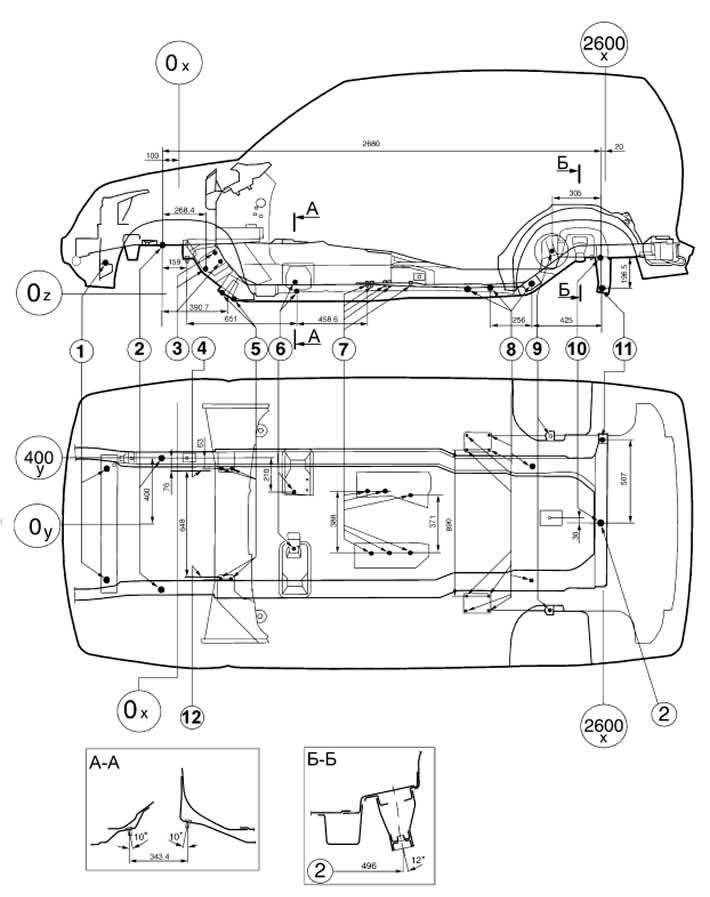
Figure 8-5. Basic reference dimensions of the attachment points of vehicle components and…

Figure 8-5. Basic reference dimensions of the attachment points of vehicle components and assemblies:
1 - holes for installing the radiator;
2 - base holes with a diameter of 20 mm;
3 - Steering gear mounts;
4 - mating plane of the pendulum arm bracket;
5 - stabilizer mounts;
6 - fastenings of the rear support of the power unit;
7 - Transfer case mounts;
8 - rear suspension arm mounts;
9 - rear shock absorber mounts;
10 - base hole;
11 - crossbar mounts;
12 - mating plane of the steering mechanism.


Polyester putties such as "Khempropol-P" or PE-0085 form reliable connections with panels cleaned to the metal. The temperature in the workroom should not be below 18°C. The prepared polyester putty should be used in no more than 10 minutes. It finally hardens 60 minutes after application. The thickness of the putty layer on the treated surface of the panel should not exceed 2 mm.


Thermoplastic is produced in powder form. It acquires the elastic properties required for its application to the metal surface of the panel at a temperature of 150-160°C. The surface to be filled must be thoroughly cleaned of rust, scale, old paint and other contaminants. Thermoplastic adhesion is better to a rough metal surface. To apply thermoplastic, the area to be leveled is heated to 170-180°C and the first layer of powder is applied, which is rolled with a metal roller. Then the second layer is applied and so on until the unevenness is filled. Each layer is rolled until a monolithic layer of plastic mass is obtained. After curing, the thermoplastic is processed with a straightening saw.

Solders such as POSSu 18-2 or POSSu 25-2 are used to level areas previously filled with solder, build up the edges of parts and eliminate gaps.

If there is significant damage to body parts, they are replaced with new ones using electric arc welding in a protective gas environment.

The article was checked: Vladimir Romannikov
This article is available at russian, bulgarian, belarusian, ukrainian, serbian, croatian, romanian, polish, slovak, hungarian

Share information:

Previous articles
Niva 1: Exterior (external elements)
Next articles

Repair of damaged bodywork
The structure of the body frame and its sections
Possible malfunctions, their causes and methods of elimination
Features of the body structure
Galvanized metal body
Removal and installation the front wing
Polishing of paintwork
Repainting the body with synthetic enamel
Painting of individual body parts


See similar articles on the topic of Chevrolet cars:
Tubeless tire repair Chevrolet Aveo T300 (2012-2018)
Tire repair kit Chevrolet Captiva 1 (2006-2018)
Disassembly, repair and assembly of the cylinder head Chevrolet Cruze 1 (2008-2016)
Tools used in car repair Chevrolet Lacetti 1 (2002-2009)
Safety precautions during maintenance and repair Chevrolet Lanos T150 (2002-2009)
Body repair — minor damage Chevrolet Tahoe 1 (1992-2000)
Body repair in case of significant damage Chevrolet Lumina 1 (1989-1994)
Link in different formats to this page


Visitor comments

No comments yet


How much will 20 + 16 =


Niva 1 (2002-2016) 
  • General information
  • Vehicle device
  • User manual
  • Maintenance
  • Power unit
  • Engine repair
  • Cooling system
  • Lubrication system
  • Power and exhaust system
  • Transmission
  • Clutch
  • Car gearbox
  • Transfer case
  • Cardan gear
  • Rear axle
  • Front axle
  • Chassis
  • Suspension and shock absorbers
  • Steering
  • Brake system
  • Body
  • Exterior (external elements)
  • Interior (internal elements)
  • Ventilation and heating
  • Electrical equipment
  • Power devices
  • Lighting and appliances


ChevyMan.ru © 2017-2026 · Mobile version · Feedback · Site search · Interesting to read · Sitemap: EN BG BY UA RS HR RO PL SK HU

Aveo 2003-2008 · Aveo 2006-2011 · Aveo 2012-2018 · Captiva 2006-2018 · Cruze 2008-2016 · Lacetti 2002-2009 · Lanos 2002-2009 · Niva 2002-2016 · Tahoe 1992-2000 · Tahoe 2000-2014 · Lumina 1 1989-1994 · Trailblazer 1 2001-2008 · Orlando 1 2010-2018 ·
🛡️ For your security and to improve our service, this site uses cookies. You can disable them in your browser.