


Most electrical equipment operates when the ignition switch is on. The following operate independently of the ignition switch: the vehicle anti-theft alarm system indicator light, door locks, high beam headlight signaling, brake lights, exterior lighting, interior and individual lighting lamps, hazard warning lights, sound signal and underhood lamp.
Most of the power supply circuits of the car's electrical equipment are protected by fuses. The battery charging circuit, engine starting circuits, and generator are not protected by fuses.
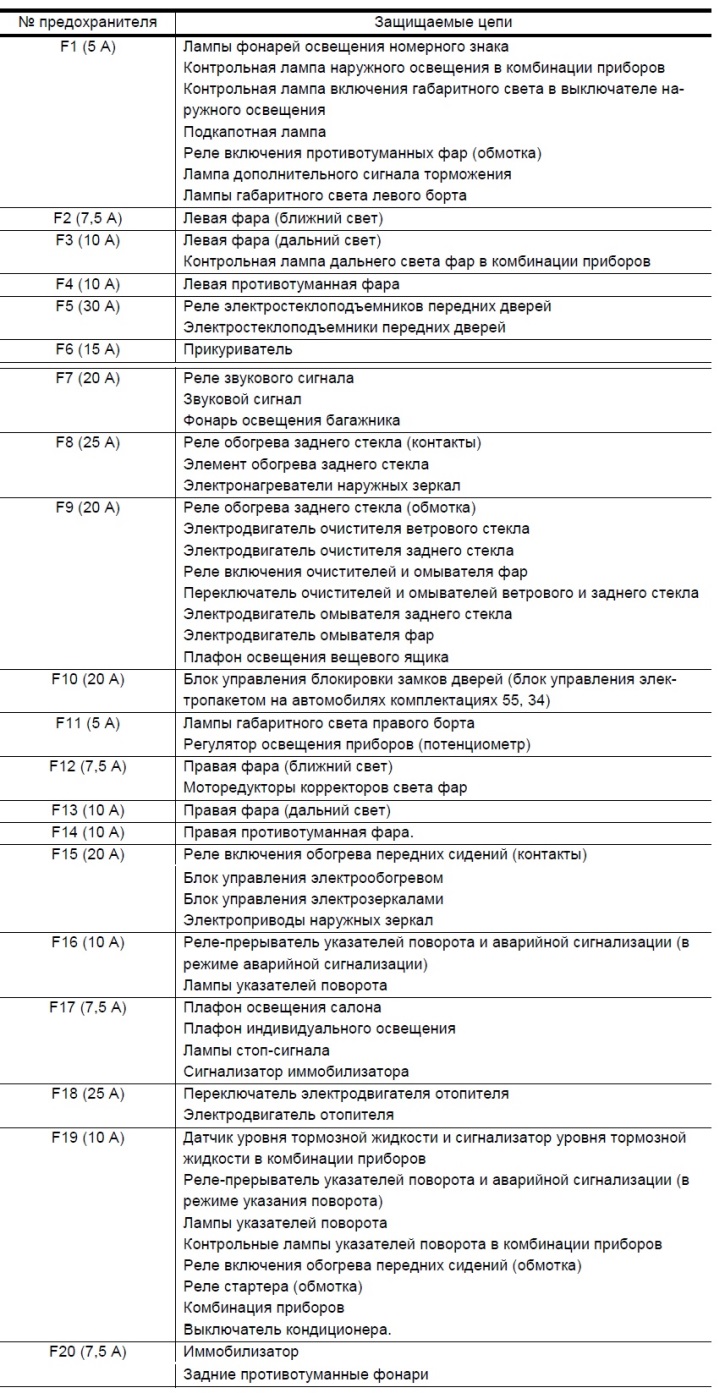
Before replacing a blown fuse, find out the reason for its burning and eliminate it. When searching for a malfunction, it is recommended to look at the circuits indicated in Table 7-1 that this fuse protects.
Table 7-1 shows the purpose of each fuse, but some circuits may not be present on your specific vehicle model (or devices), indicated in the table.
Table 7-1. Circuits Protected by Fuses
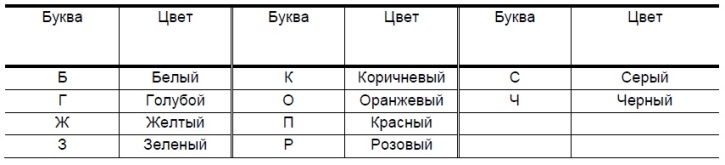
In all the diagrams provided in the "Electrical Equipment" section, the color of the wires is indicated by letters, with the first letter being the color of the wire itself, and the second being the color of the stripe on the wire (Table 7-2).
Table 7-2. Wire Color Designations
Warning: When repairing a vehicle or the vehicle's electrical system, it is essential to disconnect the wire from the negative terminal of the battery.
When operating the vehicle and when checking the vehicle's electrical circuit, it is not allowed to use fuses that are not provided for by the vehicle's design, or to short-circuit wires to ground (check the circuits for "spark"), as this may lead to burnout of the current-carrying paths of the mounting block.
When removing relays and fuses in the mounting block, do not use metal screwdrivers, as this will cause the relay terminals to short-circuit and the current-carrying tracks on the printed circuit boards of the mounting block to burn out.