


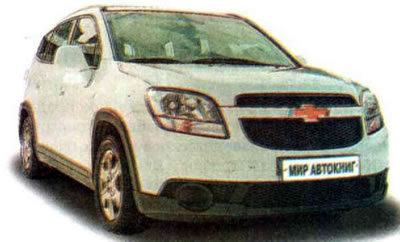
As the concept car moved towards the assembly line, the designers rounded off the edges somewhat, especially at the front, and changed the shape of the headlights and taillights. Moreover, the lights were partially moved to the luggage compartment door.
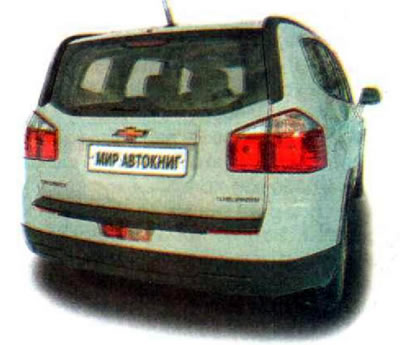
Initially, the developers were faced with the task of creating a stylish, universal family car. They accomplished the task, but as a result, there was difficulty in determining the type of vehicle that was produced. After all, modern "mini-wagons" are characterized by a semi-bonnet layout, and the designers made it look like an SUV.
Even dealers are confused about how to present the new product. Thus, the Russian representative office of Chevrolet positions it on its website as a 7-seater family car, but the image is among crossovers. However, the Orlando does not fit into this category at all - there is no version with all-wheel drive, and the low ground clearance does not reach even the most squat "SUVs". Most likely, this car would be more correctly classified as a station wagon with increased capacity. But marketing strategy dictates its own laws.
Orlando was developed taking into account the needs and preferences of European buyers, and primarily for sale on the European market. And the car was given a catchy and memorable name, named after a city in the North American state of Florida. It is noteworthy that in the United States, the GM concern planned to sell the car under a different name, and then abandoned this idea altogether. In Russia, the car went on sale at the end of 2011.
[The text of the article was obtained from the website CHEVYMAN.RU]