


You will need: wrenches "7", "12", "13" (two), a ruler.

1. To measure the full travel of the clutch pedal, measure the distance from the pedal pad to the floor without pressing the pedal.
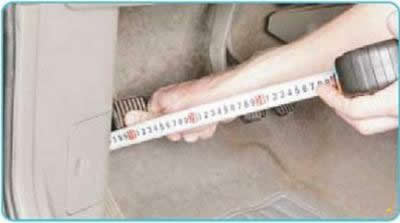
2. Press the pedal all the way down and repeat the measurement. The difference between the two measurements is the full travel of the clutch pedal, the nominal value of which should be 120-125 mm. Adjustment of the full travel of the pedal during operation is not provided. A significant deviation of the travel from the specified values, accompanied by abnormal operation of the clutch (it "slips", "leads", jerks appear when starting off), indicates damage to the clutch or its release drive. With minor deviations of the travel from the specified values, but with proper operation, the clutch can continue to be used.
3. To determine the clutch pedal free travel, measure the distance from the initial position of the pedal to the position where you feel an increase in resistance when you press the pedal with your hand. The nominal free travel of the clutch pedal is 10-12 mm. If the free travel differs from the nominal, adjust the length of the clutch master cylinder pushrod, for which...
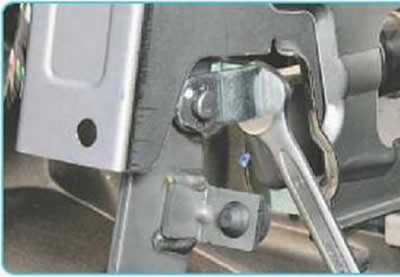
4. ... loosen the lock nut...
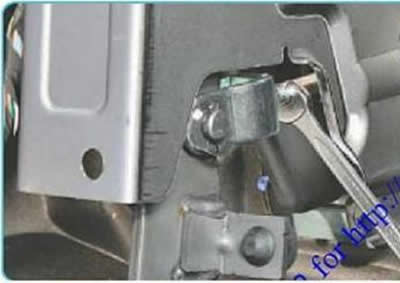
5. ...and by rotating the pusher by the flat, adjust the free travel of the pedal
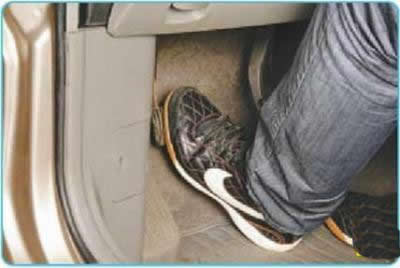
6. Check the moment of clutch engagement when releasing the pedal. With the engine idling, press the pedal all the way down, engage first gear and begin to slowly release the pedal, trying to determine at what distance the pedal pad from the floor the car begins to move. If the clutch and its release drive are in normal condition, this distance should be 30-40 mm. If the pedal travel before the clutch engages is less or more than the specified value, check the following:
- free play of the clutch pedal. Adjust it if necessary;
- full pedal travel. If the travel is less than the permissible value, adjust it and check the condition of the clutch release drive;
- presence of air in the clutch release hydraulic drive. If necessary, bleed the hydraulic drive;
- condition of the pressure and driven clutch discs. If necessary, replace defective units and parts.
[The article is based on data from the website chevyman.ru]