


Warning. Remember, the ABS system can only slightly reduce the braking distance during emergency braking or braking on roads with slippery or uneven surfaces. However, it cannot fully compensate for poor road conditions and driver errors!
When the ABS system is operating, the brake pedal vibrates slightly - this indicates that the system is operating normally.
Warning. On loose surfaces (gravel, freshly fallen snow) due to the operation of the A8S, the braking distance may increase - in such road conditions, increase the distance to the vehicle in front.
The car uses a four-channel anti-lock braking system - one channel for each wheel. The system includes wheel speed sensors, a brake light switch, a hydraulic unit combined with an electronic ABS control unit, and an ABS malfunction indicator lamp.
The hydraulic unit is a complex unit that contains a hydraulic pump with electromagnetic valves and an electronic control unit.
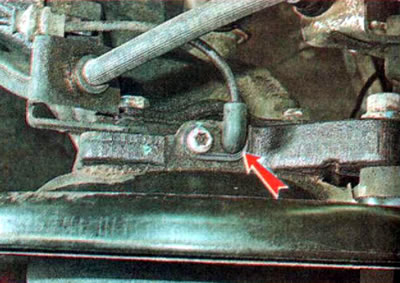
Inductive wheel speed sensors are installed on the steering knuckles of the front wheels...
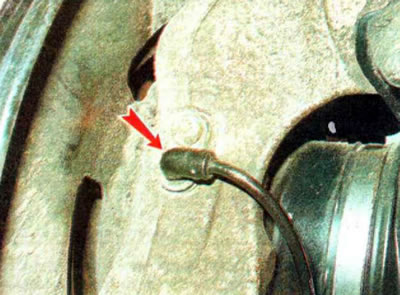
...and on the rear wheel hub journals.
Pulse signals from the sensors are sent to the control unit. At the beginning of wheel locking, the hydraulic unit, on command from the control unit, limits the pressure in the hydraulic drive, reducing the braking force.
Note: The ABS hydraulic unit also functions as the actuator for the electronic stability program (ESP).
If a malfunction is detected, the electronic control unit informs the driver about it using a warning lamp on the instrument panel. If it does not go out within a few seconds after turning on the ignition, or lights up while driving, you must contact a specialized service station as soon as possible for diagnostics and repair.
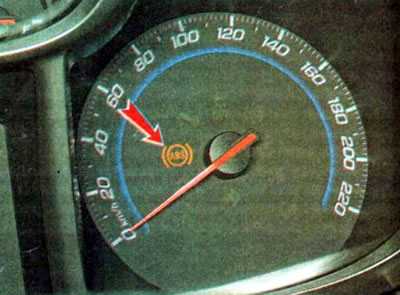
If ABS fails, the braking system remains functional, but braking efficiency may be reduced, which is especially dangerous on slippery surfaces. The cause of the malfunction can be determined by its code recorded in the control unit memory. These codes can be read at a specialized service station with diagnostic equipment. An ABS malfunction may be caused by a failure of the wheel speed sensors, damage to the electrical wiring, or a malfunction of the hydraulic valve block.
[The original article is on the website chevyman]