


To complete the job you will need a rubber bulb. We carry out the work in the following order:
1. We prepare the car for maintenance and repair.
2. With the engine off, press the brake pedal 4-6 times. While holding the pedal, start the engine. If the amplifier is working properly, the pedal should move forward slightly.
3. After letting the engine run for 1.5-2 minutes, turn it off. Slowly press the brake pedal 2-3 times. If the pedal travel at the first press is greater than at the second and third press, the vacuum booster is sealed.
4. Start the engine again and press the brake pedal. Without releasing the pedal, turn off the engine. If the pedal remains motionless for 20 seconds, the amplifier is working properly.
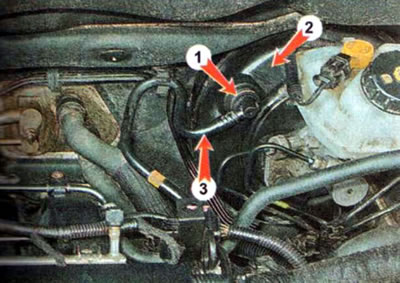
5. Otherwise, visually check the reliability of the connections of the check valve 1 with the body of the vacuum booster 2 and the tightness of the vacuum supply tube 3.
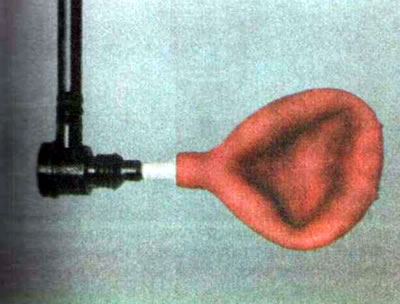
6. Check the operation of the check valve. To do this, with the engine turned off, remove the check valve from the rubber seal of the booster. We insert a rubber bulb into the valve branch pipe, which was used to insert it into the amplifier body, and squeeze it. If the bulb remains compressed, the valve is working properly. Otherwise, we replace the valve.
7. Install the valve in the reverse order and re-check the tightness of the brake booster (items 2-3).
Recommendations. If the check valve is in good condition, its tube and rubber sealing sleeve on the brake booster body are not damaged, then the booster itself is faulty. A faulty vacuum booster must be replaced.