


The brake fluid contains a base and various additives that protect the metal parts of the brake system from corrosion (corrosion inhibitors), and also provide liquids with high thermal stability. The base consists of either polyglycols and their esters, which are chemical compounds based on polyhydric alcohols, or silicones (polyorganosiloxanes) — oxygen-containing high-molecular organosilicon compounds.
Esters provide polyglycol fluid with good lubricating properties. However, such liquids are hygroscopic, that is, they absorb moisture from the atmosphere. During operation, this leads to a decrease in the boiling point of the liquid, which is fraught with the possibility of failure of the brake system during intensive braking. Also, with an increase in the water content in the liquid, corrosion of the brake system elements becomes more active. In addition, due to the high hygroscopicity of brake fluid, it is not allowed to add new fluid to the system if it has been in an open container for a long time.
Silicone fluids are free from these disadvantages - they are not hygroscopic.
Brake fluids are manufactured according to J1703, ISO (DIN) 4925 and FMVSS 116 standards. The brake fluid class for a specific vehicle is determined by its manufacturer. The manufacturer is obliged to indicate the base of the brake fluid on the packaging.
Domestic and imported fluids of classes DOT 3, DOT 4 and DOT 5.1 can be mixed in any proportions. The liquids have shades from light yellow to light brown.
Warning. DOT 5 brake fluids are silicone based and are not compatible with polyglycol fluids. Silicone-based liquids are dark red in color.
The basic parameters of brake fluid can only be determined in a specialized laboratory. The condition of the brake fluid can be indirectly determined by its appearance. It should be homogeneous, transparent and without sediment. In addition, you should take into account the vehicle manufacturer's recommendations regarding the frequency of brake fluid replacement.
Brake fluid reserve (and on a car with a manual transmission and for the hydraulic clutch system) is located in a reservoir mounted on the master brake cylinder.
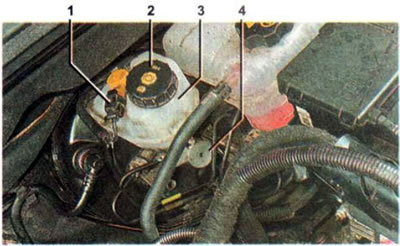
Master Cylinder Reservoir: 1 - brake fluid level sensor;2 — reservoir cap (the class of brake fluid used is indicated on it; 3 — tank body; 4 - master brake cylinder
On vehicles with a manual transmission, the clutch master cylinder is connected by a hose to the reservoir. For this purpose, a branch pipe is made on the tank. On cars with automatic transmission the pipe is plugged.
Brake fluid should be replaced regularly in accordance with the vehicle maintenance plan every 30,000 km, or every two years if the mileage is less during this time. The manufacturer allows the use of DOT-4 brake fluid in the hydraulic drive of the brakes and clutch. In accordance with the manufacturer's requirements, the brake fluid level must be checked at least once a year.
However, it is advisable to check the level every time you open the hood, for example, when adding windshield washer fluid.
A brake fluid level sensor built into the reservoir will signal an insufficient level of brake fluid - a brake system malfunction indicator lamp will light up on the instrument panel. This lamp comes on briefly each time the engine is started and then goes out. If it remains on, you should first make sure that the parking brake is disengaged, and then, if the light is still on, you should check the brake fluid level in the reservoir.
The original material is located on the website chevyman.ru