


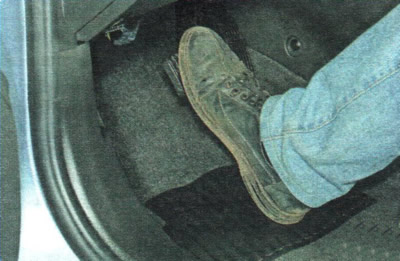
1. The reason for the decrease in braking efficiency may be the poor operation of the vacuum booster. For an express check, press the brake pedal several times with the engine off to remove the vacuum in the booster, and then, holding the pedal, start the engine. If the pedal drops slightly after starting the engine, the vacuum booster is in good condition. If the pedal remains motionless, check the vacuum booster in the order described in subsection "Checking the operation of the brake booster".
2. If braking is accompanied by beating and pulsation of the brake pedal, you should first check the condition of the front disc brakes. To do this, you need to remove the front wheels one by one, placing the car on reliable supports.
3. Inspect the brake discs. The disc surface should be flat and smooth on both sides. If the disc surface is rusty in places, which usually happens after a long period of parking with un-dried brakes, try cleaning the working surface with fine sandpaper. If this procedure does not help, you will have to send the discs for grinding or replace them with new ones.
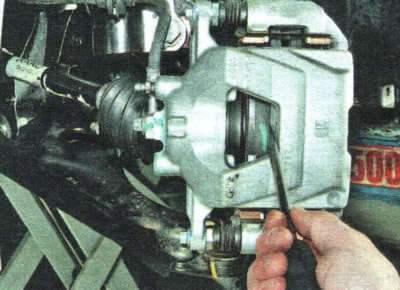
4. Check the mobility of the brake pistons. To do this, try to move the pistons from their place with a screwdriver. If the piston cannot be moved, it means that it is jammed in the brake cylinder.
WARNING: A stuck brake cylinder piston will cause the corresponding wheel to be constantly braked when the pedal is released and the vehicle to skid when braking.
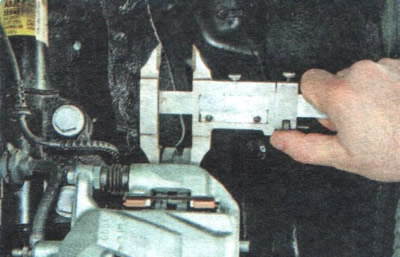
5. Check the thickness of the brake discs and brake shoe linings (see "Checking the degree of wear of brake pads, discs and drums"). If the thickness of the discs or linings is less than the maximum permissible, replace the parts with new ones.
6. If braking is accompanied by jerks of the car and creaking in the area of the rear wheels, and during intensive braking the rear part of the car skids, check the condition of the brake mechanisms of the rear wheels. To do this, you need to remove the rear wheels one by one, placing the car on reliable supports.
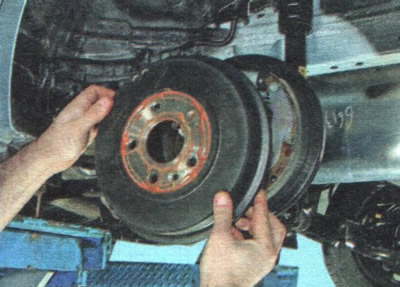
7. Remove the brake drums (see "Removal and installation the brake drum"). The working surface of the drum must be flat and smooth, without ring marks and clearly visible ovality (ovality can be determined by the unevenly worn working surface of the drum). If the ring marks are very deep or uneven wear of the working surface is clearly visible, the drum will have to be replaced with a new one.
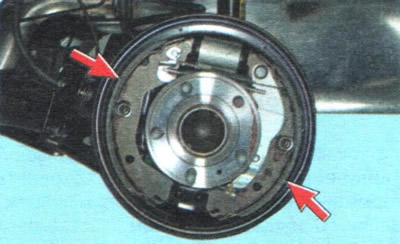
8. Inspect the brake pad linings. If the surface of the linings is oily or the linings are separating from the base, replace the brake pads.
9. Measure the thickness of the brake shoe friction linings and the diameter of the working surface of the brake drum (see "Checking the degree of wear of brake pads, discs and drums"). If the thickness of the linings or the inner diameter of the drum are outside the permissible values, replace the parts with new ones.
The article is reprinted from the website «CHEVYMAN.RU»