


When the vacuum booster fails, the force on the brake pedal increases significantly, which negatively affects vehicle control.
If the pedal effort when braking is noticeably greater than usual, check the brake booster with the vehicle stationary.
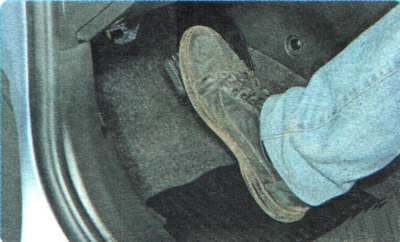
1. With the engine off, press the brake pedal five to six times at intervals of about 5 seconds; keeping the brake pedal depressed, start the engine - the brake pedal should move forward. If this does not happen, check...
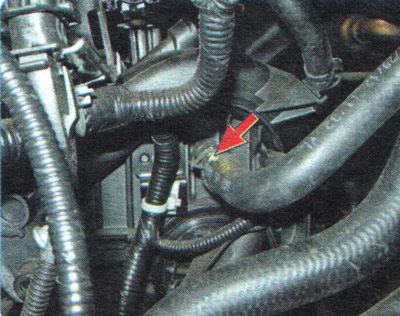
2. ...the integrity and reliability of the connection of the vacuum booster hoses with the fitting on the engine intake pipe...
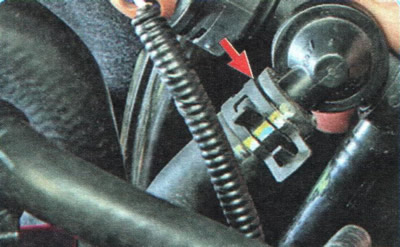
3. ...with a two-way valve...
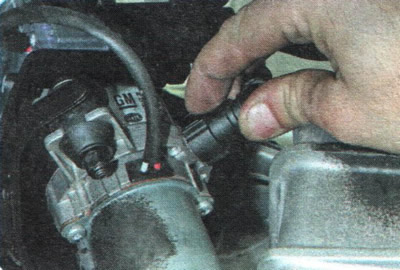
4. ...and with a nipple on the vacuum pump.
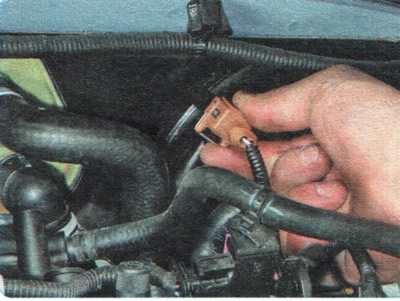
5. To check the operation of the check and two-way valves, press the locking device of the two-way valve wiring harness block...

6. ...and disconnect the block from it.
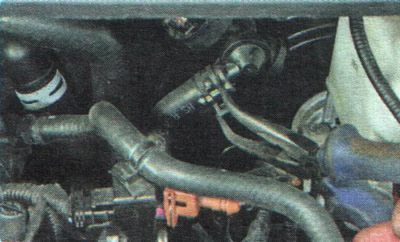
7. Loosen the clamp that secures the hose to the inlet pipe to the two-way valve by squeezing its bent ears with pliers...
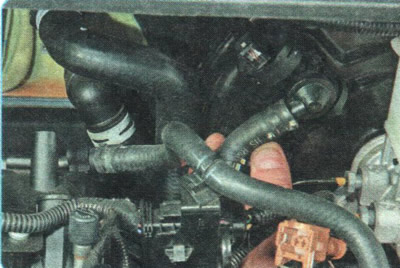
8. ...slide the clamp along the hose...
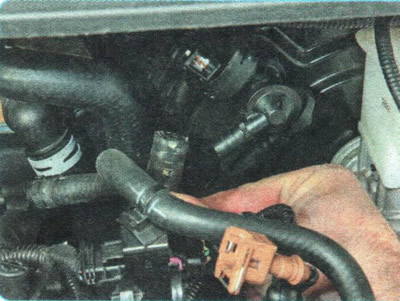
9. ...and disconnect the hose from the valve fitting.
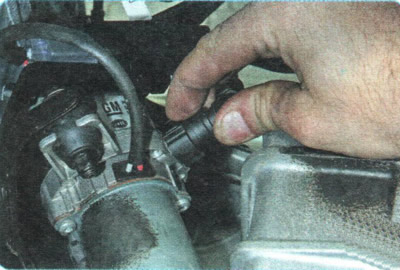
10. Squeeze the clamps of the hose tip to the vacuum pump...
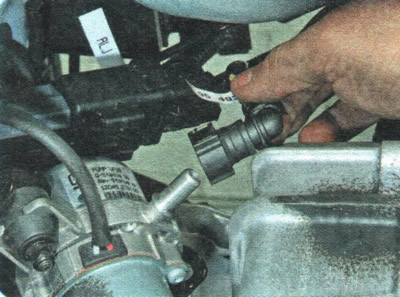
11. ...and disconnect the hose from the pump fitting.
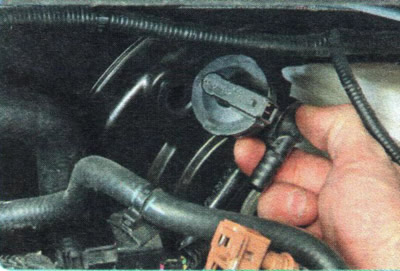
12. Remove the two-way valve from the brake booster sealing bushing hole...
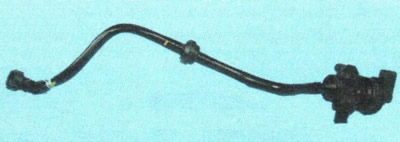
13. ...and remove the combination hose.
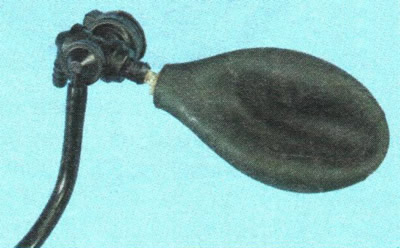
14. To check the check valve, insert the tip of the bulb tightly into the two-way valve fitting and squeeze it. Air from the bulb should come out through the valve. Release the bulb. If it remains squeezed, the valve is working properly. If you don't have a bulb, you can blow through the valve with your mouth.
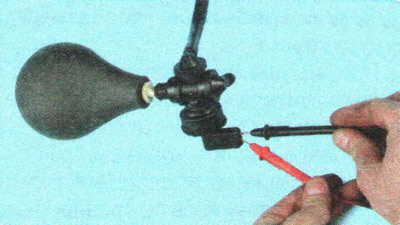
15. To test the two-way valve, apply a direct current of 12 V to its terminals. The valve should open and the bulb should straighten out.
16. If the check valve allows air to pass in both directions or the two-way valve does not open when power is supplied to it, replace the vacuum hose assembly with the valves, as it is not a disassemblable design.
[Information taken from the official website chevyman.ru]