


When the vacuum booster fails, the force on the brake pedal increases significantly, which negatively affects vehicle control.
If the pedal force when braking has noticeably increased compared to normal, check the brake booster with the vehicle stationary.
1. With the engine not running, press the brake pedal five to six times (at intervals of about 5 s) and, keeping the brake pedal depressed, start the engine. The brake pedal should move forward. If this does not happen, check...
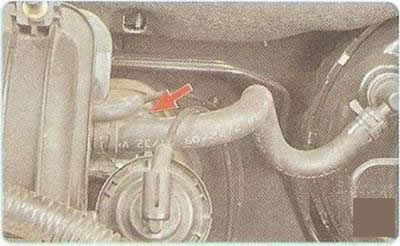
2. ...tightness of the vacuum hoses on the intake manifold...
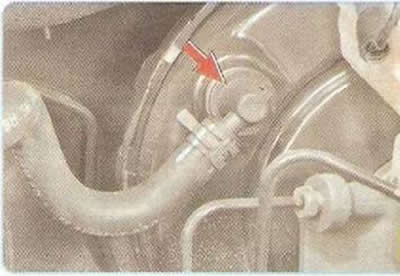
3. ...and on the brake booster housing.
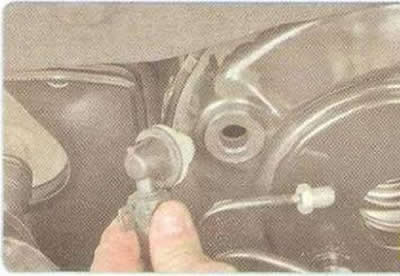
4. To check the operation of the check valve, disconnect it together with the hose from the brake booster.
5. Check the functionality of the valve installed in the cavity of the vacuum hose, for which tightly insert the tip of the rubber bulb into the hole of the check valve and squeeze it. Air from the bulb should come out through the valve.
6. Release the bulb. If it remains compressed, the valve is OK. If there is no bulb, you can blow through the valve with your mouth.
7. If the check valve leaks air in both directions, replace the vacuum hose assembly with the valve.
8. Install the parts in the reverse order of removal.
[The original article is on the website chevyman.ru]