


According to the manufacturer's recommendation, the brake fluid should be replaced after 2 years of operation or 30 thousand km of mileage, whichever comes first.
Recommendations: Brake fluid is very hygroscopic and absorbs moisture from the air, which in addition to causing corrosion of brake system parts lowers the boiling point of the fluid itself, which can lead to brake failure during frequent intensive braking. Therefore, we recommend replacing the brake fluid at least once every 2 years.
Check the tightness by external inspection:
- from above, from under the hood;
- from below the car (on a lift or inspection pit);
- from the sides of the car with the wheels removed.
Helpful Hint: When inspecting the hydraulic drive part that works under pressure, have an assistant press the brake pedal four or five times (in order to create pressure in the hydraulic drive) and hold it down until you have inspected the hydraulic drive. Inspecting the hydraulic drive without pressure is acceptable, but less effective.
Notes: If leaks are detected in the connections, tighten the clamps, plugs, and nuts. Replace hoses and pipelines with mechanical damage. If the working cylinders are leaky, repair or replace them.
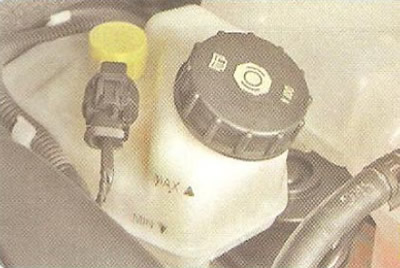
1. Inspect the master cylinder reservoir...
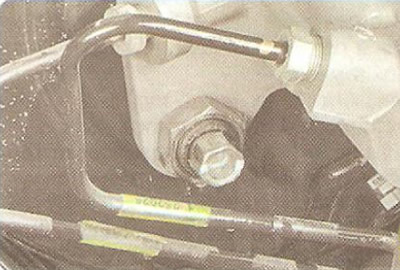
2. ...as well as the connections of the pipes to the main brake cylinder...
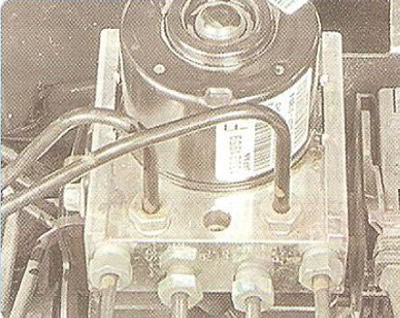
3. ...and to the ABS hydraulic electronic unit.
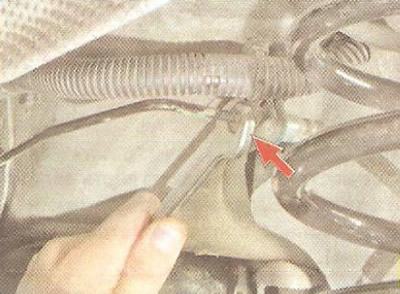
4. Check for fluid leaks from the brake line connections to the hoses; tighten the connecting nuts if necessary.
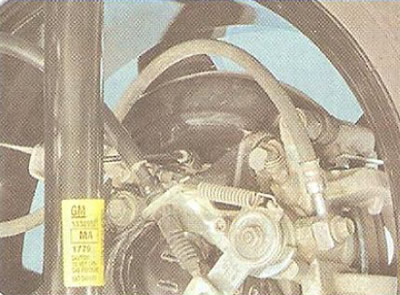
5. Inspect the brake hoses and their connections to the brake mechanisms. The hoses should not have cracks, tears or abrasions. Press the brake pedal all the way down: - if there are bulges on the hose, then the threads of the hose braiding have broken and it must be replaced.
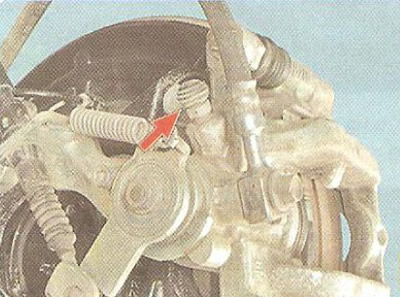
6. Inspect the brake bleed valves.
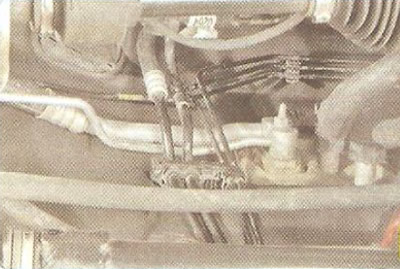
7. Check the fastening of the pipelines in the holders. Loosening or breakage of the holders leads to vibration and, as a result, to breakage of the pipelines.
[The original article can be found on the resource «ChevyMan.ru»]