


NOTE: If the vehicle pulls to one side or makes unusual noise when braking, check the condition of the brake pads.
1. Place the vehicle on a lift or jack (stands).
2. Remove the front wheel.
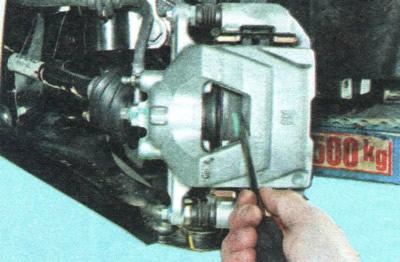
3. Check the condition of the pads through the hole in the caliper.
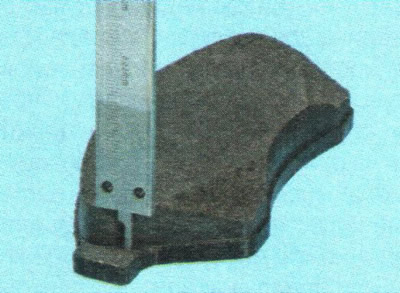
NOTE: The outer brake pad is not accessible through the hole in the caliper. To check the technical condition, this pad will have to be removed (see "Replacing the brake pads of the front wheel brake mechanism").
If the thickness of the friction linings is less than the permissible value (Table 9.1), replace the brake pads (see "Replacing the brake pads of the front wheel brake mechanism").
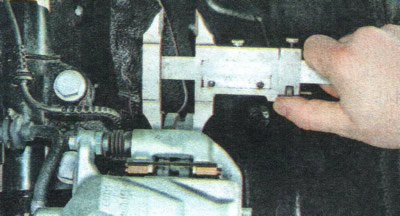
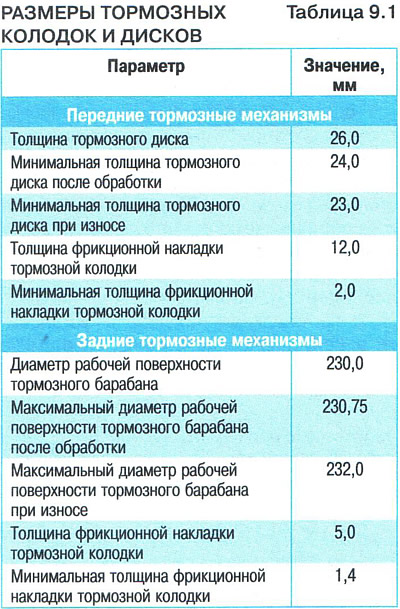
4. Measure the thickness of the brake disc at eight points evenly spaced around the circumference (at 45°) and approximately 15 mm from the outer edge of the disc. If its thickness is less than the maximum permissible value, (see table 9.1), replace the brake disc (see "Replacing the brake disc").
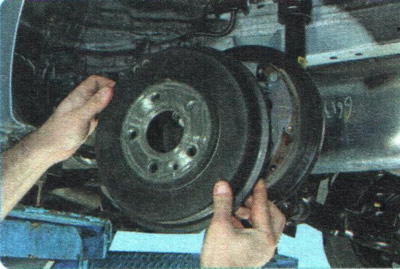
5. To check the degree of wear of the rear brake pads, remove the rear wheel and brake drum (see "Removal and installation the brake drum").
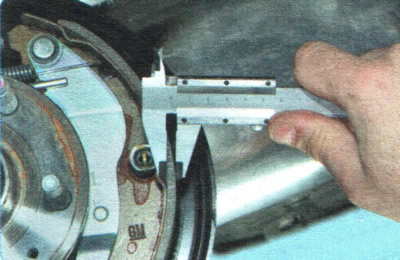
6. Measure the thickness of the friction lining. If the thickness is less than the permissible value (see table 9.1), replace the pads (see "Replacing the brake pads of the rear wheel brake mechanism").
Replace the pads in the following cases:
- friction lining thickness 1.4 mm or less;
- the surface of the linings is oily;
- the pads are not firmly connected to the base.
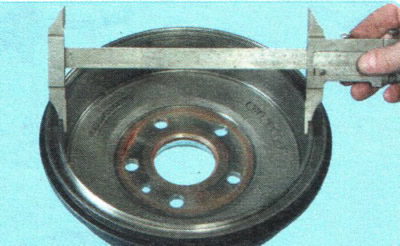
7. Measure the diameter of the working surface of the brake drum. If it is greater than the permissible value (see table 9.1), replace the drum (see "Removal and installation the brake drum").
[The source of the article is available on the website chevyman]