


You will need: TORX T30 key, wheel nut key, mounting blade (two), caliper.
The brake drum is removed for replacement if the working surface is damaged or worn (maximum permissible drum diameter 232.0 mm), and also to monitor the condition of the brake mechanisms, replace brake pads and working cylinders.
USEFUL TIP: Perform the work on the car with the rear wheels raised (on a lift or a vehicle supported by a jack). The parking brake lever must be lowered all the way down (the car is released).
1. Engage 1st gear in a manual transmission or set the automatic transmission selector lever to the "P" (parking) position and place chocks under the front wheels.
2. Raise the rear wheel and place the rear of the vehicle on the side of the drum being removed on a support. Remove the rear wheel.
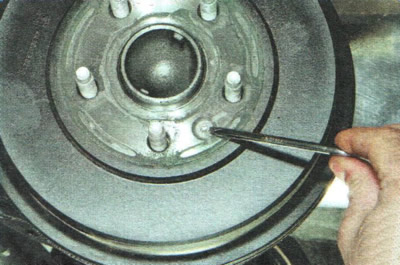
3. Loosen the screw securing the drum to the hub...
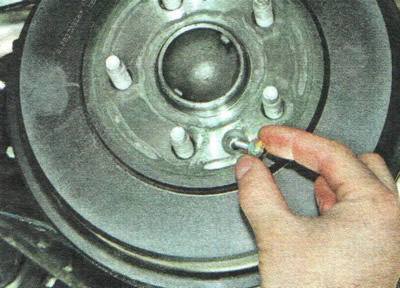
4. ...and remove the screw.
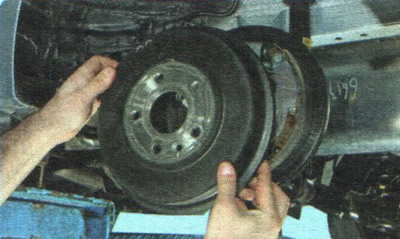
5. Remove the drum.
6. Similarly, remove the brake drum of the brake mechanism of the other rear wheel.
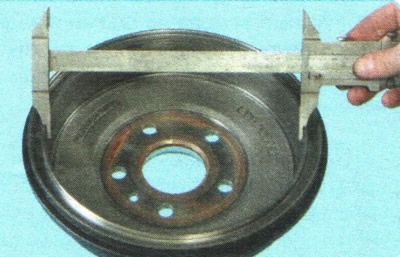
7. Measure the diameter of the working surface with a caliper. If the diameter exceeds the maximum allowable (see table 9.1), the drum must be replaced.
WARNING: Replace brake drums in pairs (left and right at the same time).
8. When installing the old drum, use a file to remove the ridge on the working surface of the drum that has formed as a result of wear.
9. Reset the gap regulator to its original state (see point 6 "Replacing the brake pads of the rear wheel brake mechanism").
10. Bring the brake pads together using two mounting blades.
11. Install the parts in the reverse order of removal.
12. Adjust the clearance between the brake shoes and the drum by pressing the brake pedal 10-15 times. Each time you press it, you should hear the adjuster click. Once the clicking stops, the clearance is set.
13. Install the wheel and decorative cap (see "Wheel replacement").
14. Check the ease of rotation of the wheel. Slight contact of the drum with the pads is permissible.
The article was borrowed from the website: «ChevyMan.ru»