


Checking on a car. To check, you need a DC voltmeter with a scale of up to 15-30 V and an accuracy class of at least 1.0.
After 15 minutes of engine operation at medium speed with the headlights on, measure the voltage between the "B+" terminal and the generator ground. The voltage should be within 14.75±0.15 V.
If there is systematic undercharging or overcharging of the battery and the regulated voltage does not fall within the specified limits, the voltage regulator must be replaced.
Checking the removed regulator. The regulator assembled with the brush holder, removed from the generator, is checked according to the diagram shown in Figure 7-11.
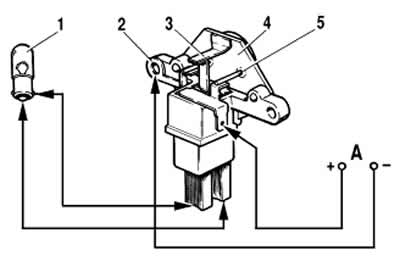
Figure 7-11. Voltage regulator testing circuit:
1 - control lamp;
2 - terminal "ground" of the voltage regulator;
3 - "DF" terminal of the voltage regulator;
4 - voltage regulator;
5 - terminal "D+" of the voltage regulator;
A - to the power source.
Between the brushes, turn on a 1-3 W, 12 V lamp. Connect a power source with a voltage of 12 V to the terminals "D+" and "ground" of the regulator, and then with a voltage of 15-16 V.
If the regulator is working properly, then in the first case the lamp should light up, and in the second case it should go out.
If the lamp lights up in both cases, then there is a breakdown in the regulator, and if it does not light up in both cases, then either there is a break in the regulator, or there is no contact between the brushes and the terminals of the voltage regulator. The latter can be checked by connecting the wires from the lamp not to the brushes, but directly to the terminals "D+" and "DF" of the voltage regulator.
The text of the article was obtained from the website chevyman