


Warning: Certain precautions must be observed when performing preventive inspection and maintenance on fuel system components. Work in well-ventilated areas and do not allow open flames or unshielded light bulbs in the work area. Avoid contact with gasoline on your skin. Work with rubber gloves. If gasoline gets on your skin, wash it off with running water and soap. Wipe up spilled fuel immediately and store the absorbent cloth where it cannot be ignited. Before acting on the elements, release the pressure in the system (see chapter 4). Have a class B fire extinguisher on hand and wear eye protection when working with the system.
1. Relieve the pressure in the fuel system (chapter 4). Disconnect the negative cable from the battery.
2. Raise the vehicle and support it with vertical supports.
3. The fuel filter is located in the bracket on the fuel tank.
4. Using compressed air or a fuel system cleaner, remove dirt from areas adjacent to the filter inlet and outlet.
5. Each end of the filter has a quick-release coupling, to disconnect which you need to use needle-nose pliers or squeeze the lock with your fingers (see illustration).
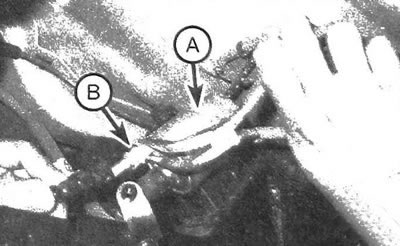
24.5. When replacing the fuel filter (A), to disconnect the couplings, it is necessary to compress the clamps (B)
Note: To receive or absorb the fuel in the filter, place a suitable container or use a damp cloth.
6. Unscrew the screw securing the bracket to the tank.
Note: On all-wheel drive vehicles, the tank has a protective panel that has a hole in it to provide access to the bracket screw.
7. Squeeze the plastic clips and disconnect the fuel lines from the filter. New filter modifications have improved fasteners.
8. Installation is carried out in the reverse order of removal.
(The source of the article is available on the website «ChevyMan.ru»)