


Contents: Checking the engine oil level ↧ Changing engine oil and oil filter ↧ Engine Oil Life Monitoring System ↧ Gasoline engine ↧ Diesel engine ↧
To ensure normal engine operation, it is necessary to monitor the engine oil level.
When operating an engine, a certain amount of engine oil is consumed.
Therefore, it is necessary to check the oil level regularly, for example, at every refuelling.
To obtain accurate information about the oil level, the engine must be warm and the car must be on a horizontal surface.
Checking the engine oil level
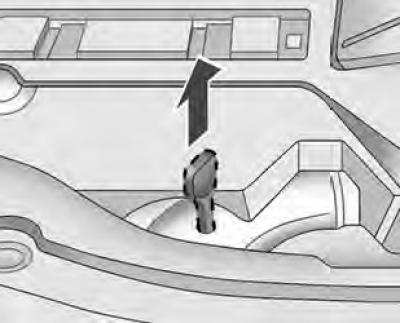
1. Park the car on a level horizontal surface.
2. Turn off the engine and wait 5 minutes. During this time, the oil will have time to drain into the oil pan. If this is not done, the oil level on the dipstick will be shown incorrectly.
3. Remove and wipe the dipstick.
4. Insert the oil dipstick into the fitting until it stops.
5. Remove the dipstick again.
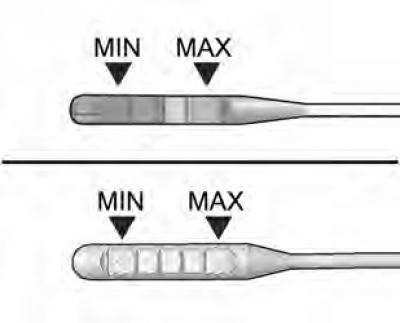
6. Check the oil level on the dipstick. The oil level should be between the MIN and MAX marks. If the level is difficult to read, look from the back.
Depending on the engine type, different types of oil dipsticks are used.
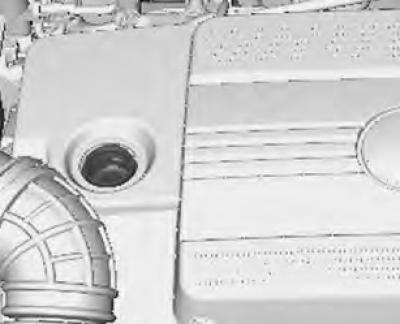
7. If the level is below the MIN mark, add the required amount of oil of the same grade and viscosity as in the engine to raise the oil level to the maximum. Exceeding the MAX mark is not allowed.
Warning: Motor oil is an irritant and may cause poisoning or death if swallowed.
Keep coolant out of reach of children.
Avoid regular or prolonged contact of motor oil with skin.
After working with motor oil, wash exposed skin areas with soap or a special cleaner.
Warning: Adding too much engine oil may affect engine performance.
Do not allow the oil level to exceed the MAX mark on the dipstick. Exceeding the maximum engine oil level may have the following consequences:
- Increased oil consumption.
- Contamination of spark plugs.
- Formation of excessive carbon deposits in the engine.
Changing engine oil and oil filter
Warning: Before performing work, make sure you have the appropriate qualifications. If you are not sure that you are doing everything correctly, contact a service station. We recommend contacting an authorized service center.
Otherwise, injury or damage to vehicle parts may occur.
When contaminated, engine oil loses its lubricating ability. Make sure that engine oil is changed according to the maintenance schedule.
Every time the engine oil is changed, the filter should also be changed.
Under severe operating conditions, the oil and oil filter must be changed more frequently than recommended in the normal maintenance schedule.
Severe operating conditions include, in particular:
- Frequent starting of movement with the engine not warmed up.
- Overcoming significant distances in traffic jams.
- Frequent trips over short distances.
- Frequent operation at outside temperatures below freezing.
- Prolonged idling of the engine.
- Frequent driving at low speeds.
- Driving on dusty roads.
Warning: Motor oil and oil containers are potentially hazardous. Avoid regular or prolonged contact with motor oil.
After working with motor oil, clean your skin and nails with soap or a special cleaner. Keep motor oil and other toxic substances out of the reach of children.
Motor oil is a skin irritant and may cause poisoning or death if swallowed.
Caution: Using non-recommended motor oil or chemical additives (additives) may cause engine damage.
Before adding any additives, consult a service station. We recommend contacting an authorized service center.
Caution: Do not dispose of used oil and filters with household waste.
Contact your local waste disposal authority.
Used motor oil and filter contain toxic substances that can harm your health and the environment.
Selecting motor oil
Buy dexos2 certified motor oils. The motor oils used in your vehicle must be dexos2 marked.
This mark guarantees that the oil quality meets the requirements of the dexos2 specification.

Your vehicle was filled at the factory with engine oil that meets dexos2 specifications.
Important: Use only dexos2 approved oils or equivalent oils with the appropriate viscosity grade. Engine oils that meet dexos2 specifications must have the dexos logo on the packaging. Failure to do so may result in engine damage and void your warranty. If you are unsure of the quality of the oil you are using, contact your supplier.
The most suitable oil for your vehicle is SAE 5W-30. SAE 0W-30, 0W-40 and 5W-40 oils are also acceptable. Do not use SAE 10W-30, 10W-40 or 20W-50 oils.
In countries with cold climates, at temperatures below -29°C, oils with a viscosity of SAE 0W-30 should be used. Oil of this viscosity simplifies engine starting in very cold conditions. When choosing oil of the required viscosity, always check whether the oil meets the required specifications.
Engine Oil Life Monitoring System
The electronic system of this car will promptly warn you of the need to change the oil and filter. The calculation is based on the engine speed, operating temperature and mileage. Depending on driving conditions, the need to change the oil may arise at different mileage values. For normal operation of the system, it is necessary to reset it after each oil change.
When the system calculates that the oil service life is over, a signal about the need to change the oil is displayed. The engine oil change indicator lights up. It is necessary to change the oil as soon as possible, the permissible mileage before changing the oil is no more than 500 km.
Under certain conditions (favorable driving conditions) the system may not signal the need to change the oil for up to 1 year. The engine oil and filter must be changed at least once a year, at the same time the system must be reset. Your dealer has trained specialists who will reset the system. In addition, it is important to regularly check the oil for leaks and maintain the required level.
In case of accidental reset of the system, the oil must be changed after 5000 km from the last oil change.
After changing the oil, you will need to reset the oil life indicator. Contact your service station.
Resetting the Engine Oil Life Monitoring System
The engine oil life monitoring system's calculations for when to change the oil are based on vehicle usage. Reset the system each time you change the oil so it can calculate when to change the oil.
To reset the oil life monitoring system, you must perform one of the following actions:
- Using a scan tool. After changing the engine oil, an authorized service center will reset the system using a scan tool. Contact a service station.
- Using the accelerator pedal
Gasoline engine
1. Turn the ignition key to the "ON/START" position with the engine off.
2. Fully depress and release the accelerator pedal three times within five seconds.
3. Turn the key to the "LOCK" position.
If the engine oil change indicator stays on after starting the engine, the oil life monitoring system has not been reset. Repeat this procedure.
Diesel engine
1. Remove the ignition key for at least one minute. Then turn the ignition key (do not start the engine).
2. Follow these steps:
- 2-1. Press the accelerator pedal all the way down and hold it in this position for 2 seconds.
- 2-2. Release the accelerator pedal and remove your foot from the pedal for 2 seconds.
- 2-3. Repeat the steps described (1, 2) two more times (total three times) within one minute.
If the engine oil change indicator stays on after starting the engine, the oil life monitoring system has not been reset. Repeat this procedure.
Caution: Remember to reset the engine oil life monitoring system after each engine oil change.
Recommended engine oil
Cm. Recommended working fluids and lubricants.
Maintenance schedule
Cm. Scheduled maintenance.
The original article is on the website: «ChevyMan.ru»