


Contents: Checking the engine oil level ↧ When to add oil ↧ What type of oil to use ↧ Motor oil additives ↧ When to change engine oil ↧ What to do with used oil ↧
If your car has a diesel engine, see the application "Engine oil (diesel engine)" It's a good idea to check your engine oil every time you fill up with gas. To get an accurate reading, the oil should be warm and the car should be on a level surface.
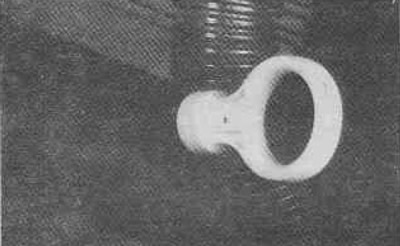
The engine oil dipstick has a yellow ring on the handle and is located on the passenger side of the engine.
Turn off the engine and let the oil drain into the oil tank for a few minutes. If you don't do this, the dipstick may not show the actual level.
Checking the engine oil level
Pull the dipstick out, clean it with a paper towel or cloth, and reinsert it all the way. Pull it out again, holding the tip down, and check the level.
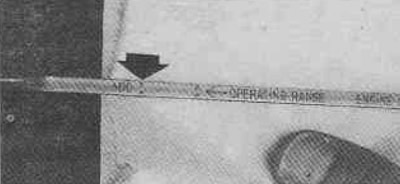
When to add oil
If the oil is below or at the ADD mark, then at least a quart needs to be added (1.14 liters) oil. But you must use the right grade. This part of the guide explains what grade of oil to use. For oil pan capacity, see the table of contents "Capacities and specifications".
Note: Do not add too much oil above the upper mark on the dipstick or the engine may be damaged.
Filler cap on the engine "VORTE07400" located at the front of the engine next to the radiator.
Make sure to fill the oil to the correct operating level. Insert the dipstick completely when you have finished filling.
What type of oil to use
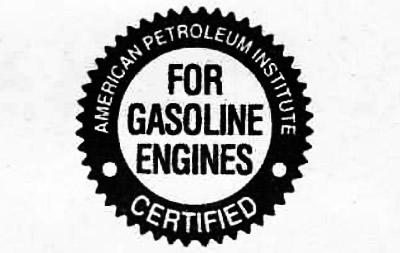
Oils recommended for your vehicle can be identified by the presence of the "Starburst" symbol. This symbol indicates that the oil is certified by the American Petroleum Institute. Do not use any oil that does not have this symbol. If you are changing your oil, make sure that the oil container has the "Starburst" symbol. If you are having your oil changed, make sure that the oil you are using is certified by the American Petroleum Institute for gasoline engines.
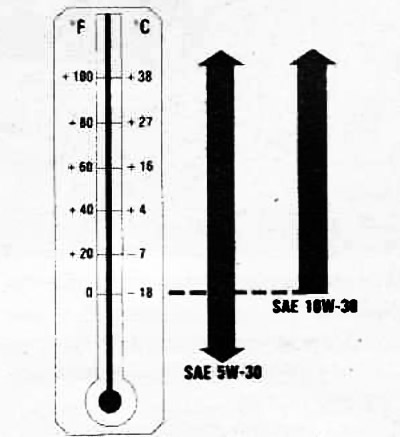
You should also use oil with the appropriate viscosity for your vehicle, as shown in the following diagram:
As shown in the diagram, SAE5W-30 oil is best for your car. However, SAE 10W-30 can be used if the air temperature is 0°F (-18°C) or higher.
These numbers on the oil container indicate the viscosity, or density, of the oil. Do not use oils with other viscosities, such as SAE 20-50.
GM Good wrench oil also meets the requirements of your vehicle.
If you are in an area where temperatures drop below -20°F (-29°C), consider using SAE 5W-30 synthetic oil or SAE 0W-30 oil. These oils will provide easy starting and greater engine protection in very cold temperatures.
Motor oil additives
Do not add anything to the oil. Your GM dealer is available to advise you if you want to add anything.
When to change engine oil
Driving under the following conditions will cause the oil to deteriorate more quickly:
- most trips are less than 510 miles (from 8 to 16 km), This is especially important when the outside temperature is below freezing
- most trips are made with long periods of idling (frequent trips with stops)
- You use your vehicle in dusty areas and off-road
- You frequently tow a trailer and use cargo on your vehicle
- the vehicle is used for service as a taxi, police car or for other commercial purposes.
If the above conditions apply to your vehicle, you should change the oil and oil filter every 3,000 miles (5,000 km) or 3 months.
If none of the above apply, change the oil and filter every 7,500 miles (12,500 km) or 12 months, whichever comes first. Driving a car with a fully warmed-up engine on the highway degrades the oil more slowly.
What to do with used oil
If oil gets on your skin, wash your hands with soap. Wash or better yet, throw away clothes contaminated with motor oil. Used oil is a threat to the environment. Do not pour oil on the ground or into water.
Instead, take it to a recycling center that collects used oil.